Reviewed · GUIDED
Trails Of Tan Ah Huat : Singapore 1920s. A storytelling guided bicycle tour!
Singapore’s past comes alive through the fictional life of Tan Ah Huat, an immigrant trying to make his way in the city of the 1920s. You pedal from Kampong Gelam to Chinatown, stopping at old bridges, trading streets, tea shops, burial districts, and the Singapore River while a guide builds the story around you.
I like the storytelling format, which gives familiar landmarks a human face, and I like the small-group setup, with no more than 10 people and a route paced for your own group. The main consideration is the early 9 a.m. start and the need for decent weather, so this is not the best pick if you prefer a late morning or indoor activity.
Key points at a glance
- A 1920s story on two wheels: Follow Tan Ah Huat through Singapore’s immigrant communities, trading districts, and old entertainment streets.
- A flat, easy route: You cover a lot of central Singapore without a hard ride, and all ages can join if they can ride a bicycle.
- A personal guide makes the difference: Alfie, Yap, and Simon have each led this experience, with a style that mixes facts, character stories, and humor.
- A taste of everyday life: Stop for coffee and a snack at a traditional coffee shop, with bottled water included.
- A compact private group: Your booking is exclusive to your group, with a maximum of 10 people.
- A useful first look at Singapore: The route links Kampong Gelam, the riverfront, Raffles Hotel, and Chinatown in one morning.
Why Tan Ah Huat makes Singapore easier to understand
Singapore can be hard to read at first. Modern towers, restored shophouses, religious districts, shopping streets, and the river all sit close together, but the connections are not always obvious. This tour gives those places a single thread: the imagined life of Tan Ah Huat, a Chinese immigrant arriving in Singapore during the 1920s.
That choice matters. Instead of hearing a string of dates and building names, you follow a person who has to find work, understand local customs, move through unfamiliar communities, and adapt to a changing city. The tale is not presented as a simple rags-to-riches adventure. It includes the ordinary pressures of life, which makes the historical setting more useful and believable.
The storytelling is the strongest reason to book. Guides such as Alfie, Yap, and Simon use character scenes, historical explanation, and videos shown at points along the route. The result is more active than a standard sightseeing ride. You are not just passing a bridge or a shopfront. You are asking what Tan Ah Huat might have seen there, who he may have met, and how the place affected his choices.
You should still think of the story as a teaching device, not a documentary record of one real man. The tour uses a fictional character to explain real communities, buildings, trades, and customs. For many people, that is a strength. If you want only verified biographies and formal architectural facts, the dramatic approach may feel less exact.
A few more Singapore experiences worth comparing
- Singapore: Guided City Tour by Amphibious Duck Boat
★ 4.5 · 479 reviews - Singapore: Foodie Experience Guided Tour with 5 Tastings
★ 4.7 · 291 reviews - Singapore: Private Custom Tour with a Local Guide
★ 4.8 · 276 reviews
Starting in Kampong Gelam at 9 a.m.
The tour begins at 462 Crawford Lane and returns there after about four hours. There is no hotel pickup, but the starting point is in the city area and taxis are described as inexpensive and safe. The tour is also near public transportation, so allow enough time to reach the meeting point before the 9 a.m. departure.
Your first stop is Kampong Gelam, historically a Muslim settlement. The question here is immediate and useful: what was Tan Ah Huat doing in a place shaped by a different community, and whom did he meet? This opens the door to Singapore as a meeting point for people of different languages, faiths, and backgrounds.
You also hear where Singapore’s former shoreline lay before land reclamation changed the city. That detail helps you picture an older waterfront, rather than assuming that today’s roads and buildings always occupied the same ground. The stop is brief, around 10 minutes, but it sets the period and introduces the idea that Singapore’s physical shape has changed as much as its economy.
Raffles Hotel Arcade and the social divide
The route continues to Raffles Hotel Arcade, connected with the city’s more polished and expensive side. The hotel has operated since the era of Tan Ah Huat, giving the guide a way to contrast the world of wealthy visitors with the daily struggles of working immigrants.
The focus is not simply on taking a photograph outside a famous hotel. You hear what Tan Ah Huat might have seen there and whom he might have encountered. That viewpoint helps explain the social distance between different parts of colonial Singapore.
This stop also gives the tour some architectural and sightseeing appeal. If you want a morning that includes major landmarks, you get them without leaving the story behind. The time here is about 10 minutes, so expect context and a quick look rather than a full hotel tour.
The Singapore River from Queen Elizabeth Walk to Cavenagh Bridge
At Queen Elizabeth Walk, the route reaches the mouth of the Singapore River. This is one of the most important parts of the morning because the river was central to the arrival of Chinese immigrants and to the movement of goods, workers, and money.
Your guide explains why the river mattered to Chinese communities and points out landmarks that have survived major changes. You then continue to Cavenagh Bridge, where the story becomes more personal. Why did Tan Ah Huat love the river, and why did he resent it? The answer links opportunity with hard work, danger, and the daily demands of a port city.
The bridge area is also a good place to understand how Singapore’s trade center developed. Former shophouses once served as godowns, or warehouses, putting commercial activity right beside the water. You hear about coolies and the physical labor that kept trade moving. These details prevent the riverfront from becoming just a scenic stop.
At around 10 minutes per listed stop, the pace is brisk. You get several viewpoints and a clear story, but you will not spend long examining every building. I see this as a good trade for a four-hour route that covers several neighborhoods.
Same island, a completely different afternoon:
- Lion City Bike Tour of Singapore
★ 5.0 · 6,211 reviews - Singapore: Gardens by the Bay Bundle Entry Ticket
★ 4.3 · 3,726 reviews - Singapore: Big Bus Hop-On Hop-Off Tour by Open-Top Bus
★ 4.5 · 3,261 reviews - Singapore: Lion City Highlights Bike Tour
★ 4.9 · 2,010 reviews
Read Bridge and the city after dark
Read Bridge, also known as Malacca Bridge, offers a different mood. Tan Ah Huat considered it a favorite hangout, and the guide explains why people gathered there in the evening.
This section gives you a glimpse of social life outside work. The tour is not only about immigration, trade, and survival. It also asks where people relaxed, met friends, and watched the city change after the working day ended.
The stop lasts about 10 minutes. It is a compact introduction rather than a long stay, but the character-based approach gives the bridge a reason to matter. You are learning what the place meant to people, not only what it is called.
Pek Sin Choon and the story of Nanyang tea
At Pek Sin Choon, the focus shifts to Nanyang tea. This heritage tea business provides a direct link between Singapore’s commercial past and its continuing food culture.
You learn how the business changed from Tan Ah Huat’s era to the present. That comparison is valuable because it shows that heritage is not frozen in one period. A shop can retain an old identity while adapting to new customers and new ways of doing business.
The visit is scheduled for about 10 minutes, so do not expect a lengthy tea workshop. Instead, treat it as a short, grounded explanation of trade, taste, and changing business practices. It is one of the stops that makes the tour feel more local than a simple ride between major monuments.
Jinrikisha Station and old transport
Jinrikisha Station recalls a time when rickshaws played an important role in Singapore’s transport system. The stop lasts about five minutes, making it one of the shorter pauses, but the subject is central to understanding how people and goods moved through the city before modern transport.
The guide tells the story through Tan Ah Huat’s eyes. That keeps the subject practical. You are not only learning that rickshaws existed. You are considering what the system meant for the people who operated it and for those who depended on it.
The route also includes a look at an iconic Chinese theatre, described as a great token of love from a philanthropist to his wife. Tan Ah Huat’s connection with the site adds another personal turn to the journey. Since the supplied schedule does not give a separate stop time for this theatre, you should expect it to be folded into the route rather than treated as a long independent visit.
Coffee, snacks, and the turning point at Singapore Centre
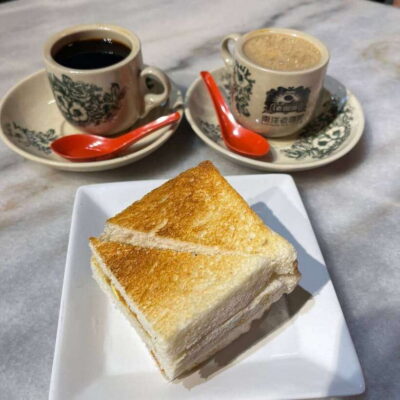
The coffee-shop stop is one of the most useful details in the whole experience. At Singapore Centre, you learn why coffee shops mattered to Chinese communities in Tan Ah Huat’s time and who he met there. That meeting changes the course of his story.
You also sample his favorite coffee and a snack. This is not a full meal, so you should eat beforehand if you need a substantial breakfast. Still, a drink and small bite make the historical setting more tangible than another stop at a monument.
I particularly like this part because food and drink reveal everyday life. A coffee shop was not simply a place to refuel. It was a social point where people exchanged news, sought work, built connections, and made decisions. The scheduled 15 minutes is enough for a short break without slowing the entire route.
Trengganu Street and Chinatown’s harder side
Trengganu Street brings the tour into Chinatown and changes the tone again. Here, you hear about the darker secrets associated with the streets and how Tan Ah Huat’s fate led him there.
The value of this stop is its refusal to present old Chinatown as only picturesque shophouses and preserved facades. The district also carried poverty, crime, pressure, and uncertain prospects. You get a more complete view of the community when those elements are included.
The stop takes about 10 minutes. Listen closely, since the meaning comes from the guide’s explanation rather than from a large museum display. This is also where a strong storyteller matters most. Alfie’s ability to make the tale easy to follow was highlighted repeatedly in the supplied comments, while Yap and Simon were also praised for making the history clear and engaging.
Sago Street, the Street of the Dead
The final listed stop is Sago Street, once known as the Street of the Dead. The name points to the burial practices and difficult conditions connected with the area during Tan Ah Huat’s time.
This is a useful closing section because it deals with mortality and traditional burial rites, subjects often left out of a polished city tour. You learn what the street represented in the 1920s and what fate had in store for Tan Ah Huat.
At about 10 minutes, it is another concise stop. The tour then returns to the starting point. By the end, you have moved from a Muslim settlement to a hotel district, the riverfront, old warehouses, transport sites, tea commerce, coffee-shop culture, and Chinatown. The route gives you a broad first picture of Singapore without asking you to spend the day in a vehicle.
What the bicycle format adds
The bicycle is more than a novelty here. It lets you link districts at street level and keep the journey moving between short stops. You see the transitions between areas instead of arriving at each one by car and starting from scratch.
The route is described as flat and easy, and all ages are welcome as long as they can ride a bicycle. That makes it a practical choice for families and mixed-age groups. The ride is not presented as a fitness challenge, but you should still be comfortable cycling for several hours in Singapore’s warm conditions.
The group is private to your booking, with a maximum of 10 people. That matters because the guide can keep the story at a pace that suits your group. It also makes it easier to ask about a building, pause for clarification, or follow the plot without competing with a large crowd.
Bicycles, bottled water, and lockers for bags are included. You do not need to carry your luggage around the route, though the available information does not specify locker size, so keep your bag modest.
Price, timing, and who gets the best value
At $79.89 per person, this is not the cheapest way to see central Singapore. The price makes more sense if you value a private guide, a four-hour route, bicycle use, the coffee-shop stop, and a designed story that connects the locations.
You are paying for interpretation as much as transport. A self-guided ride could cover some of the same streets for less, but it would not provide Tan Ah Huat’s storyline, the videos, the explanations of coolie life and burial customs, or the guide’s links between the stops.
The experience is a good match for a first morning in Singapore. It introduces several central districts and gives you references that can improve the rest of your visit. You may also appreciate it if you have already seen the major sights and want a more personal angle.
I would be cautious if you dislike fictional storytelling, need a slow museum-style visit, or want a serious cycling workout. The schedule moves through many stops, and some visits last only five or 10 minutes. Also remember that poor weather can lead to a new date or a full refund, and the tour requires a minimum number of participants.
Free cancellation is available up to 24 hours before the 9 a.m. start. Changes or cancellations inside that window are not accepted for a refund. Confirmation is sent within 48 hours of booking, subject to availability, so do not leave this until the final hours of your Singapore stay.
Should you book Trails of Tan Ah Huat?
Book it if you want Singapore explained through people, work, food, trade, and difficult choices rather than through a checklist of buildings. The strongest parts are the storytelling, the personal guides, the flat bicycle route, and the coffee-shop stop.
I would especially recommend it for first-time visitors, couples, families with competent young cyclists, and anyone who remembers places better through stories. Ask for a guide such as Alfie, Yap, or Simon if scheduling allows, but guide availability is not guaranteed.
Skip it if you want a late start, a purely factual lecture, or a long stop at each landmark. For the right person, though, this is a lively and useful way to connect Kampong Gelam, the Singapore River, and Chinatown in one morning.
FAQ
How long does the bicycle tour last?
The tour lasts approximately four hours and returns to the starting point.
Where does the tour begin?
It begins at 462 Crawford Lane, Singapore 190462.
What time does the tour start?
The start time is 9 a.m.
Is hotel pickup included?
No. Hotel pickup is not included. The meeting point is in the city area, and taxis are described as inexpensive and safe.
How large is the group?
The activity is exclusive to your group and has a maximum of 10 travelers.
Do I need to be an experienced cyclist?
No. The route is flat and easy. All ages can participate as long as they can ride a bicycle.
What is included in the price?
Bicycle use, a licensed guide, bottled water, and lockers for bags are included. A coffee and snack stop is also part of the route.
Can I cancel for a full refund?
Yes. You can cancel at least 24 hours before the start time for a full refund. Poor weather or failure to meet the minimum number of participants may also lead to a new date or a full refund.
Recently added around Singapore
- The Real Singapore Heartland Walking Food Tour★ 5.0 · 4 reviews
- Vegetarian Culinary Adventure in Singapore★ 5.0 · 7 reviews
- Singapore’s Marina Bay Wonders and Heritage Tales, Chinatown★ 5.0 · 5 reviews
- Singapore’s Hidden Treasures: A Cultural Private Tour★ 5.0 · 3 reviews
- Private Tour Singapore Street Food & Night Tour★ 5.0 · 4 reviews
- Singapore – Albatross Speedboat Adventures Cruising in Sentosa★ 5.0 · 3 reviews
- Small Group Full Day Singapore City Tour with Roundtrip Transfers★ 4.0 · 11 reviews
- Tastes of Chinatown★ 5.0 · 4 reviews
Guided, compared.
Singapore: Guided City Tour by Amphibious Duck Boat
Read our review →
Singapore: Foodie Experience Guided Tour with 5 Tastings
Read our review →
Singapore: Private Custom Tour with a Local Guide
Read our review →
Singapore: Chinatown and Little India Guided Walking Tour
Read our review →
Singapore Foodie Experience Guided Tour with 5 dishes Tasting
Read our review →
Singapore: Private Flexible Tour with a Licensed Local Guide
Read our review →
LUXURY Private day tour: Kuala Lumpur & Malacca from Singapore by licensed guide
Read our review →