
Reviewed · SINGAPORE
Vegetarian Culinary Adventure in Singapore
Singapore’s vegetarian food culture reaches far beyond a plate of plain vegetables. On this three-hour morning tour, you sample Chinese Buddhist, Japanese, and Indian dishes, browse stalls selling spices and dried goods, and learn how religious practice shapes what people eat.
I like the small group of no more than 10 and the generous tastings, which turn this into breakfast, lunch insurance, and a cultural walk in one. I also like the temple visits, since they give the food a clear connection to Singapore’s Buddhist and Hindu communities.
The main drawback is simple: there is a lot to eat in three hours. You may leave very full, and the price of $161.08 per person is easier to justify if you value a guide, multiple tastings, and cultural context rather than just a quick meal.
Key points to know before booking
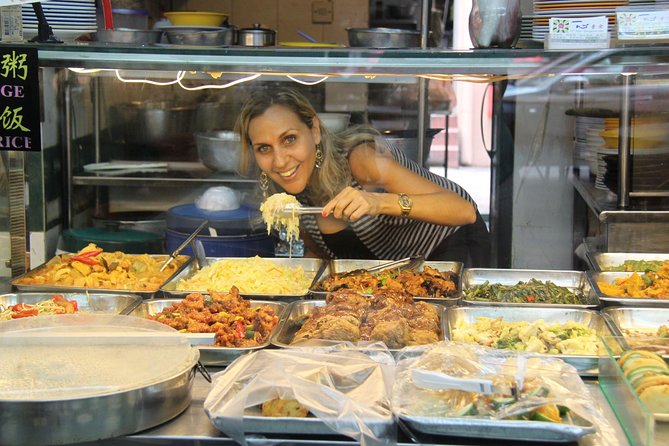
- Start at Tekka Centre: Meet your licensed guide at 10:00 a.m. at the entrance to Tekka Centre on Buffalo Road.
- Taste across several food traditions: The route includes Chinese Buddhist cuisine, Japanese cuisine, and Indian cuisine, with vegetarian and some vegan choices.
- Food comes with explanation: Your guide discusses ingredients, recipes, religion, place names, and Singapore’s food culture.
- Expect generous portions: Breakfast, snacks, drinks, fruit, and food samples are included, so arrive hungry and plan for a full stomach.
- Small group format: The maximum is 10 people, allowing more personal attention than a large food walk.
- Ends in central Singapore: The tour finishes at 190 Middle Road, Singapore 188979.
A vegetarian morning that begins at Tekka Centre
The tour starts at 10:00 a.m. at the entrance to Tekka Centre, a practical meeting point for a food-focused walk. Your licensed guide explains the route before leading you through the neighborhood and its food stops.
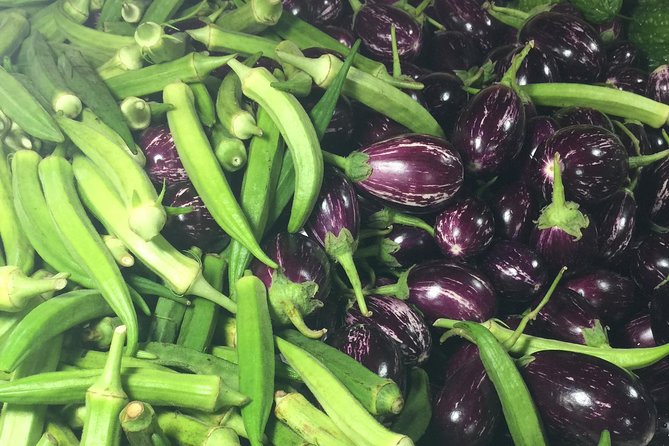
Tekka Centre is a fitting place to begin. The tour is not limited to ready-to-eat dishes. You also look at the ingredients behind Asian vegetarian cooking, including vegetables, dried products, spices, and fruit. That matters because many vegetarian dishes depend as much on seasoning, texture, and preparation as on the main ingredient.
I like this early portion of the walk because it gives you a way to read the food later. A dried product or spice that seems unfamiliar in a shop can make more sense once it appears in a dish and your guide explains how it is used.
You should expect walking between several locations rather than sitting in one restaurant for three hours. The supplied details do not give a precise distance or a list of every stop, so comfortable shoes are sensible. The tour is designed for most people, but you should share any specific dietary needs when booking.
Other Singapore outings people line up beside this one:
- Lion City Bike Tour of Singapore
★ 5.0 · 6,211 reviews - Singapore: Gardens by the Bay Bundle Entry Ticket
★ 4.3 · 3,726 reviews - Singapore: Big Bus Hop-On Hop-Off Tour by Open-Top Bus
★ 4.5 · 3,261 reviews
Shopping for spices, dried goods, and fruit
The food stops include shops that sell ingredients used in vegetarian cooking across Asia. You may see an assortment of vegetables, dried products, spices, and fruit, with your guide explaining how these items fit into local recipes.
This part adds useful context to the tastings. Singapore’s food culture draws on several communities, and the tour uses ingredients to show how those traditions differ. You are not simply told that a dish is vegetarian. You learn what gives it flavor and how certain ingredients are prepared.
The produce and shop visits also make the tour more practical for anyone who wants to continue eating well after the morning ends. If you cook at home, the explanations can help you recognize ingredients in Singapore’s markets and specialty shops.
The limitation is that the emphasis is on tasting and explanation, not shopping time. The tour schedule must keep moving, so this is not the best choice if you want a long, unhurried market visit or time to bargain for ingredients.
Three food traditions on one morning
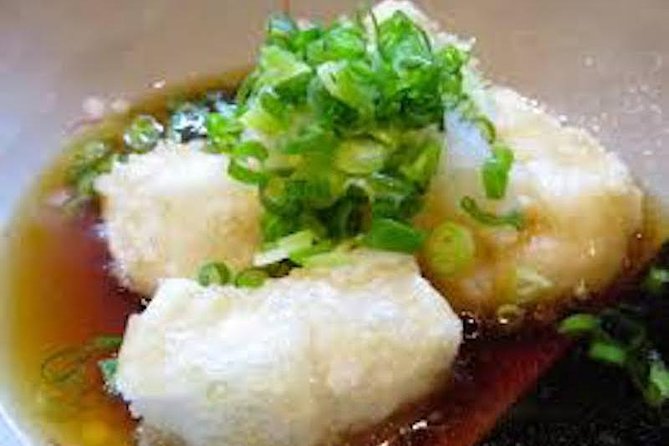
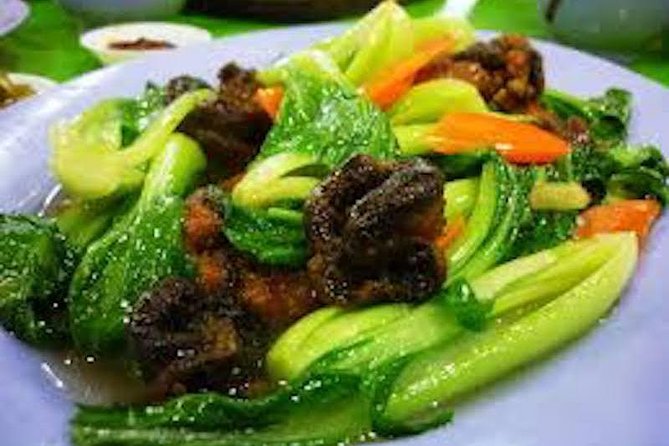
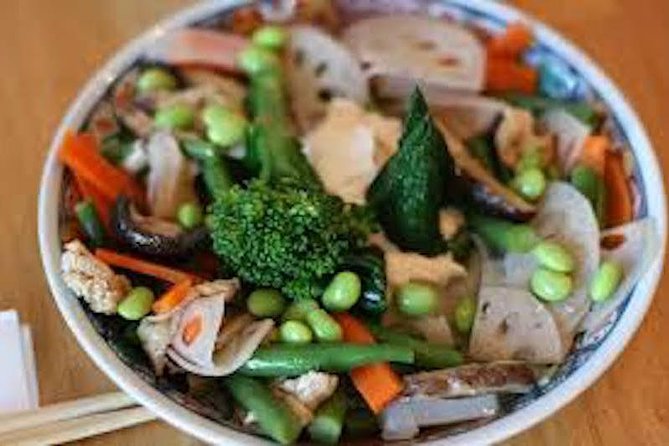
The strongest part of the route is its range. You visit restaurants offering Chinese Buddhist cuisine, Japanese cuisine, and Indian cuisine. The food is described as fully vegetarian, with some venues also offering vegan dishes.
Chinese Buddhist cuisine is especially useful for understanding the religious side of the tour. Vegetarian practice can shape both the ingredients used and the way food is prepared. Your guide connects those choices to the faith tradition rather than treating vegetarian food as a modern lifestyle trend.
The Japanese stop adds another style of cooking, while the Indian food offers a different set of spices, textures, and recipes. You may not receive a full meal at each restaurant. Instead, the tour builds a morning of samples and dishes across several places, allowing you to compare approaches.
That range is a real advantage for you if you are tired of food tours that offer one meat-free dish as an afterthought. Here, vegetarian and vegan food are the point of the route. It also suits mixed groups, provided everyone is happy to focus on vegetarian food for the morning.
At the same time, you should check your own needs before booking. The tour includes vegetarian food and some vegan options, but the information does not promise that every tasting is vegan, gluten-free, nut-free, or suitable for every allergy. Tell the operator about dietary requirements at booking and ask for clarification if an allergy is serious.
Why the guide matters more than the menu
The food is the headline, but the guide determines how much you get from it. Your guide explains ingredients, recipes, Singaporean culture, and the role of religion in vegetarian cooking. The route also includes background on place names and their historical significance.
Several guides have been praised for different strengths. Angel is described as passionate about the food and able to adapt the experience to the group. Kim brings strong knowledge of preparation and the cultural meaning of the dishes. Ahmed explains the link between place names, local history, and food, while Rashid is described as personable, helpful, and well informed.
Those names do not mean you can select a particular guide when booking. They do show the range of information the tour can offer. A good guide can turn a bite of fruit or a bowl of noodles into a lesson about ingredients, community, and daily life.
The group limit of 10 helps here. You can ask questions without trying to catch a guide’s voice across a large crowd, and the guide has a better chance of adjusting explanations to the group. If you prefer to move alone and choose your own restaurants, this level of structure may feel restrictive. If you like food tours with conversation and background, it is a strong point.
Same island, a completely different afternoon:
- Singapore: Lion City Highlights Bike Tour
★ 4.9 · 2,010 reviews - Small Group: Michelin and Local Hawker Food Tour with 9 tastings
★ 5.0 · 1,890 reviews - Morning at the Zoo with 1-way Transfer (Free & Easy)
★ 4.0 · 1,882 reviews - Experience Singapore: Cultural Cooking Class
★ 5.0 · 1,514 reviews
Buddhist and Hindu temples along the route
The temple visits give the food stops a sense of place. You visit a Buddhist temple and a Hindu temple in the neighborhood, then learn more about religion-based vegetarianism.
This is more useful than a quick photo stop. The tour links what you eat with the beliefs and customs found around you. It also helps explain why vegetarian food has such a visible place in Singapore’s dining culture.
Your guide provides the cultural explanation, but temple visits still require respectful behavior. The supplied information does not list a dress code, visitor rules, or whether every area is open for entry, so follow your guide’s instructions at each site.
The temples also break up the eating. A three-hour tasting route could otherwise become a series of restaurant interiors. Adding places of worship gives you a better sense of the neighborhood and keeps the morning from feeling like a restaurant checklist.
How much food you actually receive
Breakfast and food samples are included, along with snacks, bottled water, and other drinks for tasting. The portions appear generous enough that you may struggle to finish everything if you arrive without much appetite.
That is good value in practical terms. You are not paying $161.08 only for a guide and a walk. You are also covering a substantial morning of food across several cuisines, plus drinks and cultural interpretation.
The tour’s food volume is also the main reason to plan ahead. Eat lightly before the 10:00 a.m. start, but do not arrive dehydrated or exhausted. If you cannot finish a portion, ask your guide about taking food away, since one account specifically notes that you may want to bring some home. Do not assume every restaurant allows leftovers, but carrying a small container could be useful if you have one.
This is not a good match for someone seeking only a coffee and a small pastry. It is aimed at people who want to make food the main event of the morning.
Is $161.08 a fair price?
At $161.08 per person, this is not a cheap breakfast walk. The value depends on how you use it.
I would consider the price more reasonable if you are new to Singapore, want an introduction to several vegetarian traditions, and prefer having someone select the stops. You receive food and drinks, a licensed local guide, bottled water, snacks, temple visits, and explanations of ingredients and culture. Finding and comparing several suitable vegetarian restaurants on your own would take time.
The cost is harder to defend if you already know Singapore’s vegetarian food scene, want a self-guided market morning, or eat very little. You are paying for access, planning, and interpretation as much as for the dishes themselves.
The group size helps protect the value. With no more than 10 people, this is closer to a personal food walk than a large coach-style outing. Group discounts are available, which may make it more appealing for families or friends booking together.
The tour is usually booked about 31 days in advance, so popular dates may fill early. Confirmation is normally sent at booking, though reservations made within one day of travel are confirmed as soon as possible, subject to availability.
Who will enjoy this food walk most?
I would recommend it first to vegetarian and vegan diners who want to understand Singapore through food rather than simply locate a restaurant. It also suits curious omnivores who are happy to spend a morning eating only vegetarian food.
Families can consider it too. The minimum age is 7, and most people can participate. The small group should make it easier for a child to ask questions, though the number of tastings means younger children may tire or fill up quickly.
It is a good fit for first-time visitors who want a guided introduction to several cultural communities. The route covers food, shops, markets, temples, recipes, and place names in one compact morning.
You may want to skip it if your priority is a relaxed, sit-down meal at one restaurant. The schedule involves several stops, and the guide’s explanations are an important part of the value. It is also less suitable if you need a tightly controlled allergy-free menu unless the operator confirms that your requirements can be met.
Timing, meeting point, and the end of the route
Meet at the Tekka Centre entrance, 665 Buffalo Road, also listed as Zhujiao Centre, Tekka Market, Singapore 210665. The start time is 10:00 a.m., and the experience lasts about three hours.
The tour ends at 190 Middle Road, Singapore 188979. That central finish is useful if you want to continue sightseeing or find another meal nearby, although you may not be hungry immediately after the tastings.
A mobile ticket is available, and free cancellation applies when you cancel at least 24 hours before the start time. Cancellations made less than 24 hours ahead, as well as late changes, are not refunded.
My recommendation
Book this tour if you want a guided vegetarian food education, not just a list of places to eat. The combination of Chinese Buddhist, Japanese, and Indian food, ingredient shops, temple visits, and a small group gives the morning a clear purpose.
I would be more cautious if $161.08 feels high for breakfast or if you have strict dietary limits that go beyond vegetarian or vegan eating. For everyone else, the generous tastings and cultural explanations make this a well-focused way to get acquainted with Singapore’s meat-free food traditions. Arrive hungry, tell the operator about dietary needs, and expect to eat more than you planned.
FAQ
Where does the tour begin?
The tour begins at the entrance to Tekka Centre, 665 Buffalo Road, Zhujiao Centre, Tekka Market, Singapore 210665.
What time does the tour start?
The start time is 10:00 a.m.
How long does the experience last?
The tour lasts approximately three hours.
Where does the tour end?
The tour ends at 190 Middle Road, Singapore 188979.
What food is included?
Breakfast, food tastings, drinks, bottled water, and snacks are included.
Which cuisines are included?
The tour visits restaurants offering Chinese Buddhist cuisine, Japanese cuisine, and Indian cuisine. The food is vegetarian, and some dishes or venues are vegan.
Are temple visits part of the tour?
Yes. The route includes visits to a Buddhist temple and a Hindu temple in the neighborhood.
How many people can join?
The maximum group size is 10 travelers.
Can children participate?
The minimum age is 7, and most people can participate.
What happens if I need to cancel?
You can receive a full refund if you cancel at least 24 hours before the experience start time. Cancellations or changes made less than 24 hours before the start time are not accepted for a refund.
Recently added around Singapore
- The Real Singapore Heartland Walking Food Tour★ 5.0 · 4 reviews
- Singapore’s Marina Bay Wonders and Heritage Tales, Chinatown★ 5.0 · 5 reviews
- Singapore’s Hidden Treasures: A Cultural Private Tour★ 5.0 · 3 reviews
- Private Tour Singapore Street Food & Night Tour★ 5.0 · 4 reviews
- Singapore – Albatross Speedboat Adventures Cruising in Sentosa★ 5.0 · 3 reviews
- Small Group Full Day Singapore City Tour with Roundtrip Transfers★ 4.0 · 11 reviews
- Tastes of Chinatown★ 5.0 · 4 reviews
- Singapore Zoo★ 4.5 · 8 reviews