
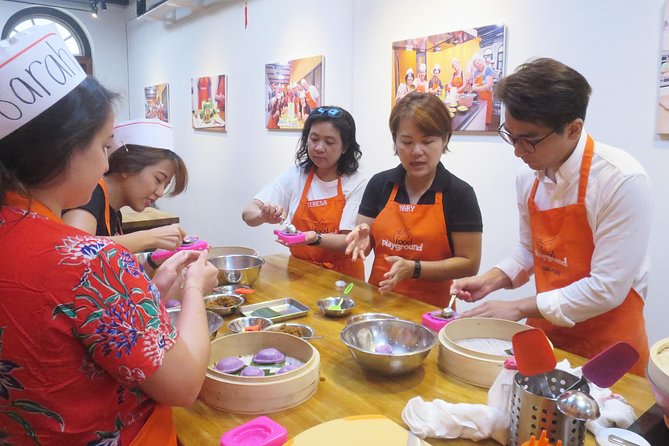
Reviewed · COOKING CLASSES
Experience Singapore: Cultural Cooking Class
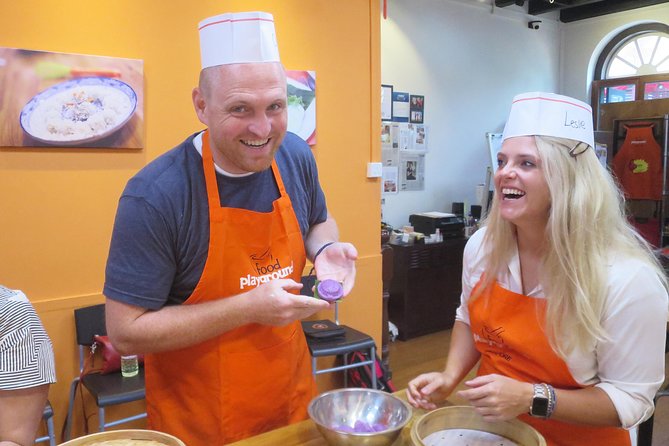
Singapore’s food culture makes more sense when you prepare it yourself. At Food Playground on Sago Street, you’ll work with local instructors to make three dishes, perhaps laksa, chicken satay, curry chicken, Hainanese chicken rice, or ondeh ondeh, then sit down to eat your work.
I like the small-group format, which keeps the class personal, and the way cooking is tied to Singapore’s Chinese, Malay, Indian, and British influences. You also get recipes and class photos afterward. The main drawback is that some instructors spend too long on introductions or dishes not on the menu, so the cooking may begin later than expected.
Key points at a glance
- Three dishes in about three hours: You cook, rather than simply watch a demonstration, then eat lunch with the group.
- A Chinatown setting: The class takes place at Food Playground, 24A Sago Street, in a heritage shophouse near temples, food halls, and several MRT stations.
- Small groups: Classes run with 2 to 12 people, and several sessions have had only six participants.
- Local food stories: Instructors explain how Singapore dishes developed and how ingredients are used.
- Useful take-home material: Recipes and photographs are sent after class, making it easier to repeat the meal at home.
- Good for mixed skill levels: The class welcomes beginners, confident home cooks, and children age seven and older.
Cooking Singaporean food in a Chinatown shophouse
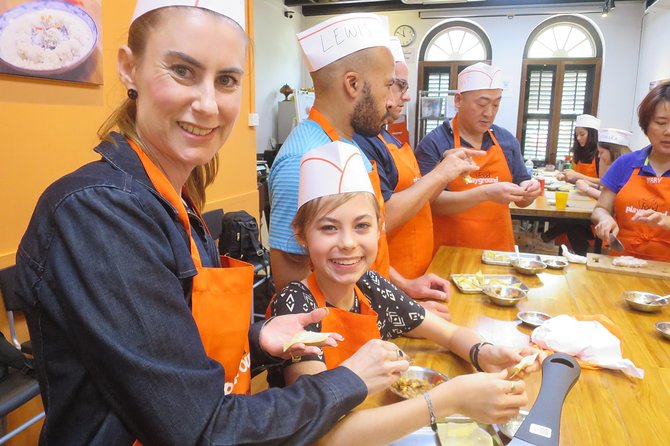
Food Playground gives you more than a recipe lesson. The class takes place on the second floor of an old shophouse at 24A Sago Street, in the heart of Chinatown. That setting matters. You are not cooking in an anonymous hotel room. You are in one of Singapore’s best food districts, surrounded by places where food, migration, trade, and daily life have long met.
The session begins at 9:30 am. You arrive, meet the instructor and your fellow cooks, put on an apron, and settle into the kitchen. A short food quiz may start the morning, followed by an introduction to Singapore’s food traditions and the dishes on the menu.
The class menu changes, so you should not book with only one dish in mind. Possible recipes include laksa, chicken satay, curry chicken, Hainanese chicken rice, and ondeh ondeh. The supplied information also describes three dishes being prepared in one session, with ingredients and instructions subject to change.
That flexibility is useful for repeat visitors. You might take the class once for laksa and return another time for a different set of recipes. It also means you should check the menu if one particular dish is the main reason you want to go.
More cooking classes in Singapore:
- Singapore: Hands-on Cooking Class with Cultural Immersion
★ 4.9 · 107 reviews - Singapore: Market-to-Table Experience and Cooking Class
★ 5.0 · 17 reviews - Private Market Visit and Cooking Class With A Professional Chef
★ 4.5 · 10 reviews
What the three-hour class is really like
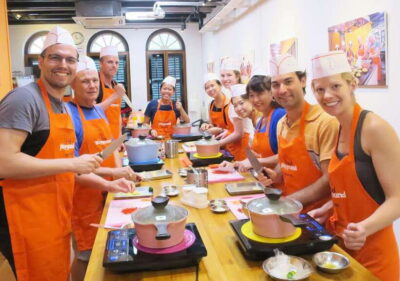
The format combines demonstration with hands-on work. The instructor shows the group a technique or recipe, then participants help prepare the food. In many sessions, two people share a cooking station. Solo participants may receive their own station when space allows.
This setup has a social side. You are cooking alongside people from other places, sharing tools and tasks, and eating together at the end. It is a good choice if you enjoy meeting people while you learn, but it may feel less private than a one-to-one lesson.
The class is designed for beginners, and the instructions are presented step by step. You may learn how to make curry paste from scratch, handle spices, prepare ingredients, and balance the flavors in a soup or rice dish. The food is prepared with guidance, so you are not expected to arrive with professional skills.
That said, the amount of hands-on work can vary by recipe and group. The class is interactive, but it is not necessarily a private cooking station for every person. If you prefer complete control over every part of a dish, keep that shared format in mind.
The food stories behind the recipes
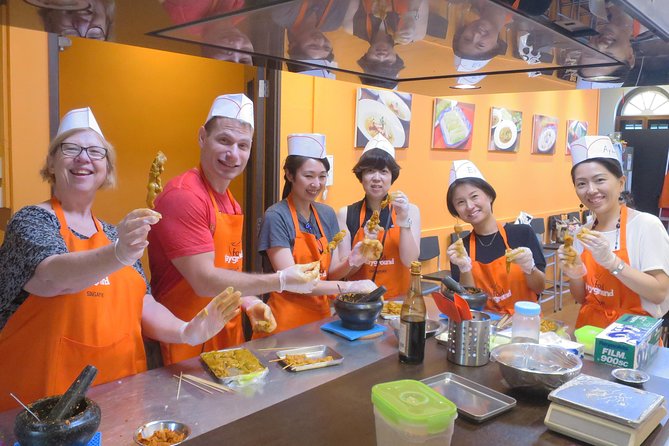
Singapore’s cuisine reflects its Chinese, Malay, Indian, and British connections. This class uses food to explain those links in a way that is easier to remember than a standard talk.
You may hear why a dish became popular, how its ingredients reflect Singapore’s communities, and how traditional food is prepared. Instructors also discuss local food products and the people who work with them. That context gives the cooking a purpose. You are not simply following a list of steps. You are learning why certain pastes, spices, noodles, rice dishes, and sweets belong to Singapore’s food culture.
The strongest sessions appear to balance explanation with action. Instructors such as Mary, Monica, Sara, Nur, Ann, YY, Kiat, and Cindy have been praised for clear teaching, warmth, humor, and useful food tips. Since instructors can vary by date, treat those names as examples rather than a promise of who will teach your class.
One small caution: the opening talk can run long. Some sessions have spent too much time discussing dishes that were not being cooked that day. If you are eager to get to the stove, that may test your patience. The upside is that these introductions can add useful cultural context when kept focused.
Eating what you make for lunch
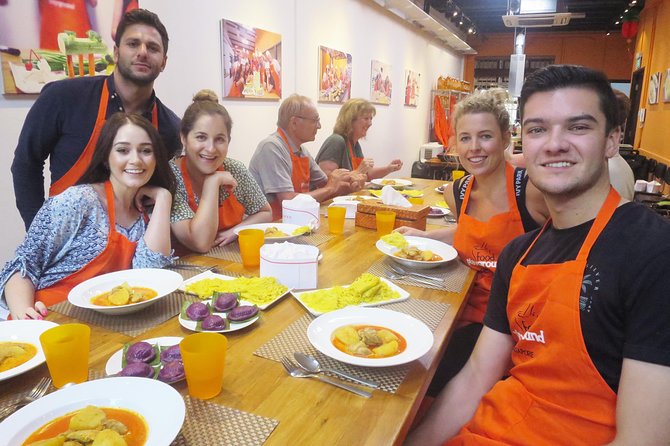
The best part comes after the cooking. You sit down in the dining area and eat the dishes prepared by the class. Lunch includes water, coffee, and tea.
This is not a restaurant meal where someone else handles the hard work. The food carries the memory of your own preparation. You will know which ingredients went into the curry paste, how the noodles were assembled, or how the rice and chicken came together.
The shared meal also gives you time to talk with the group and ask follow-up questions. Several sessions have been described as relaxed and informal, with people enjoying both the food and the company. The social element is especially useful for solo visitors, although couples and families can enjoy it just as well.
You should arrive hungry. Three dishes plus lunch can be a substantial meal, and one class member noted that the food hall nearby looked tempting afterward but was hard to face after eating so much. That is useful planning advice: save the Chinatown food hall for later, or visit before the class if you want to browse without a full stomach.
More workshops and classes in Singapore:
- Singapore Night Photography Workshop
★ 5.0 · 20 reviews - Singapore Photography Masterclass – Private Photography Lesson
★ 5.0 · 17 reviews - Singapore: Scent Crafting Workshop with Rainforest Orchids
★ 4.4 · 11 reviews - Pau Making Workshop With Dim Sum Tasting and Factory Tour
★ 5.0 · 6 reviews
Why the Chinatown location adds value
The class ends where it begins, at 24A Sago Street. That makes it easy to continue your day in Chinatown without arranging another transfer.
The area around the class offers plenty to see. The nearby Pagoda Temple has an upper roof garden and museum, and the local food hall gives you another way to see Singapore’s food culture. Several MRT stations are close by, according to the supplied details, so the meeting point is practical for a morning activity.
The location also helps you connect the lesson with the city. After learning how local dishes are made, you can notice related ingredients, food stalls, temples, and shopfronts around Chinatown. The class is not a walking tour, but its setting gives you a useful base for exploring on foot afterward.
Hotel pickup and drop-off are not included. That is not a major problem for an activity in central Chinatown, but you need to make your own way to the meeting point and arrive ready for the 9:30 am start.
Is $96.97 a fair price?
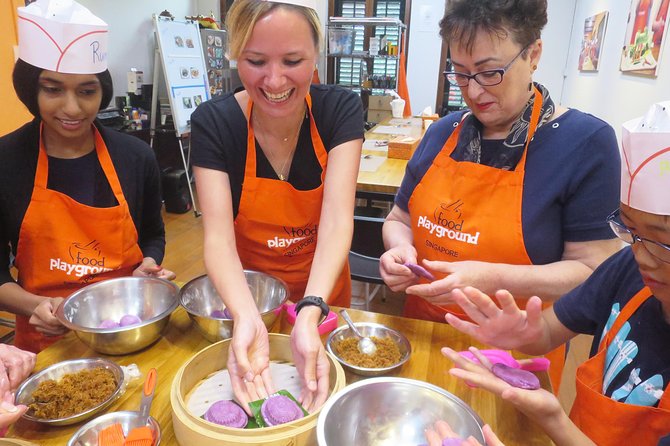
At $96.97 per person, this is not the cheapest meal in Singapore. You can eat well at a hawker center for far less.
The comparison is not quite fair, though. Your fee covers about three hours, all equipment, all ingredients, an English-speaking local instructor, lunch, water, coffee, tea, and the chance to prepare three dishes. You also receive recipes and, in many sessions, photographs taken during the class. For someone who values a practical skill and cultural background, that makes the price reasonable.
The value improves if you will actually cook the recipes again at home. Laksa, curry chicken, satay, chicken rice, and ondeh ondeh are more useful souvenirs than another meal you forget a day later. You are paying for instruction, a social experience, and a meal, not only for the food on the plate.
Group discounts may be available, which can help families or couples. The class accepts a maximum of 12 people, while the minimum is two. A smaller class can make the price feel stronger because you have more chances to ask questions and receive help.
Still, this is not the right choice if you only want to eat Singaporean food or if cooking is not your interest. Hawker centers and food-focused tours may give you more variety for less money.
Who should book this class?
I would choose this experience for several types of visitors:
- First-time visitors who want context: The class explains how food connects to Singapore’s communities and culture.
- Home cooks: You receive recipes and learn techniques that can be repeated after the trip.
- Solo visitors: The shared stations and group meal make it easy to meet people.
- Families with older children: The minimum age is seven, and the interactive format gives children something practical to do.
- Couples looking for a shared activity: You prepare and eat the meal together rather than sitting through a passive demonstration.
- Repeat visitors: The changing menu gives you a reason to return for different recipes.
I would be more cautious if you have strict dietary needs. You are asked to provide dietary requirements when booking, but the menu and ingredients can change. The supplied information does not promise that every dietary request can be met, so confirm before paying.
The class also suits people who do not mind a group setting. You may share a station, and the pace depends partly on the instructor and the other participants. That is part of the charm, but it may not satisfy someone seeking a private, highly technical lesson.
Small details that make the morning work
Bring a good appetite and wear clothes that are comfortable for cooking. The class provides equipment and ingredients, so you do not need to bring cooking tools.
Plan to arrive at 24A Sago Street before 9:30 am. The activity ends back at the meeting point after lunch. Since no hotel transfer is included, allow enough time to reach Chinatown on your own.
Ask about the day’s menu if you have a favorite dish. Because the menu can change, booking this class for one exact recipe carries some risk. The broader experience is more dependable: three Singapore-style dishes, instruction, cultural background, and a shared meal.
Free cancellation is available when you cancel at least 24 hours before the local start time. Cancellations or changes made within 24 hours are not refunded or accepted. The class also needs at least two participants to operate, and a cancellation for that reason brings the choice of another date or a full refund.
My take: should you book it?
Book this class if you want to understand Singapore through its food and enjoy doing something with your hands. The strongest features are the small groups, the friendly local teaching, the heritage Chinatown setting, and the recipes you can use at home.
I would not book it solely for a guaranteed laksa lesson, since the menu changes. I would also allow for a slower start if your instructor gives a long introduction. For most food lovers, though, the combination of cooking, cultural stories, lunch, and a central location makes this a sensible use of three hours in Singapore.
FAQ
Where does the cooking class take place?
The class takes place at Food Playground, 24A Sago Street, Singapore 059020, in the Chinatown area.
What time does the class start?
The class starts at 9:30 am.
How long does the experience last?
The cooking class lasts approximately three hours.
What dishes will I cook?
The class prepares three Singapore-style dishes. Possible dishes include laksa, chicken satay, curry chicken, Hainanese chicken rice, and ondeh ondeh. The menu can change.
Is lunch included?
Yes. You eat the food prepared during the class, and water, coffee, and tea are included.
Are cooking equipment and ingredients provided?
Yes. All equipment and ingredients are included.
Is the class taught in English?
Yes. Local English-speaking instructors lead the class.
How many people can join?
The class operates with a minimum of two participants and a maximum of 12.
What is the minimum age?
The minimum age is seven years old.
Is hotel pickup included?
No. You must make your own way to the meeting point, and the activity ends there.
Can I provide dietary requirements?
Yes. You should advise the provider of any specific dietary requirements when booking. Ingredients and the menu may change.
Can I cancel for a refund?
You can cancel at least 24 hours before the start time for a full refund. Cancellations or changes made less than 24 hours before the start time are not refunded or accepted.
Recently added around Singapore
- The Real Singapore Heartland Walking Food Tour★ 5.0 · 4 reviews
- Vegetarian Culinary Adventure in Singapore★ 5.0 · 7 reviews
- Singapore’s Marina Bay Wonders and Heritage Tales, Chinatown★ 5.0 · 5 reviews
- Singapore’s Hidden Treasures: A Cultural Private Tour★ 5.0 · 3 reviews
- Private Tour Singapore Street Food & Night Tour★ 5.0 · 4 reviews
- Singapore – Albatross Speedboat Adventures Cruising in Sentosa★ 5.0 · 3 reviews
- Small Group Full Day Singapore City Tour with Roundtrip Transfers★ 4.0 · 11 reviews
- Tastes of Chinatown★ 5.0 · 4 reviews
Cooking Classes, compared.
Singapore: Hands-on Cooking Class with Cultural Immersion
Read our review →
Singapore: Market-to-Table Experience and Cooking Class
Read our review →
Private Market Visit and Cooking Class With A Professional Chef
Read our review →
Singaporean Cooking Class With A Professional Chef
Read our review →
Peranakan Cooking Class in Singapore, near Lavender MRT Station
Read our review →Browse the lists this tour appears in