
Reviewed · WORKSHOPS
Pau Making Workshop With Dim Sum Tasting and Factory Tour
The best part of this Singapore experience is that you do not simply eat dim sum. You learn to shape your own pau, then see how a commercial halal producer turns that small kitchen skill into a working food business. The hands-on pleating is playful but surprisingly precise, and the tasting platter gives you a clear sense of the Chinese and Malay flavors Nury Dian Xin brings together.
I like the private-group format, which keeps the two hours personal, and I like the factory setting because it gives the food some useful context. The main drawback is the location at Admiralty, which can take effort to find, and the published group limit is inconsistent: one part says up to 15 people, while another says up to 24. Confirm that point before paying.
Key points at a glance
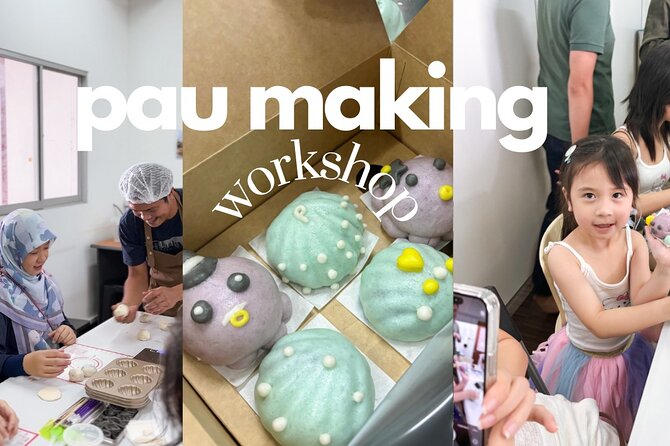
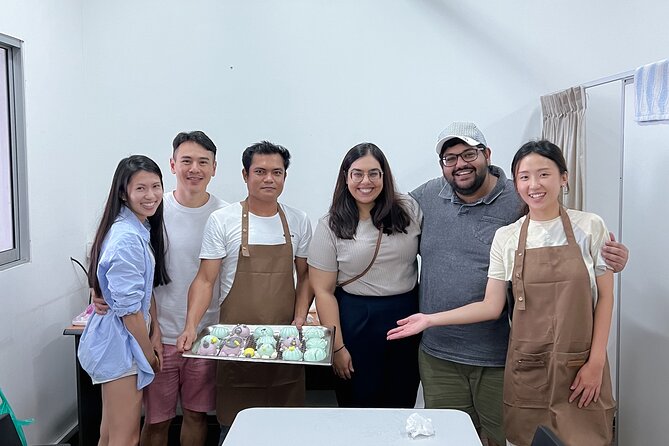
- Make and package your own paus: You learn pleating techniques, shape decorative buns, and take your creations home.
- Taste three familiar dim sum items: The included platter features siew mai, pau, and lor mai kai.
- See a real halal production site: The short factory visit explains pau manufacturing and food-industry requirements.
- Learn about Singapore’s food mix: Nury Dian Xin connects Chinese dim sum traditions with Malay and Muslim dietary needs.
- Good for private groups: The activity is reserved for your party, with equipment and ingredients supplied.
- Plan extra time for Admiralty: The factory is at Food Xchange @ Admiralty, and finding the correct unit can be tricky.
Why pau making works so well in Singapore
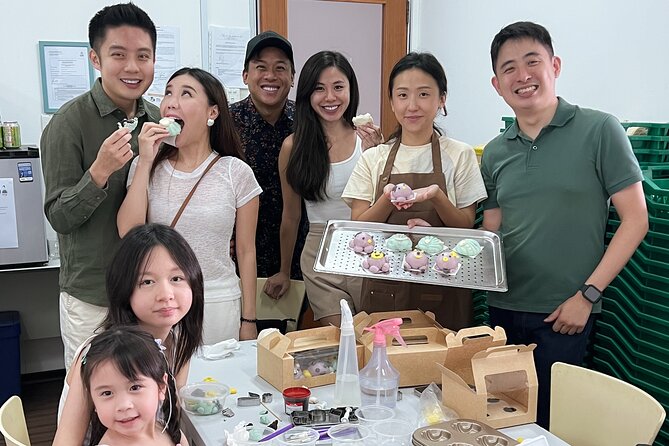
Pau, the soft steamed bun often filled with savory or sweet ingredients, is easy to recognize and harder to make well. The dough must be handled gently, and the folds need enough control to keep the bun closed while giving it a neat shape. That gap between eating a pau and making one is where this workshop earns its keep.
At Nury Dian Xin, you learn to pleat your own paus and experiment with fancy looking designs. This is not presented as a full culinary school course, so you should not expect a long technical lesson on fermentation or professional recipe development. Instead, it is a compact introduction that lets you try the key hand skill for yourself.
I think that makes the activity a good match for families, friends, and private groups who want something more active than a standard food tasting. You can laugh at uneven folds, compare shapes, and still leave with something edible. The class has a clear purpose, but it does not take itself too seriously.
More workshops and classes in Singapore:
- Experience Singapore: Cultural Cooking Class
★ 5.0 · 1,514 reviews - Singapore: Hands-on Cooking Class with Cultural Immersion
★ 4.9 · 107 reviews - Singapore Night Photography Workshop
★ 5.0 · 20 reviews
A two-hour visit with a useful rhythm
The experience lasts about two hours, which is long enough for several distinct parts without taking up an entire day. You meet at Nury Dian Xin Delight Pte. Ltd., located at 8A Admiralty Street, unit 07-34, inside Food Xchange @ Admiralty.
The workshop combines three elements:
- A practical pau-making session
- A tasting of selected dim sum
- A mini tour and explanation of food manufacturing
The order may depend on the class, so do not treat it as a rigid stage show. The important point is the balance. You are not spending the whole time listening to a talk, and you are not left to figure out the dough without guidance. You get an introduction to the products, time to work with the ingredients, and a look at the factory side of the business.
The session ends where it begins. That makes the visit simple to plan, though the northern location means you will want to allow time to reach the building and find the right unit.
Pleating paus is the main event
The practical section is the heart of the experience. You receive the pau ingredients, equipment, and packaging, then work through the process of shaping your own buns. The point is not merely to produce a perfect result. It is to understand how much hand skill goes into the tidy little buns sold in shops and served at dim sum tables.
You can test your creativity with decorative pleats and shapes. Expect some uneven edges at first. That is part of the fun, and it also gives you a better feel for the craft. A factory can produce consistent paus at scale, but a private workshop lets you see the human skill behind that consistency.
The completed paus are packaged for you to bring home and show friends or family. The packaging is a small but useful touch. You do not have to finish the activity, carry loose dough around Singapore, and wonder what to do with it. The take-home element also gives children and first-time cooks a clear result from the class.
Do not book this expecting a full meal. The included food is a snacks dim sum platter, and the main food activity is your pau-making session. Drinks are not included, so plan to buy those separately if needed.
What you taste: siew mai, pau, and lor mai kai
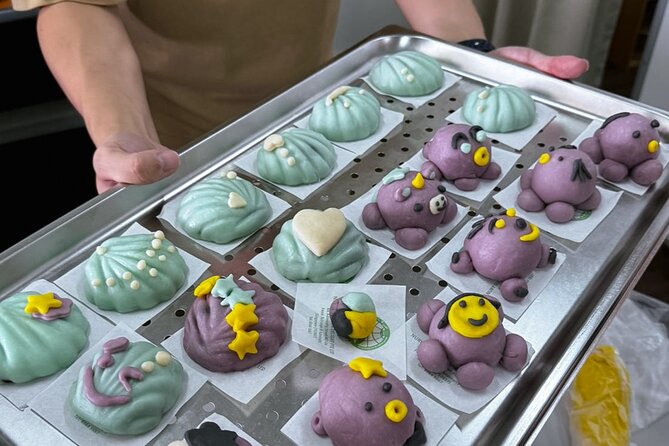
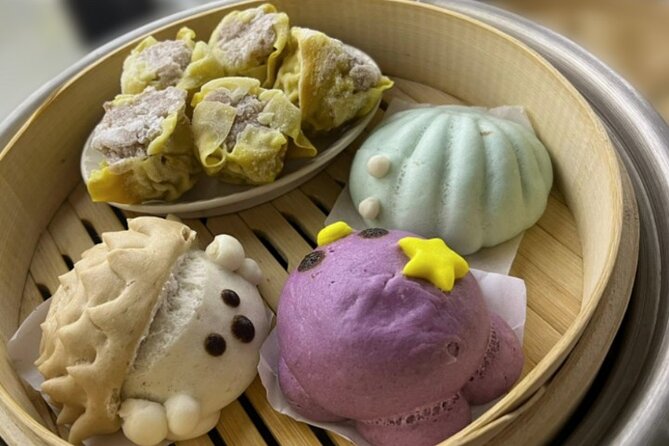
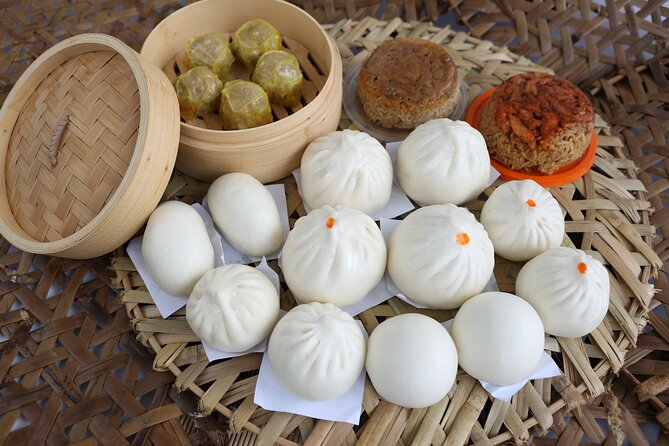
The included platter features siew mai, pau, and lor mai kai. That gives you three different dim sum forms to try, rather than several versions of the same bun.
Siew mai offers a different texture and shape from pau. Lor mai kai, a sticky rice dish traditionally prepared with savory ingredients, adds another useful comparison. Together, the platter helps you understand the range of items produced at the factory.
Nury Dian Xin focuses on premium halal dim sum, with recipes that connect Chinese dim sum styles to Singapore’s Muslim community. The value here is cultural as well as culinary. You are not only tasting generic snacks. You are seeing how a familiar food tradition is adapted so more people can enjoy it.
If you are vegetarian, contact the provider at least 24 hours before the workshop. The instructors can prepare a suitable food item, but this needs advance notice. The supplied details do not promise a fully vegetarian workshop, so be specific about your dietary needs when you book.
More food tours in Singapore:
- Small Group: Michelin and Local Hawker Food Tour with 9 tastings
★ 5.0 · 1,890 reviews - Small Group: Singapore Street Food & Night Tour with 9 tastings
★ 5.0 · 1,240 reviews - The Award-Winning PRIVATE Food Tour: 10 Tastings of 3 Cultures
★ 4.5 · 1,017 reviews - Singapore: Chinese, Indian & Arabic Quarters, Culture & Food Tour
★ 5.0 · 789 reviews
The factory tour adds context
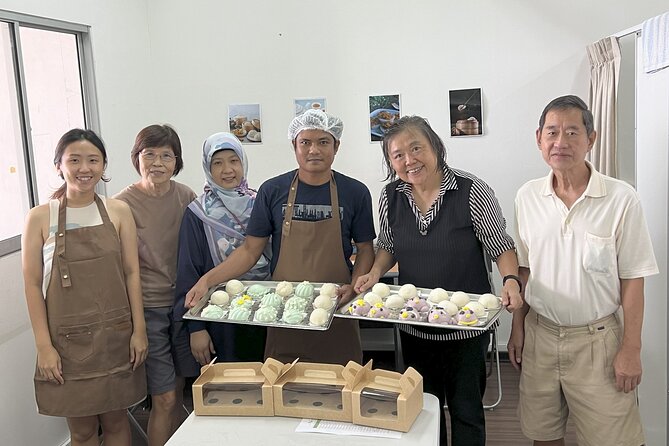
The mini factory tour keeps the activity from feeling like a stand-alone craft lesson. You get an introduction to how paus are manufactured, along with an explanation of the accreditation requirements involved in food production.
That matters because the contrast is easy to understand. During the workshop, you make a small batch by hand. At the factory, you learn how a larger producer must manage consistency, food safety, and formal compliance. The tour does not turn you into a food-industry expert, but it gives you a better idea of what happens between a recipe and a packaged product.
You also learn about Nury Dian Xin’s partnerships with the community to combat food waste. That is one of the more distinctive parts of the visit. A food workshop can create waste through practice dough, ingredients, and packaging. Hearing how a producer works with the community gives the activity a wider purpose without turning it into a lecture.
The factory setting may feel more practical than polished. That is a strength if you want to see where food is made, rather than visit a staged attraction. It is less suitable if you are looking for a sleek cooking studio in central Singapore.
Private groups make the class easier
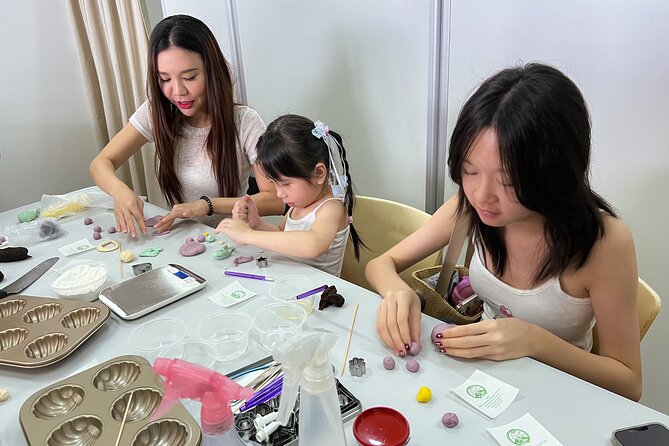
This is a private activity, so only your group takes part. That makes a difference when you are working with dough. You can ask questions, take your time with the folds, and share the experience with people you already know.
The information gives two different maximum group sizes. The tour summary lists up to 15 people, while the workshop description says up to 24. Since the price is listed as $644.33 per group, the exact headcount matters a great deal. A group of four will pay much more per person than a group of 15, while a larger party could make the flat rate more attractive.
I would confirm both the maximum number and the final price before booking. If your group is close to either limit, ask Nury Dian Xin which capacity applies to your date. That simple check avoids confusion at the factory.
The private format suits a birthday outing, family activity, school-related group, or team session. It is less compelling for a solo visitor or a couple unless you particularly want a private lesson and are comfortable with the group price.
Getting to Food Xchange @ Admiralty
The meeting point is 8A Admiralty Street, #07-34, Food Xchange @ Admiralty, Singapore 757437. The site is near public transportation, and parking is available near the lift lobby on the first floor.
The building can be hard to identify on a map, so allow extra time. The unit number is important: you need the seventh-floor location, not just the industrial building address. If you drive, the parking near the lift lobby is useful, but you should still give yourself time to get from the car park to the correct unit.
This is one area where practical preparation will improve the experience. Save the full address, check the route before leaving, and arrive with enough time to find the workshop. The activity ends back at the meeting point, so you can continue from Admiralty afterward without arranging a separate return transfer.
Who will get the most from this workshop
I would recommend this to you if you enjoy food experiences that include a task, not just a tasting. It is especially suitable for:
- Families wanting an indoor activity with something to take home
- Groups of friends looking for a lighthearted shared project
- Visitors interested in halal food production in Singapore
- Anyone curious about the connection between Chinese dim sum and Malay or Muslim food culture
- Private parties that can spread the group price across several people
The class also works for people who have never cooked dim sum. You do not need to arrive with professional shaping skills. In fact, beginners have the most to gain from seeing how much care goes into a simple-looking pau.
I would think twice if your main interest is central Singapore sightseeing. Admiralty is away from the city center, and the factory visit requires a dedicated trip. I would also hesitate if you want a long, advanced cooking course. This is a short introduction, not a full-day lesson in dough science and filling recipes.
Price, timing, and practical value
At $644.33 per group, the value depends on your headcount. The fee includes the private workshop, pau ingredients, baking equipment, packaging, the dim sum platter, and the factory visit. For a sizable group, the cost can make sense because you are paying for a reserved experience rather than individual admission.
For a small group, the price is harder to justify on food alone. You are paying for the instruction, private setting, factory access, and the chance to make your own paus. That is worthwhile if those elements interest you, but it is not a bargain meal.
The two-hour duration is another positive. You can fit it into a half-day plan without giving up an entire day of sightseeing. Just add travel time to Admiralty and a margin for finding the unit.
Confirmation arrives within 48 hours of booking, subject to availability. Free cancellation is available if you cancel at least 24 hours before the start time. If you cancel later or request changes inside that window, the payment is not refunded and changes are not accepted.
What the strongest parts of the experience are
The most successful feature is the combination of making, tasting, and seeing. Each part supports the next. You make a pau, taste finished dim sum, then see the setting where these foods are produced for a wider market.
The instructors also appear to be a key part of the experience. Thu and Shi Min are named as workshop instructors, and the session is described as welcoming and engaging. That matters because pleating can feel awkward at first. Clear help makes the activity more enjoyable and keeps you from leaving with a tray of collapsed buns.
The food-waste work is another worthwhile detail. It gives you something meaningful to take away beyond the pleating technique. You learn that a food producer can connect its business with community partnerships and waste reduction.
The main weakness is logistical rather than culinary. Finding the factory can be difficult, and the northern location takes planning. Neither problem ruins the activity, but both are easy to avoid if you check the address and confirm the group limit before you go.
Should you book the Nury Dian Xin pau workshop?
Book it if you want an active, private food experience and you are happy to travel to Admiralty. The pau-making section gives you a skill to try, the platter gives you a taste of halal dim sum, and the factory visit explains how a small hand-shaped bun becomes part of a larger food operation.
It is best value for a medium or large private group. Before paying, confirm whether your booking allows 15 or 24 people, ask about vegetarian arrangements if needed, and plan extra time to locate the unit.
Skip it if you only want a quick dim sum meal, a central Singapore activity, or an advanced cooking course. For families, friends, and curious food lovers, though, this is a thoughtful two-hour outing with plenty of flour, folds, and useful context.
FAQ
Where does the pau-making workshop take place?
It takes place at Nury Dian Xin Delight Pte. Ltd., 8A Admiralty Street, #07-34 Food Xchange @ Admiralty, Singapore 757437.
How long does the workshop last?
The private workshop and factory visit take approximately two hours.
What food is included?
The included snacks dim sum platter contains siew mai, pau, and lor mai kai.
Are drinks included?
No. Drinks are not included in the experience price.
Can I take my paus home?
Yes. The workshop includes pau ingredients and packaging, so you can bring your handmade paus home.
Is the activity private?
Yes. Only your group participates in the private tour or activity.
How many people can join the group?
The information gives two limits. The tour summary says up to 15 people, while the workshop description says up to 24. Confirm the applicable limit with Nury Dian Xin before booking.
Can vegetarians take part?
Vegetarians should contact the provider at least 24 hours before the workshop so the instructors can prepare a suitable food item.
What is the cancellation policy?
You can receive a full refund if you cancel at least 24 hours before the local start time. Cancellations or changes made less than 24 hours before the activity are not accepted for a refund.
Recently added around Singapore
- The Real Singapore Heartland Walking Food Tour★ 5.0 · 4 reviews
- Vegetarian Culinary Adventure in Singapore★ 5.0 · 7 reviews
- Singapore’s Marina Bay Wonders and Heritage Tales, Chinatown★ 5.0 · 5 reviews
- Singapore’s Hidden Treasures: A Cultural Private Tour★ 5.0 · 3 reviews
- Private Tour Singapore Street Food & Night Tour★ 5.0 · 4 reviews
- Singapore – Albatross Speedboat Adventures Cruising in Sentosa★ 5.0 · 3 reviews
- Small Group Full Day Singapore City Tour with Roundtrip Transfers★ 4.0 · 11 reviews
- Tastes of Chinatown★ 5.0 · 4 reviews
Workshops, compared.
Singapore: Hands-on Cooking Class with Cultural Immersion
Read our review →
Singapore: Market-to-Table Experience and Cooking Class
Read our review →
Singapore Photography Masterclass – Private Photography Lesson
Read our review →
Singapore: Scent Crafting Workshop with Rainforest Orchids
Read our review →
Private Market Visit and Cooking Class With A Professional Chef
Read our review →
Singaporean Cooking Class With A Professional Chef
Read our review →Browse the lists this tour appears in