
Reviewed · WALKING TOURS
Singapore 2.5-Hour Walking Tour: Graves, Guns & Battles
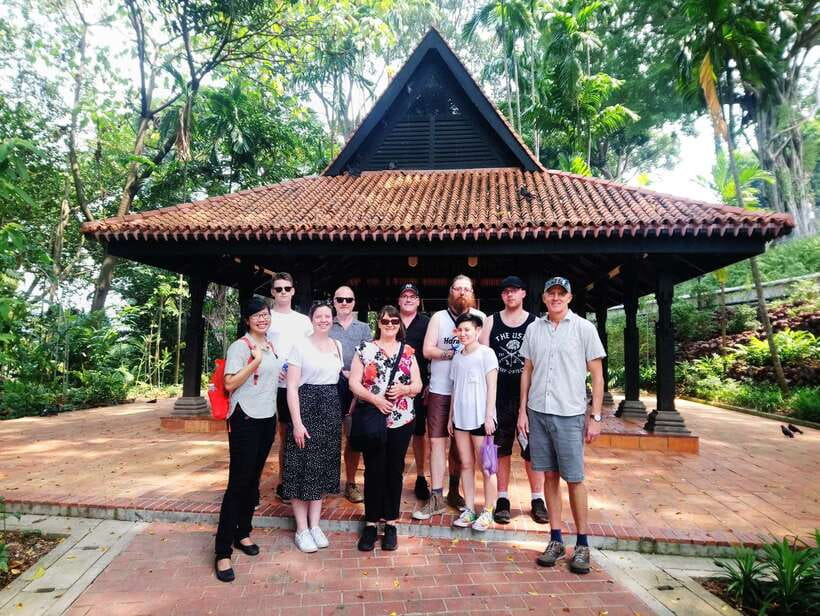
Fort Canning Hill holds an unusual secret: beneath a green rise in the middle of modern Singapore lie the traces of an ancient kingdom, a colonial military post, and the command center for one of World War II’s most important battles. This 150-minute walk brings those layers together without sending you across the city.
I like the way the tour links Singapore’s 14th-century beginnings with its colonial and wartime past. I also like the guides’ human touch. Helena, Nancy, Wei Wei, Joanne, Wina, and Shar have all led tours praised for clear storytelling, humor, and a strong sense of Singaporean identity.
The catch is practical: this is a real hill walk in a hot, wet climate. You’ll climb stairs, spend time outdoors, and need comfortable shoes, water, and rain protection. It is not suitable for people with mobility impairments.
Key points to know before you book
- A royal hill in the city center: Fort Canning was tied to ancient Singapura and later became a center of British military power.
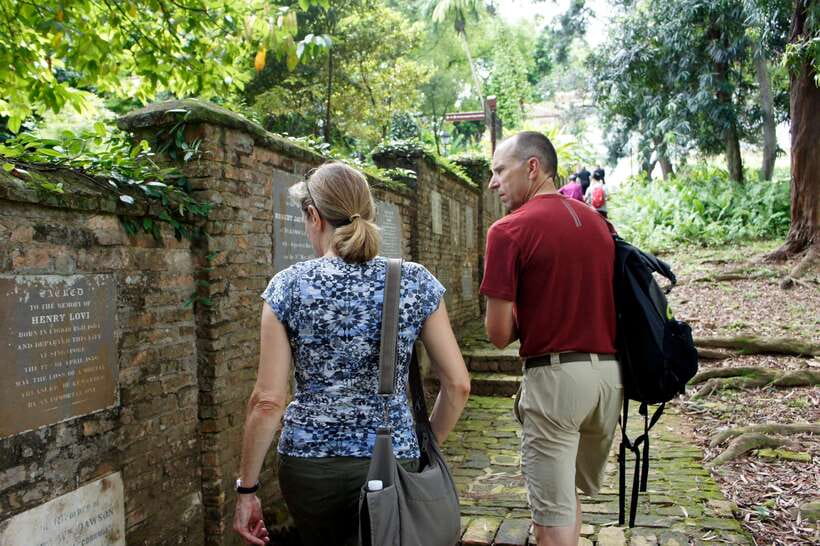
- Graves tell the story: You’ll see the grave of Singapore’s last ancient king and a 19th-century colonial cemetery.
- War history has real weight: The tour explains Singapore’s fall during World War II and the decisions made from Fort Canning.
- The guides are a major strength: Helena and Nancy receive particular praise for lively, clear, and thoughtful presentations.
- Plan for heat and stairs: Morning departures may be more comfortable, especially before the day grows hot.
- Good value at $31: For two and a half hours with a live English guide, the price is fair, especially if Singapore’s history is new to you.
Why Fort Canning Hill matters
Fort Canning is not simply a park with a few old walls. It is one of the few places in Singapore where several distinct eras sit close together.
The hill is linked to ancient Singapura, the settlement that gave Singapore its name. According to the tour’s theme, rulers once commanded from this high ground, and one of Singapore’s last ancient kings was buried here. That gives the first part of the walk a more personal feel than a standard city-history lecture. You are not only hearing about dates and rulers. You are standing near the burial place of someone tied to Singapore’s earliest royal story.
Centuries later, the hill became part of the British colonial defense system. The change from royal center to military position says a lot about Singapore’s place in Southeast Asian power struggles. The tour uses that shift to explain the rise and fall of empires, rather than treating each monument as an isolated stop.
I find that useful because Singapore’s history can seem compressed when you first arrive. Ancient kingdoms, European empire-building, trade, World War II, and the modern city all overlap here. Fort Canning gives you a physical way to connect them.
More walking tours in Singapore:
- Singapore: Private Walking Tour with a Local
★ 4.7 · 410 reviews - Private Customised Singapore Walking Tour
★ 5.0 · 370 reviews - Singapore: Chinatown and Little India Guided Walking Tour
★ 4.8 · 190 reviews
The Grave of the Last Ancient King of Singapore
The grave is one of the most distinctive stops. It anchors the story of ancient Singapura in a real place, rather than leaving the subject as a vague introduction to the island’s past.
Your guide explains the role of the hill and the people who ruled from it. The setting also helps you understand why the site mattered. From higher ground, rulers and military planners could command attention across the settlement and later the port.
The stop is likely to appeal most if you want more than colonial architecture or World War II facts. It gives the walk an older time scale and shows that Singapore’s story did not begin with the arrival of the British.
You should also expect a respectful tone. Graves are not just photo stops here. The tour asks you to tread lightly, both in the literal sense and in the way you think about the people connected to the hill.
The 19th-century colonial cemetery
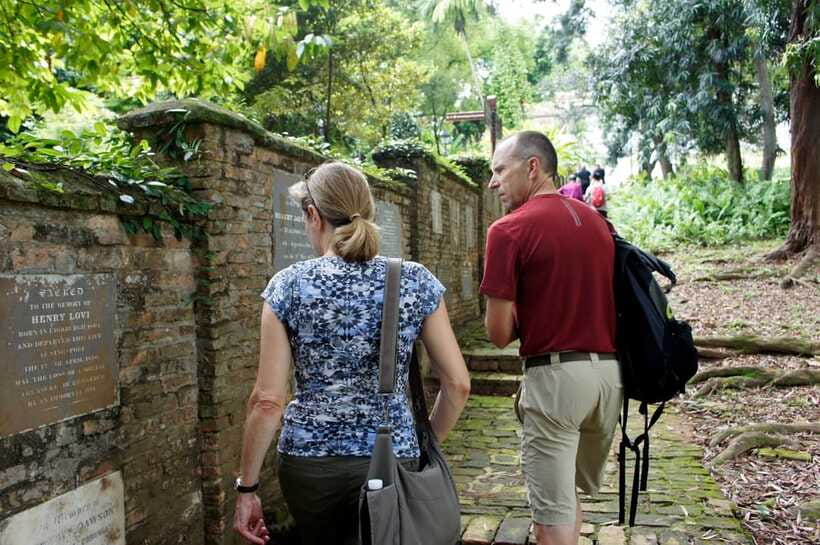
The colonial cemetery changes the mood again. After the discussion of ancient rulers, you move into the period when Singapore was part of the British Empire.
A cemetery can reveal more than a fort wall. Names, dates, and burial patterns show how a colonial society was built, who held authority, and how fragile life could be far from home. Your guide uses the graves to tell the story of the people who helped shape colonial Singapore, rather than presenting empire as a simple tale of buildings and trade.
This is also a good point to pay attention to the guide’s style. The strongest guides on this walk do not simply recite names. They add context, explain the human cost of change, and use humor carefully when the subject allows it. Helena has been especially praised for warmth, precision, and an entertaining delivery, while Nancy is noted for making the hill’s past accessible and personal.
The cemetery is outdoors, so the tropical weather matters. Carry water and an umbrella or poncho. In Singapore, rain can arrive quickly, and shade is not guaranteed at every stop.
Old Fort Gateway and the age of guns
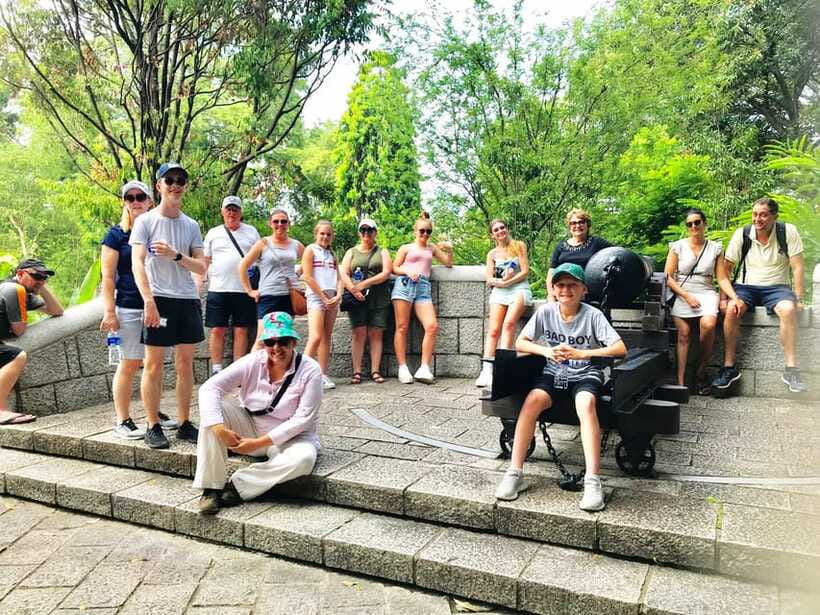
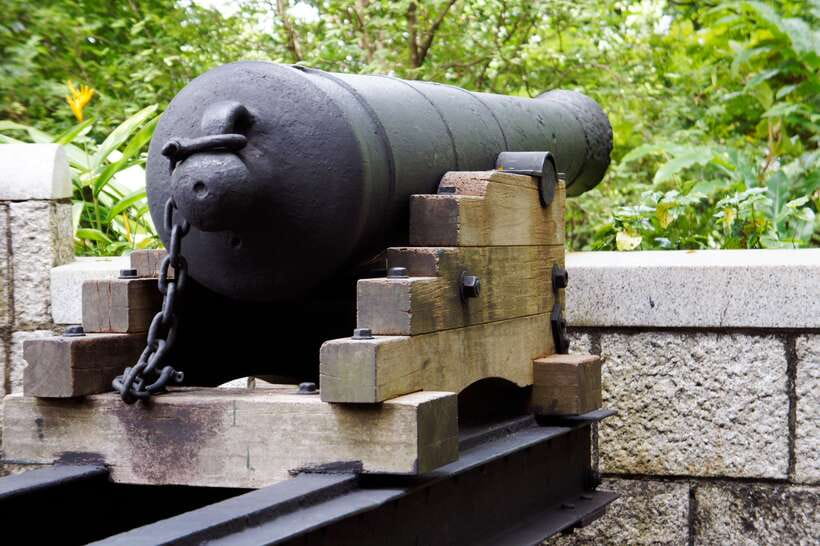
The Old Fort Gateway brings the military side of the hill into view. The name alone marks a change from royal burial ground to colonial defense site.
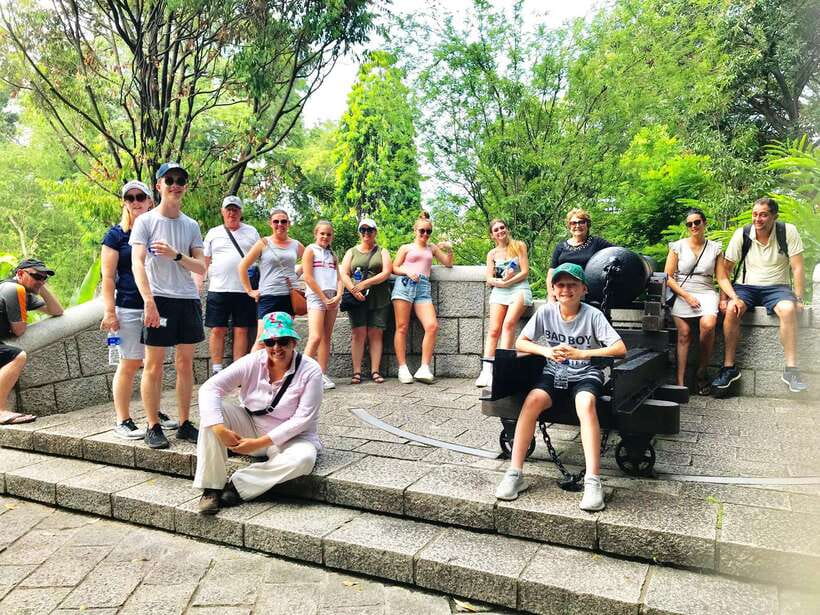
Here, the guide explains how the British used Fort Canning and how the hill fit into the wider defense of Singapore. The point is not only to look at an old entrance. It is to understand why this location mattered to rulers, empire-builders, and military commanders across different periods.
The tour title promises graves, guns, and battles, and this is where those themes come together. The guns represent technology and power, but the story also asks how well that power was used. The history of Singapore’s defenses is not presented as a simple success story.
You may find the transition from the outdoor ruins to indoor displays especially useful. The Fort Canning Heritage Gallery offers a chance to see the hill’s story in a more organized setting and, according to the experience details, has free entrance. One past visitor specifically recommended allowing extra time for the exhibition after the walk.
Same island, a completely different afternoon:
- Lion City Bike Tour of Singapore
★ 5.0 · 6,211 reviews - Singapore: Gardens by the Bay Bundle Entry Ticket
★ 4.3 · 3,726 reviews - Singapore: Big Bus Hop-On Hop-Off Tour by Open-Top Bus
★ 4.5 · 3,261 reviews - Singapore: Lion City Highlights Bike Tour
★ 4.9 · 2,010 reviews
Sang Nila Utama Garden and Singapore’s beginnings
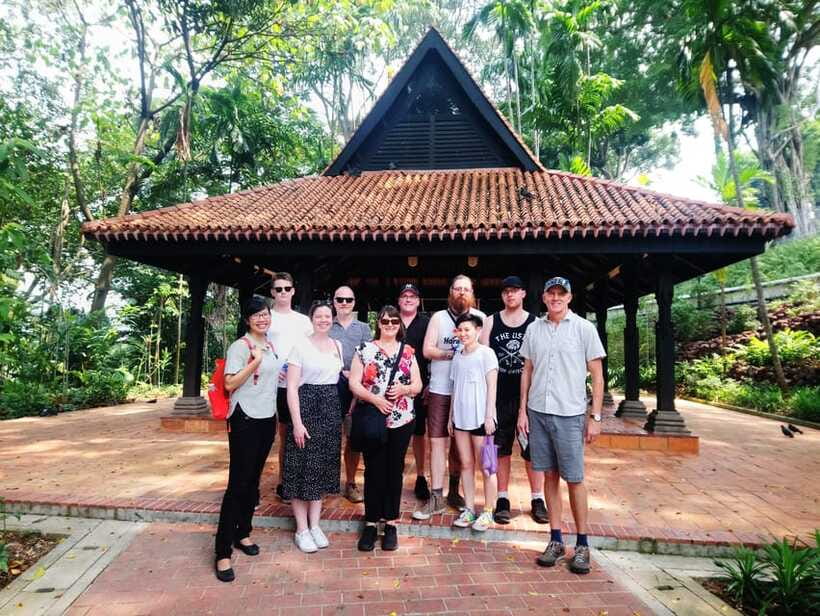
Sang Nila Utama Garden adds another ancient layer to the route. It is connected to the early story of Singapura and helps frame the hill as a place of origins, not only a colonial fort.
The garden also provides a change of pace. After graves and military history, you get a setting where the guide can return to the founding stories and explain how Singapore’s identity developed over time.
One four-star assessment wished for more information about the park’s plants. That is a fair expectation to manage. This is primarily a history walk, not a botany tour. You may learn some incidental details about the grounds, but the focus remains on rulers, empire, trade, and war.
That distinction matters when choosing your tour. If you want a garden walk with extensive plant commentary, this is probably not the best fit. If you want the garden as a setting for Singapore’s early story, it makes good sense within the route.
The spice story and the making of an empire
The tour also follows the world-changing story of a humble spice. The supplied description does not specify every detail of this section, but the theme points to the role of spice in trade, ambition, and imperial expansion.
This is valuable context. Singapore’s rise did not happen in isolation. Its position in regional trade made it important to larger powers, and the hunger for valuable goods helped drive competition across Southeast Asia.
A good guide can make this part feel less abstract by tying global trade to the hill’s rulers, graves, and military structures. You begin to see that the hill was part of a much larger system. Local power, overseas empire, commerce, and armed force were connected.
The best approach is to listen for those links rather than waiting for a list of facts. Guides such as Helena and Joanne have been praised for making complex material easy to follow, with enough humor to keep the pace lively and enough seriousness for the painful chapters.
Singapore’s fall and the World War II story
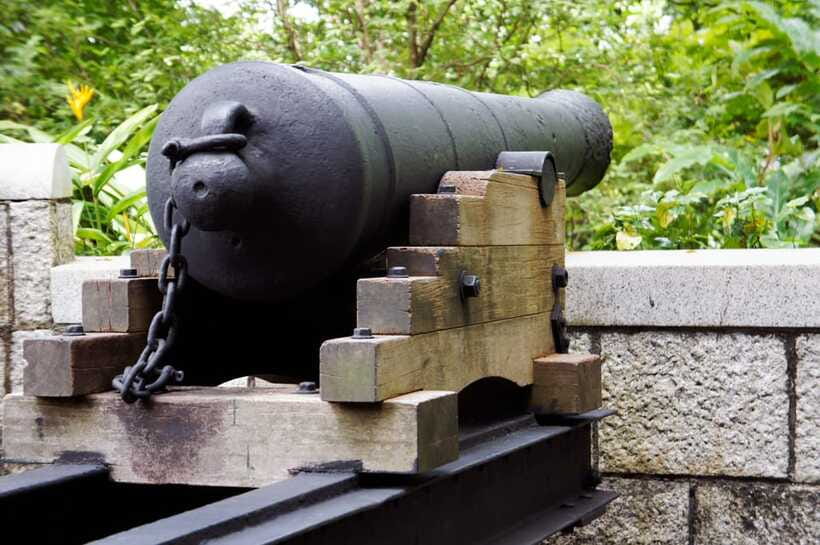
The World War II section is likely the emotional center of the walk. Fort Canning is tied to the fall of Singapore, and the tour explains the battle and the decisions made by military leaders.
Several parts of the experience have been described as solemn or emotional, especially when the guide discusses the struggles faced by Singapore’s people. That balance is important. You get military detail, but the story is not reduced to troop movements and famous commanders.
The tour also connects Fort Canning to the rooms where major wartime decisions were made. The broader Fort Canning and Battlebox story is part of this history, but you should check at booking whether any Battlebox admission is included, since optional activity costs are not included in the stated tour price.
If you know little about the fall of Singapore, this walk can give you a strong base. If you already have a serious interest in the Pacific War, you may want more time on the military details than the route allows. One four-star assessment made exactly that point, wishing for less general hill history and more time on the Battlebox and the wider Pacific conflict.
That is a useful limit to understand. This is a broad Fort Canning history tour, not a specialist military seminar.
The Fort Canning Heritage Gallery
The Heritage Gallery provides an indoor pause and helps bring the various threads together. It is especially welcome when the weather turns hot or wet.
One person who took a morning tour noted that the gallery offered air-conditioned relief before the heat became too strong. That makes an early starting time a smart choice. You can still expect outdoor walking, but the indoor section gives your body a break.
The gallery is also useful if you prefer visual material alongside spoken explanation. The guide gives the story its shape, while the displays help you place the hill’s different eras in sequence.
If you have time, consider staying a little longer after the guided portion. The exhibition entrance is free, and the extra visit can help you review what you have heard without the group’s schedule pressing you forward.
How hard is the 150-minute walk?
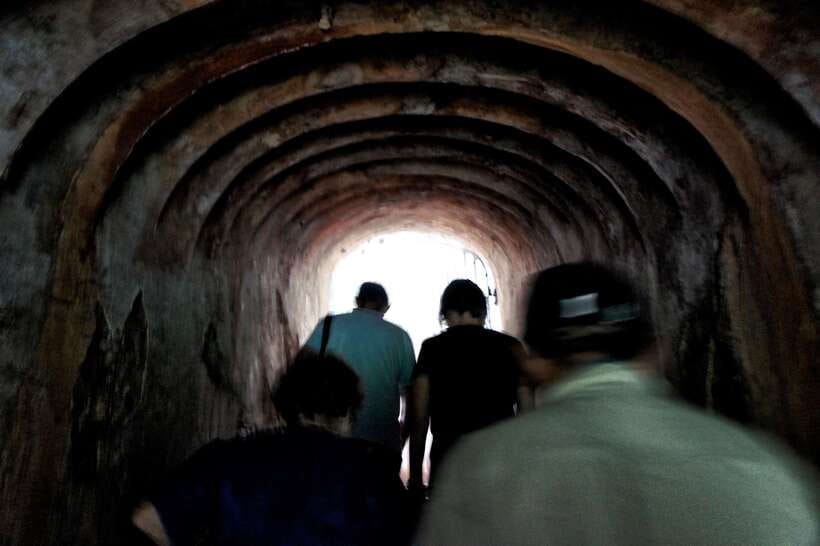
The tour lasts 150 minutes, and the walking is described as manageable rather than punishing. There are breaks, and one morning group found the route easy to handle.
Still, do not treat easy as flat. Fort Canning Hill has stairs, and the route includes repeated movement between outdoor sites. You need enough stamina for two and a half hours on your feet.
Wear shoes with good grip. Bring a bottle of water, an umbrella or poncho, and light clothing suited to Singapore’s heat. An umbrella is useful for both sun and rain.
The tour is not suitable for people with mobility impairments. If stairs are difficult for you, ask about a private tour before booking. Private tours are available at different rates, but the supplied details do not give those rates or promise a step-free route.
Guide quality and the value of live storytelling
The live guide is the main reason to choose this experience instead of simply visiting Fort Canning on your own.
The strongest names associated with the tour include Helena, Nancy, Wei Wei, Joanne, Wina, and Shar. Helena is particularly noted for polished English, enthusiasm, humor, and a strong command of Singapore’s story. Nancy is praised for making the walk feel personal, while Wei Wei is noted for explaining a great deal of history within a small area.
You will not know in advance which guide leads your departure. At the meeting point, look for someone wearing a guide license and ask if they are leading the walking tour called Of Graves & Guns & Battles.
This matters because the subject is broad. A guide can help you understand why an ancient grave, a colonial cemetery, a gateway, and a World War II command story belong in one route. The information is more useful when someone explains the connections as you move through the hill.
Is $31 a fair price?
At $31 per person, the tour offers 150 minutes with an English-speaking guide in one of Singapore’s most important historic areas. I consider that fair value, especially for a first visit or for anyone who wants context before exploring the city alone.
You are paying for interpretation, not admission to a string of expensive attractions. The value comes from the structure of the walk and the guide’s ability to explain difficult history clearly.
A past booking was priced at S$40 per person, so the amount you see may vary with currency, date, or booking conditions. Check the final total before paying. Food and drinks are not included, and optional activities cost extra.
Free cancellation up to 24 hours before the tour and reserve-now, pay-later booking make it easier to fit this into a changing Singapore schedule.
Who should book this Fort Canning walk?
I would choose this tour if you want a strong introduction to Singapore’s past in one compact area. It suits first-time visitors, history fans, people interested in World War II, and locals who want a fresh look at Fort Canning.
It is also a good choice if you prefer stories with a human side. The route covers rulers and battles, but it also deals with graves, civilian struggles, empire, and the choices that shaped Singapore.
You may want another type of outing if you dislike stairs, struggle in heat, or want a slow garden tour focused on plants. You should also consider a more specialized military experience if your main goal is an exhaustive study of the Pacific War.
Should you book it?
Book it if you want Singapore’s history explained in person, with ancient royalty, colonial power, and World War II joined in a single walk. At $31, it is a sensible way to get your bearings before visiting more sites on your own.
Choose a morning time if possible. Bring water and rain protection, and leave room to spend extra time at the free Fort Canning Heritage Gallery. If stairs are a problem, skip this outing or ask about a private format before committing.
FAQ
How long does the Fort Canning walking tour last?
The tour lasts 150 minutes, or two and a half hours.
What language is the tour conducted in?
The tour is conducted in English by a live English-speaking guide.
Where does the tour meet?
Meet at the Outdoor Lift at the entrance of Fort Canning Centre, 5 Cox Terrace, Fort Canning Hill.
How do I identify the guide?
The guide will be wearing a guide license. Ask if they are leading the walking tour called Of Graves & Guns & Battles.
What are the main places visited?
The experience highlights the Grave of the Last Ancient King of Singapore, a 19th-century colonial cemetery, the Old Fort Gateway, Sang Nila Utama Garden, and Fort Canning Heritage Gallery.
Are food and drinks included?
No. Food and drinks are not included, so bring water and plan for your own refreshments.
Are there stairs on the route?
Yes. There are a number of stairs to climb during the walking tour.
Can I cancel for a refund?
Yes. You can cancel up to 24 hours in advance for a full refund.
Recently added around Singapore
- The Real Singapore Heartland Walking Food Tour★ 5.0 · 4 reviews
- Vegetarian Culinary Adventure in Singapore★ 5.0 · 7 reviews
- Singapore’s Marina Bay Wonders and Heritage Tales, Chinatown★ 5.0 · 5 reviews
- Singapore’s Hidden Treasures: A Cultural Private Tour★ 5.0 · 3 reviews
- Private Tour Singapore Street Food & Night Tour★ 5.0 · 4 reviews
- Singapore – Albatross Speedboat Adventures Cruising in Sentosa★ 5.0 · 3 reviews
- Small Group Full Day Singapore City Tour with Roundtrip Transfers★ 4.0 · 11 reviews
- Tastes of Chinatown★ 5.0 · 4 reviews
Walking Tours, compared.


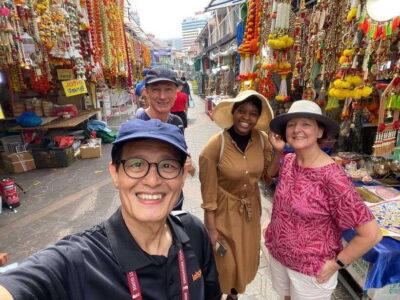
Singapore: Chinatown and Little India Guided Walking Tour
Read our review →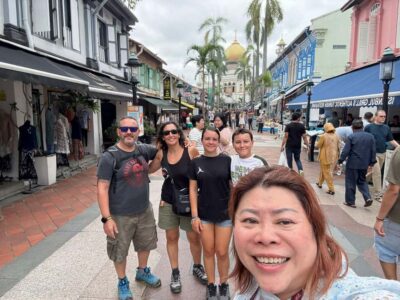
Singapore: Customized Private Tours (Car/Bus/Walking)
Read our review →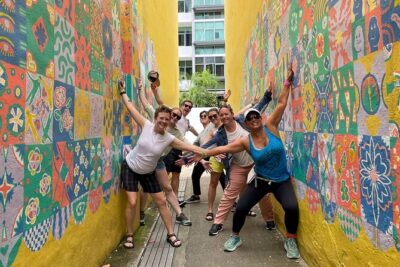
Singapore Group History & Culture Walking Tour
Read our review →
Half Day or Full Day Private Custom Walking Tour of Singapore
Read our review →
Singapore: Chinatown Historic Walking Tour with Lunch
Read our review →Browse the lists this tour appears in