
Reviewed · WALKING TOURS
CityWalk With A Local
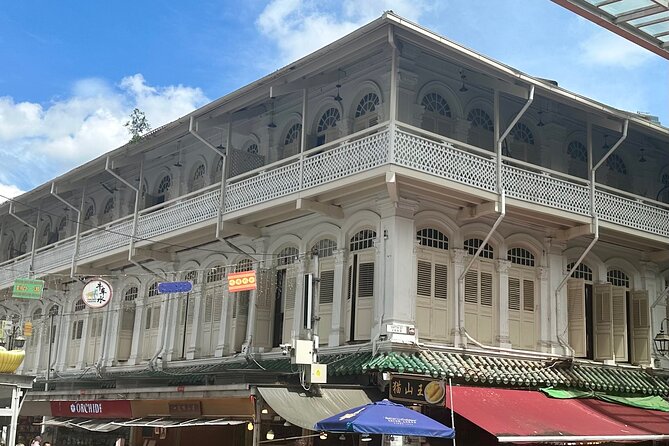
Singapore’s story comes into focus when you walk through the places where daily life, trade, religion, and government once met. On this three-hour route, local guide Jimmy Loh connects Chinatown’s food stalls and temples with the river, colonial center, and carefully built Marina Bay.
I like the small group of no more than 10 people, which gives you room to ask questions. I also like the route’s range: you get street art, religious customs, city planning, colonial buildings, land reclamation, and useful tips for the rest of your stay. The main consideration is that this is a walking tour with no private transport, so Singapore’s heat and sudden rain can affect your comfort.
Key points to know before booking
- Start in Chinatown at 9:30 am: Meet at Nanyang Old Coffee, 268 South Bridge Road, a convenient place to begin near public transport.
- Six stops in three hours: The route covers Chinatown, Thian Hock Keng Temple, the Downtown Core, the Singapore River, the Civic District, and Marina Bay.
- Jimmy Loh leads the walk: He is a Singapore-born, licensed tourist guide who explains local history in a clear, easy-to-follow way.
- Small groups help: With a maximum of 10 people, you can ask about food, religion, architecture, and getting around.
- It ends at the Merlion: The walk finishes at Merlion Park, a useful location for continuing around Marina Bay.
- Bring weather protection: Water is supplied, but private transportation is not, and the tour requires good weather.
Why this city walk is useful early in your stay
I would place CityWalk With A Local near the beginning of a Singapore visit. The route gives you a useful framework for the city instead of treating each sight as an isolated photo stop.
You move from early trade and immigrant communities to modern finance and reclaimed waterfront. That change is the real subject of the walk. Jimmy explains not only what a building is, but why it is there, how the area was used before, and what Singapore wanted to achieve as it developed.
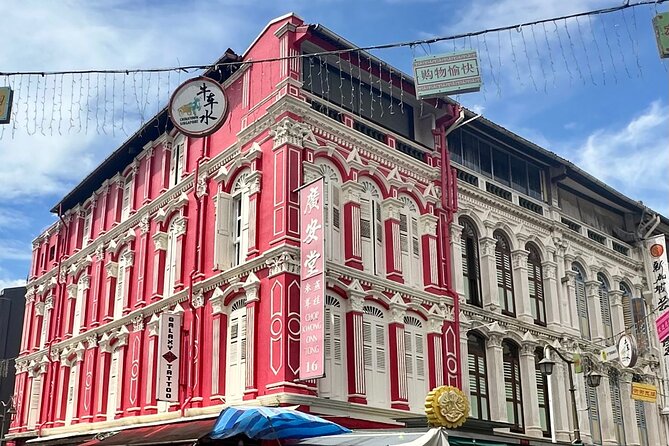
The tour also reaches beyond the usual postcard view. You will see major landmarks, but the emphasis is on the details around them: old building uses, street murals, religious practices, the river’s working past, and the planning rules that shaped the modern skyline.
The small group matters here. This is not a headset-and-follow-the-flag experience. You can stop to ask why Singapore has strict height limits in some areas, how different faiths share space, or where to go for the rest of your visit. Jimmy’s calm, conversational approach is a strong part of the experience. His answers are not limited to a fixed script, which is helpful if you like to ask your own questions.
More walking tours in Singapore:
- Singapore: Private Walking Tour with a Local
★ 4.7 · 410 reviews - Private Customised Singapore Walking Tour
★ 5.0 · 370 reviews - Singapore: Chinatown and Little India Guided Walking Tour
★ 4.8 · 190 reviews
Chinatown reveals the city behind the food stalls
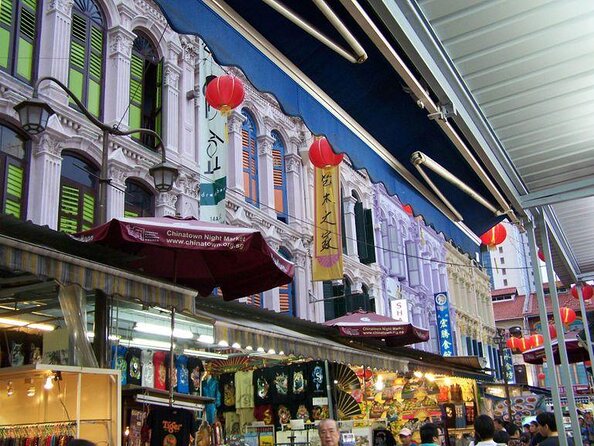
The tour begins at Nanyang Old Coffee on South Bridge Road and spends about 40 minutes in Chinatown. This is not simply a quick look at a market. Jimmy uses the Market and Food Centre to explain how people lived and made a living in Singapore’s early days.
You will look at how buildings were used in the past and how their roles have changed. That comparison helps you read Chinatown as a working neighborhood rather than a decorative historic quarter. The food center adds a practical side to the story, connecting meals and small businesses with the city’s older livelihoods.
Cultural and religious practices are also part of this stop. Chinatown is a good place to learn how Singapore’s communities developed alongside one another, and Jimmy points out details that are easy to miss if you are walking alone.
Allow time to look up and around you. Wall murals and street art add another layer to the district, showing how modern art is used to recall older work, homes, and neighborhood life. The route does not include paid admissions, so this portion costs you nothing beyond the tour fee.
If you are hoping for a long food tasting session, adjust your expectations. The food center is used mainly as a doorway into Singapore’s social and economic past. You may get suggestions for places to eat, but the experience is not presented as a dedicated food tour.
Thian Hock Keng Temple rewards careful attention
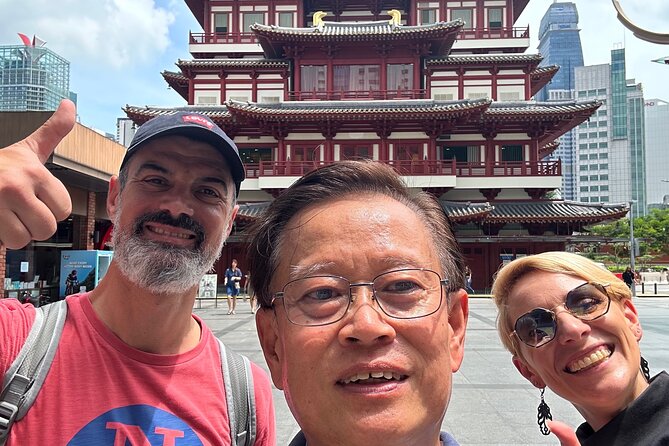
The next stop is the Thian Hock Keng Temple mural, with about 20 minutes devoted to the temple area. This is a short visit, but it covers architecture, religious practice, and the site’s unusual multi-religious character.
Jimmy explains the building’s design and points out special features that can pass unnoticed when you are focused on taking photographs. He also covers what to do and what not to do inside a temple. That guidance is practical, especially if you are unfamiliar with local religious customs.
The multi-religious aspect is one of the most interesting parts of the walk. Instead of presenting faith as a set of separate attractions, Jimmy explains how religious sites fit into Singapore’s wider story of communities living close together.
The 20-minute timing means you should not expect a long, quiet temple visit. It is a focused temple walk, not a ceremony or extended study. Still, the stop works well because it follows Chinatown and gives cultural practices a clear place in the city’s development.
Singapore’s Downtown Core is planned, not accidental
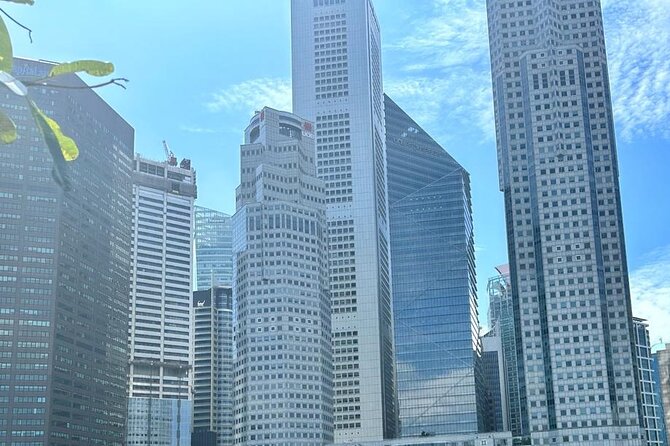
The Downtown Core portion lasts about 30 minutes and shifts the focus from older neighborhoods to the modern Central Business District. Here, Jimmy talks about architecture, building shapes, height limits, greenery requirements, and the types of businesses that operate in the area.
This is where the tour helps you understand Singapore as a planned city. The skyline may look like a collection of towers, but the rules behind those towers matter. Height limits, open space, and greenery requirements affect how the center feels at street level.
You will also look for lesser-seen details in the business district. That can be a welcome change from simply photographing the tallest buildings. Jimmy’s explanations connect the offices and high-rises with Singapore’s larger effort to build a successful business center without giving up every bit of greenery or public space.
This section may appeal most to people who like architecture, urban planning, or modern history. If you prefer markets and old buildings throughout the tour, the shift into the business district may feel less personal. The route’s strength is precisely that it shows both sides of Singapore.
Same island, a completely different afternoon:
- Lion City Bike Tour of Singapore
★ 5.0 · 6,211 reviews - Singapore: Gardens by the Bay Bundle Entry Ticket
★ 4.3 · 3,726 reviews - Singapore: Big Bus Hop-On Hop-Off Tour by Open-Top Bus
★ 4.5 · 3,261 reviews - Singapore: Lion City Highlights Bike Tour
★ 4.9 · 2,010 reviews
The Singapore River explains the city’s original engine
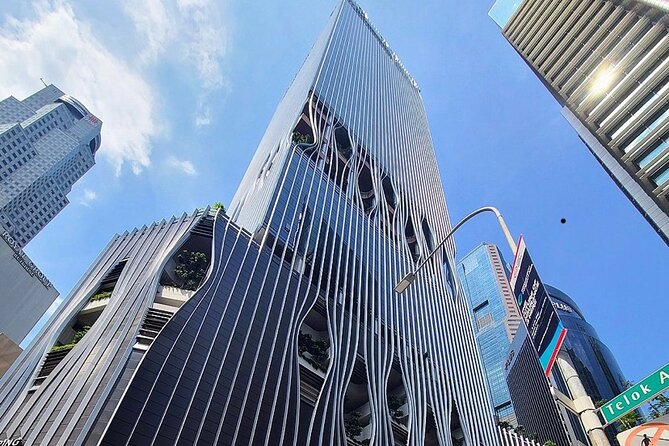
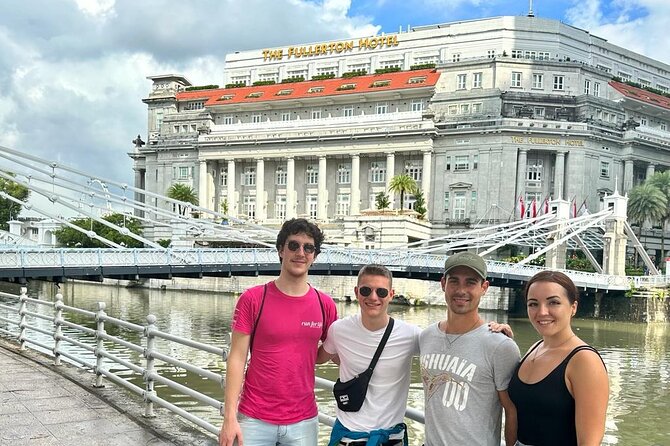
The walk then reaches the Singapore River for roughly 30 minutes. This is one of the most important historical stops because the river links Singapore’s early livelihood with its later transformation.
Jimmy explains the conditions faced by people who worked along the river and how business grew around it. The story is not only about commerce. It also covers the major cleanup that changed the river and its surroundings.
That cleanup helped turn an older working waterfront into a more polished riverfront area. You will hear how the river and its businesses changed rather than simply viewing the waterfront as a scenic backdrop.
This stop gives you a useful before-and-after view of Singapore. The city’s modern order did not appear by accident. It came through large decisions about sanitation, trade, redevelopment, and the use of public space.
The river section can be especially helpful if you plan to return later in the day. Jimmy provides tips on where to go and what else to see, so you can use this first look to decide how much time to spend along the waterfront.
The Civic District connects Temasek to modern Singapore
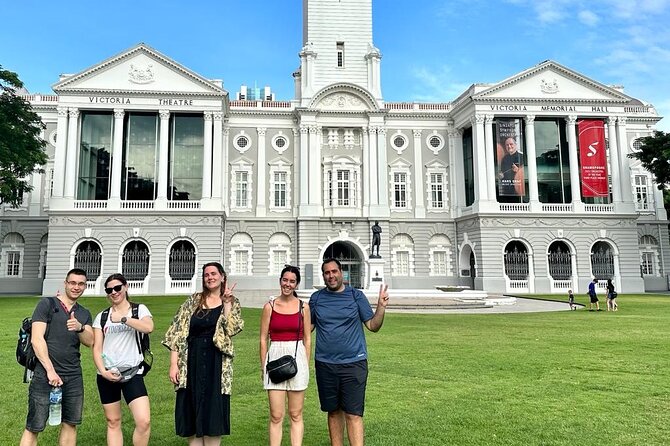
The Colonial District, also called the Civic District, receives another 30 minutes. Jimmy begins far earlier than the colonial period, discussing the existence of Temasek and the changes from Temasek to Singapura and then Singapore.
That wider time frame is important. Singapore’s story did not begin with colonial buildings, and this stop places those buildings within a longer sequence of names, settlements, political changes, and national development.
You will compare colonial buildings as they were used in the past with their roles today. Jimmy also covers Singapore’s path to independence and the transformation toward first-world conditions. His approach links architecture to political and economic change, so the buildings become evidence of a changing country rather than isolated monuments.
This portion should suit you if you want historical context without spending hours inside a museum. The tradeoff is that 30 minutes can only introduce the subject. You will get a clear overview and useful landmarks, not an exhaustive study of every colonial structure.
Marina Bay shows how Singapore built new land
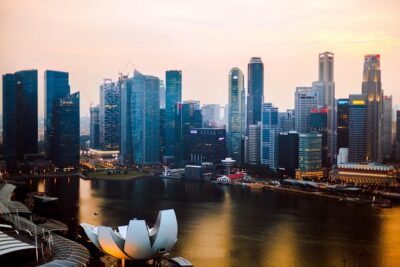
The final 30-minute section reaches Marina Bay and ends at the Merlion sculpture in Merlion Park. Jimmy explains land reclamation, how Marina Bay was formed, and the phases of its growth.
For a city with limited land, reclamation is central to understanding the modern waterfront. This stop shows you that Marina Bay is not simply a natural harbor edge. It is the result of long-term planning and construction, shaped to support business, public space, and a new city image.
The route also points out Marina Bay features and explains the Merlion. The sculpture is an obvious photo stop, but the surrounding story gives it more meaning. By the time you reach it, you have followed Singapore from early settlement and river trade to a carefully planned modern center.
Ending at Merlion Park is convenient. You can continue around Marina Bay after the tour, and the location makes it easy to combine the walk with your own sightseeing. Since the tour does not include private transportation, ending in a major central area is more useful than finishing far from the places you are likely to visit next.
What the $48.42 price buys you
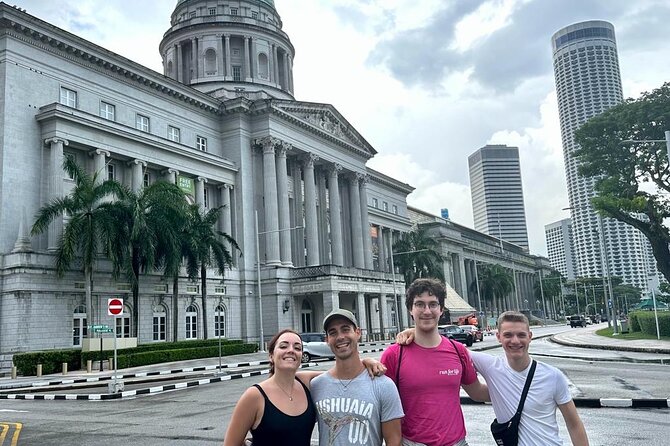
At $48.42 per person, this is not the cheapest way to see Singapore’s central sights. You are not paying for admission tickets, a meal, or private transport. The value comes from the guide’s explanation, the route design, and the chance to ask questions in a small group.
That value is strongest if you want context. You could walk through Chinatown, the riverfront, the Civic District, and Marina Bay on your own, but you would need to research the changes in building use, religious etiquette, river cleanup, land reclamation, and city planning separately.
The tour also saves you from organizing a route between six areas. In three hours, you get a broad orientation and practical suggestions for the rest of your stay. Jimmy’s ability to answer questions in an unscripted way adds value for curious visitors who want more than memorized dates.
The price is less compelling if you mainly want photographs or a food tasting. It is also worth noting that water is included, but private transportation is not. Bring comfortable walking shoes and plan for the fact that the walk takes place outdoors in Singapore’s weather.
Who will get the most from this tour
I would recommend this experience to a first-time visitor who wants to understand Singapore quickly. It is also a good match for anyone interested in the relationship between old neighborhoods and modern development.
You are likely to enjoy it if you value:
- Clear explanations rather than a long list of dates
- A local guide who can answer personal questions
- Small groups and direct conversation
- Architecture, religion, food culture, and urban planning
- Practical suggestions for the rest of your stay
- A broad overview without paying for multiple attractions
Families and older visitors should note that most people can participate, but this is still a three-hour city walk. There is no private vehicle to provide breaks between stops. A morning start helps, yet you should still prepare for heat or rain.
The experience requires good weather, and it may also be canceled if the minimum number of participants is not reached. If that happens, you are offered another date or experience, or a full refund.
Practical details for the morning
The start time is 9:30 am at Nanyang Old Coffee, 268 South Bridge Road, Singapore 058817. The meeting point is near public transportation, and the mobile ticket makes the booking information easy to keep on your phone.
The tour ends at Merlion Park, 1 Fullerton Road, Singapore 049213, beside the Merlion sculpture. This point-to-point design is helpful because you do not have to return to Chinatown after the walk.
The group is limited to 10 people. That is small enough for questions without making the experience private. Jimmy Loh is the experience provider and a licensed tourist guide.
You can cancel for a full refund up to 24 hours before the start time. Changes or cancellations inside that window are not accepted for a refund. Confirmation is sent within 48 hours, subject to availability.
Should you book CityWalk With A Local?
Book it if you want a strong first look at Singapore’s story, especially through the eyes of a local guide. Jimmy Loh’s friendly delivery, broad subject range, and willingness to answer questions make the walk useful beyond the three hours themselves.
Skip it if you want a seated tour, private transport, a dedicated food experience, or long visits inside individual attractions. For most first-time visitors who can handle a morning walk, the combination of Chinatown, temple customs, the river, colonial Singapore, and Marina Bay gives you a solid foundation for exploring on your own.
FAQ
How long does CityWalk With A Local last?
The experience lasts approximately three hours.
What time does the tour start?
It starts at 9:30 am.
Where does the tour begin?
The meeting point is Nanyang Old Coffee at 268 South Bridge Road, Singapore 058817.
Where does the tour finish?
The walk ends at Merlion Park, 1 Fullerton Road, Singapore 049213, at the Merlion sculpture.
How many people can join the tour?
The maximum group size is 10 people.
Is transportation included?
No. Private transportation is not included. The experience is a city walk, and the meeting point is near public transportation.
Is bottled water included?
Yes. Bottled water is included.
What places does the tour visit?
The route includes Chinatown Street Market, the Thian Hock Keng Temple mural, Singapore’s Downtown Core, the Singapore River, the Colonial or Civic District, and Marina Bay.
Can I cancel for a full refund?
Yes. You can cancel at least 24 hours before the start time for a full refund. Cancellations or changes made less than 24 hours before the start time are not refunded or accepted.
Recently added around Singapore
- The Real Singapore Heartland Walking Food Tour★ 5.0 · 4 reviews
- Vegetarian Culinary Adventure in Singapore★ 5.0 · 7 reviews
- Singapore’s Marina Bay Wonders and Heritage Tales, Chinatown★ 5.0 · 5 reviews
- Singapore’s Hidden Treasures: A Cultural Private Tour★ 5.0 · 3 reviews
- Private Tour Singapore Street Food & Night Tour★ 5.0 · 4 reviews
- Singapore – Albatross Speedboat Adventures Cruising in Sentosa★ 5.0 · 3 reviews
- Small Group Full Day Singapore City Tour with Roundtrip Transfers★ 4.0 · 11 reviews
- Tastes of Chinatown★ 5.0 · 4 reviews
Walking Tours, compared.
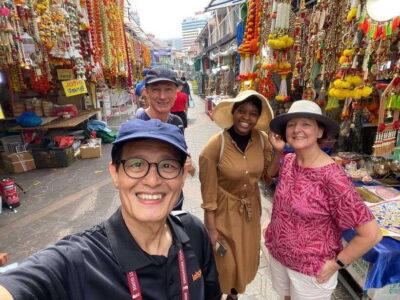
Singapore: Chinatown and Little India Guided Walking Tour
Read our review →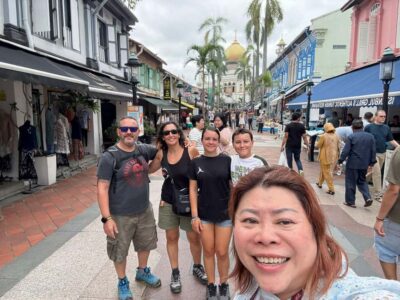
Singapore: Customized Private Tours (Car/Bus/Walking)
Read our review →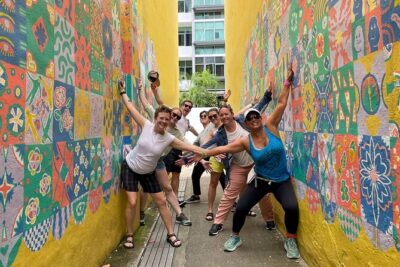
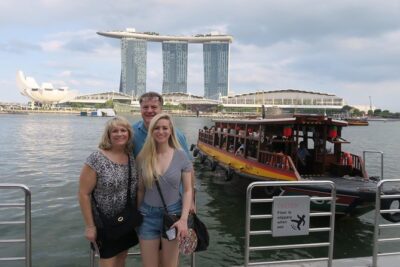
Singapore Group History & Culture Walking Tour
Read our review →
Half Day or Full Day Private Custom Walking Tour of Singapore
Read our review →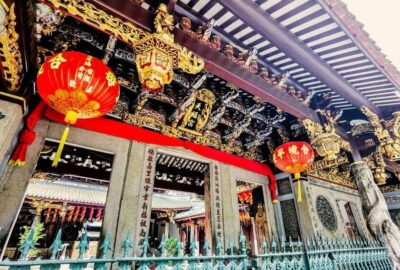
Singapore: Chinatown Historic Walking Tour with Lunch
Read our review →Browse the lists this tour appears in