
Reviewed · HISTORICAL TOURS
Guided Walking Tour to the Historical Attractions in Farrer Park
Farrer Park gives you a side of Singapore that glossy downtown tours often miss. In two and a half hours, you move from old horse-racing grounds and century-old temples to an active red light area, ornate shophouses, local food stops, and sites tied to the Japanese Occupation. The route is varied and candid, with little effort to polish away the neighborhood’s rougher edges.
I like the access to places you might not think to visit on your own, especially the reclining Buddha chamber at Sakya Muni Buddha Gaya Temple and the Peranakan-era architecture along Petain Road. I also like that guide Ping brings strong local history to the walk and points out food places that have not been picked up by the Michelin Guide. The main consideration is the subject matter: Flanders Square is an active red light district, so this tour suits adults and curious older teens better than families seeking a gentle sightseeing walk.
Key points at a glance
- A 2.5-hour look at lesser-seen Singapore: The route links temples, food streets, heritage buildings, and wartime sites.
- Guide Ping adds the human story: Her friendly style and strong command of local history were praised by past participants.
- The temples are a major strength: You enter a private chamber with a reclining Buddha and learn about Taoism, Hindu worship, and ancestral traditions.
- Flanders Square is frank and unusual: The daytime red light area offers social context, but it may feel uncomfortable for some visitors.
- Petain Road rewards close attention: The restored shophouses provide some of the walk’s finest architecture.
- Small group and simple logistics: The tour accepts no more than 15 people, starts at 11 a.m., and returns to its starting point.
Why Farrer Park makes a good walking tour
Farrer Park sits close to central Singapore, yet its story is less familiar than that of Marina Bay, Chinatown, or Little India. The neighborhood brings together several strands of the city’s past: British sporting life, Chinese and Hindu religious practice, Peranakan architecture, wartime trauma, working-class food culture, and the continuing presence of the sex trade.
That mixture gives the walk its value. You are not just moving from one attractive building to another. You are seeing how different communities and periods overlap in a small part of Singapore.
The tour begins at lyf Farrer Park Singapore at 2 Perumal Road and starts at 11 a.m. It ends back at the same meeting point. With a maximum of 15 people, the group should be small enough for questions and conversation, while still giving the guide a manageable crowd at temples and along narrow streets.
The tour costs $31.38 per person. For Singapore, that is a reasonable price for a licensed English-speaking guide, 2.5 hours of commentary, and entry to several religious and historic sites at no extra admission charge. You are paying mainly for interpretation and access, not for food or attraction tickets. Gratuities are not included.
More walking tours in Singapore:
- Singapore: Private Walking Tour with a Local
★ 4.7 · 410 reviews - Private Customised Singapore Walking Tour
★ 5.0 · 370 reviews - Singapore: Chinatown and Little India Guided Walking Tour
★ 4.8 · 190 reviews
Race Course Road and Farrer Park’s sporting past
The first stop on Race Course Road sets up the rest of the walk. From 1843 to 1933, a horse-racing track occupied this area. After the racecourse closed, the ground became a sporting field known as Farrer Park.
That change helps explain why the neighborhood carries more than one identity. British colonial leisure gave way to a public sporting space, and the area later became closely tied to football. The guide also explains the role Farrer Park played in Singapore’s Indian community, giving you a useful opening lesson in how land use and community life changed over time.
You spend about 10 minutes here, so do not expect a long stop or an elaborate display. Its value comes from the explanation. Without a guide, Race Course Road can look like an ordinary city street. With the background, it becomes an important clue to the district’s past.
The reclining Buddha at Sakya Muni Buddha Gaya Temple
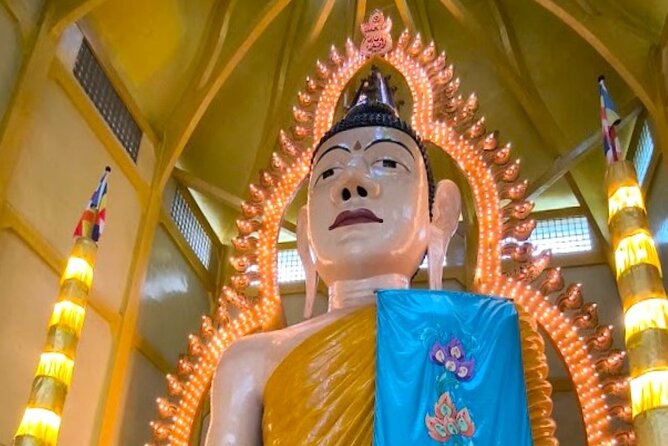
The Buddhist temple is one of the route’s strongest stops. You enter a private chamber containing a reclining Buddha and see sculptures that tell the story of the Buddha’s life.
This is the sort of access that makes a guided walk worthwhile. You can look at religious art on your own, but a guide can direct your attention to the scenes, explain what they represent, and help you understand the place as an active temple rather than just a photogenic building.
Allow about 20 minutes here. As with any religious site, respectful behavior matters. The tour data does not specify a dress code or photography rules, so I would listen carefully to the guide before taking pictures. The temple is not presented as a quick exterior photo stop. You go inside and spend enough time to examine its sculpture and symbolism.
Leong San See Temple and Taoist traditions
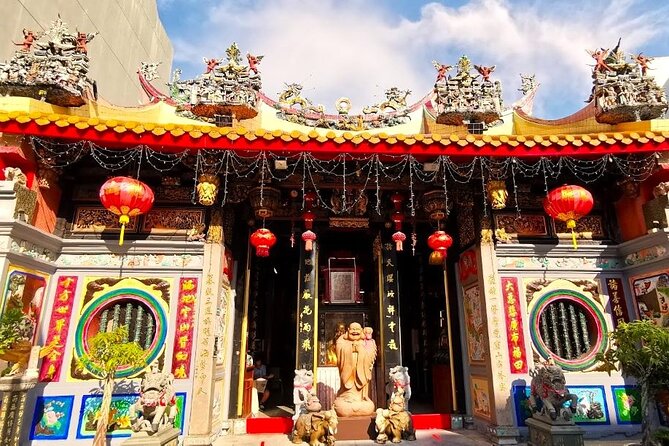
Leong San See Temple brings a different religious tradition into the walk. Its ornate architecture gives you plenty to study, while the guide explains Taoism and ancestral worship.
This pairing with the Buddhist temple works well. Instead of treating Singapore’s religious buildings as interchangeable, the tour gives you a chance to notice differences in belief, ritual, and visual style. The stop lasts about 20 minutes, which should be enough for a focused explanation without turning the morning into a long series of formal lectures.
I especially like the emphasis on ancestral worship. It connects the temple to family life and memory, not only to religious practice. You get a better sense of why these places remain important in a modern city.
More heritage tours in Singapore:
- Historical Singapore Bike Tour on Full-Sized Bicycles
★ 5.0 · 1,421 reviews - Singapore: Historical Half-Day Bike Tour
★ 4.8 · 399 reviews - Singapore Private Food, Culture and Heritage Tour with 9 tastings
★ 5.0 · 394 reviews - Singapore Group History & Culture Walking Tour
★ 5.0 · 160 reviews
Balestier Road and the food story
The Balestier stop is brief, around 10 minutes, but it adds another layer to the neighborhood. You learn how Balestier Road got its name, its connection with America, and how the area developed into a food destination.
The tour does not treat food as a separate checklist of restaurants. Instead, it uses food to explain the district’s present-day identity. That is useful if you plan to return later for a meal, since you will already have a sense of why the area matters.
The stop is more about context than eating. Do not expect a full tasting session here. The proper food break comes later in Serangoon.
Sri Vadapathira Kaliamman Temple
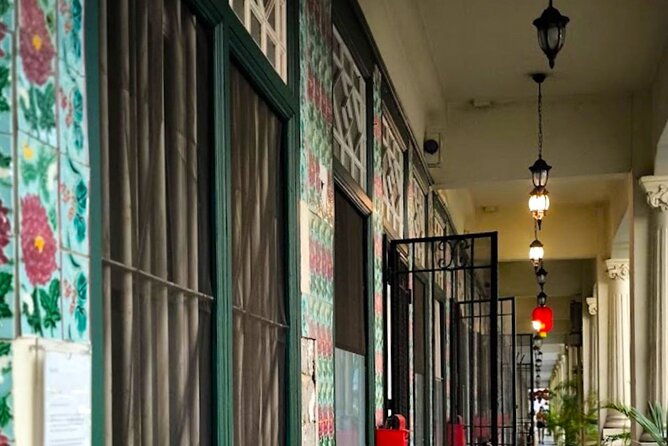
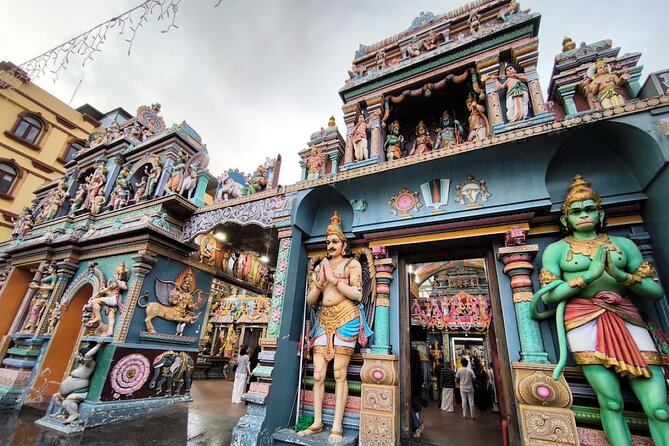
At Sri Vadapathira Kaliamman Temple, you hear stories about Hindu gods and visit a colorful temple dating to about 1870. The short 10-minute stop gives the route a strong visual change after the Chinese temples.
The temple’s age matters, but the guide’s explanation of the deities is the real reason to pay attention. Religious imagery can be hard to read if you do not know the stories behind it. A clear introduction helps you see more than color and decoration.
The tour moves quickly through this section, so ask questions while you have the chance. If Hindu temple traditions are a main interest for you, you may wish the stop were longer. Still, within a mixed neighborhood walk, the brief visit provides a useful contrast.
Serangoon and the Hokkien prawn noodles break
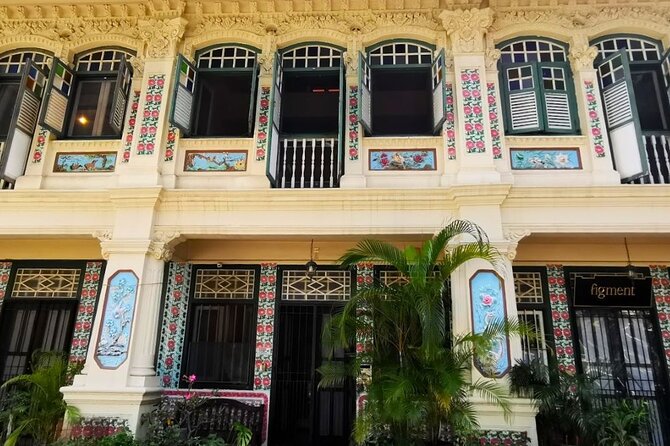
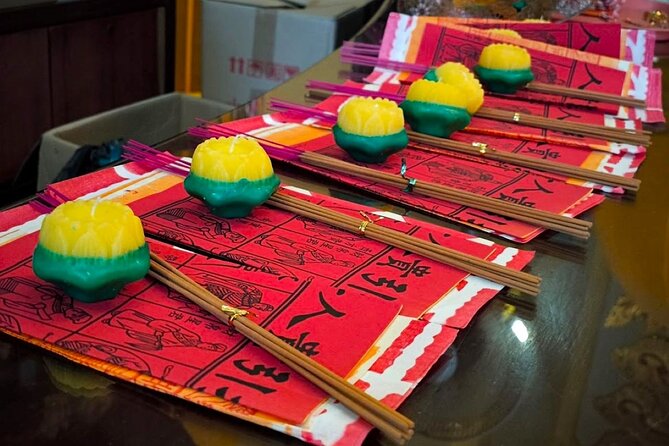
Serangoon brings a practical pleasure: a short break at a local coffee shop serving fried Hokkien prawn noodles. The stop lasts about 10 minutes, so this is best understood as a chance to pause and sample or observe a local food favorite, not a full lunch.
The tour points you toward places favored by local residents and not yet listed by the Michelin Guide. That can be more useful than another famous restaurant recommendation, especially if you want to eat somewhere connected to everyday neighborhood life.
You should plan your expectations around the limited time. The supplied details do not state whether the noodles are included in the tour price, so check that when booking or ask the guide. The walk continues after the break, and the experience is still an active sightseeing tour rather than a food tour.
Flanders Square and an adult side of Singapore
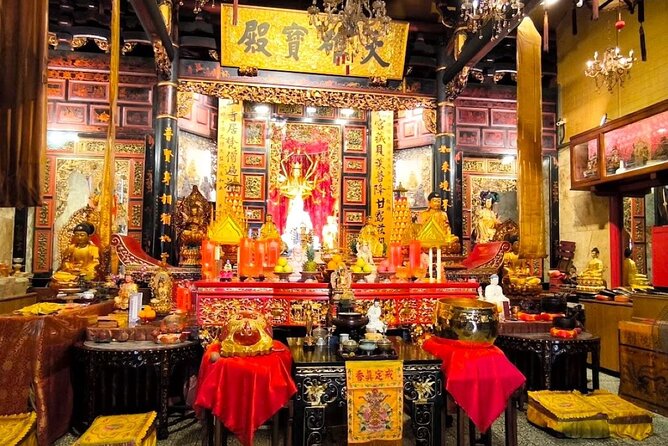
Flanders Square is the most unusual stop. You visit a red light area that operates during the day and closes at night. The tour does not pretend this part of Singapore does not exist, and that frankness is one of its strengths.
You learn how the area functions as part of the city rather than seeing only the polished version presented in central tourist districts. This can be a valuable lesson in urban life, but it is also the point most likely to divide opinion. Some people will find the setting interesting and direct. Others may feel uneasy walking through an active adult district.
I would not choose this tour for young children, and I would tell older children in advance what they may see. The stop lasts about 15 minutes, so it is not the entire focus of the outing. Still, it is a real part of the route, not a passing reference.
Petain Road’s restored shophouses
Just a short distance from Flanders Square, Petain Road offers a sharp visual contrast. Here you examine what may be Singapore’s most beautifully restored row of heritage shophouses and learn about Peranakan culture.
This is likely the walk’s best architecture stop. The buildings reward a slow look at their facades, proportions, colors, and decorative details. The location also makes an important point: heritage and adult commerce can exist almost side by side, creating a neighborhood that is more complicated than a neatly packaged historic quarter.
The guide explains who the Peranakans are, which gives the buildings a cultural context beyond their appearance. You spend about 10 minutes here. That is enough for an introduction and photographs, though architecture fans may wish for extra free time afterward.
Tyrwhitt Road, Chye Seng Huat Hardware, and new Farrer Park
The stop at Chye Seng Huat Hardware shifts the mood again. You discover the more modern, stylish side of Tyrwhitt Road and see how old districts can attract new cafes and other popular places.
The name can be confusing because Chye Seng Huat Hardware is associated with a contemporary social and food scene, while the tour uses it as a reference point for the area. The stop is about 10 minutes and helps you connect the older neighborhood with its newer businesses.
This balance is one reason I like the route. You are not being shown only preserved buildings. You also see a district that continues to change.
Holy Trinity Church and Jalan Besar Stadium
Holy Trinity Church is a quick five-minute stop, but its architecture makes it worthwhile. It is one of only two churches in Singapore built in the Chinese Renaissance style.
That detail gives you a reminder that Chinese architectural influence reaches beyond temples and shophouses. The tour does not list an interior visit, so expect to view and discuss the church rather than spend a long time inside.
Jalan Besar Stadium adds a more serious historical note. It is described as the birthplace of Singapore football and as a major inspection site during Operation Sook Ching. Here, the guide discusses World War II in Singapore and the atrocities suffered during the Japanese Occupation.
The five-minute timing sounds short for such a painful subject, but the stop works as an introduction within a broader route. You may want to ask follow-up questions if wartime Singapore is a major interest. The value lies in learning that a familiar sporting site also carries a difficult wartime memory.
Former Victoria School and Kitchener Road
At the People’s Association, you see the impressive grounds of the former Victoria School. The stop lasts about five minutes, so the focus is on the site and its place in local history rather than a long interior visit.
The final area, Kitchener Road, gives you more food pointers and a story about an amusement park that once entertained people including Charlie Chaplin. This brings the tour back to leisure, popular culture, and the way city neighborhoods provide entertainment as well as housing and worship.
You also hear about local favorite eateries. These recommendations can be useful after the tour, since the walk itself includes only a short coffee-shop break and does not provide a full meal.
Who should book this Farrer Park walk?
I would choose this tour if you have already seen Singapore’s main landmarks and want a more grounded look at the city. It also suits repeat visitors, history fans, architecture lovers, and anyone who prefers neighborhood streets to large attractions.
The tour is a good fit if you enjoy varied subject matter. In one morning, you cover horse racing, Buddhism, Taoism, Hinduism, food, sex work, Peranakan culture, modern businesses, football, and wartime history. That range is the point, but it can feel fast if you prefer one subject explored at length.
The 11 a.m. start is convenient, though Singapore’s heat can make a 2.5-hour walk tiring. The provided details do not state the exact walking distance, so wear comfortable shoes and bring water. Public transportation is nearby, and mobile tickets make the meeting process simple.
English is the tour language, and the guide is a licensed tourist guide. Guide Ping received especially strong praise for her friendly manner, historical command, and ability to show places you would probably miss alone. Her approach seems to suit people who want explanation without a stiff classroom feel.
Should you book it?
Book this walk if you want Singapore with the neat edges left off. The temples, Petain Road shophouses, local food advice, and Ping’s storytelling provide strong value for $31.38, particularly in a group capped at 15 people.
Skip it if you want a relaxed, family-oriented route built around famous sights, or if an active red light district would make you uncomfortable. For the right person, this is an unusually broad introduction to Farrer Park, a neighborhood where worship, sport, food, commerce, and difficult history sit within a short walk of one another.
FAQ
How long does the Farrer Park walking tour last?
The tour lasts approximately 2 hours and 30 minutes.
What time does the tour start?
The tour starts at 11:00 a.m.
Where does the tour begin?
The meeting point is lyf Farrer Park Singapore, 2 Perumal Road, #01-01, Singapore 218773.
Where does the tour end?
The activity ends back at the meeting point.
What is included in the tour price?
The tour includes an English-speaking licensed tourist guide.
Are gratuities included?
No. Gratuities are not included in the tour price.
How much does the tour cost?
The listed price is $31.38 per person.
What is the maximum group size?
The tour has a maximum of 15 participants.
Is the tour available with a mobile ticket?
Yes. The experience provides a mobile ticket.
Can I cancel the tour for a full refund?
Yes, if you cancel at least 24 hours before the experience start time. Cancellations made less than 24 hours in advance are not refunded, and changes within that period are not accepted.
Recently added around Singapore
- The Real Singapore Heartland Walking Food Tour★ 5.0 · 4 reviews
- Vegetarian Culinary Adventure in Singapore★ 5.0 · 7 reviews
- Singapore’s Marina Bay Wonders and Heritage Tales, Chinatown★ 5.0 · 5 reviews
- Singapore’s Hidden Treasures: A Cultural Private Tour★ 5.0 · 3 reviews
- Private Tour Singapore Street Food & Night Tour★ 5.0 · 4 reviews
- Singapore – Albatross Speedboat Adventures Cruising in Sentosa★ 5.0 · 3 reviews
- Small Group Full Day Singapore City Tour with Roundtrip Transfers★ 4.0 · 11 reviews
- Tastes of Chinatown★ 5.0 · 4 reviews
Historical Tours, compared.
Historical Singapore Bike Tour on Full-Sized Bicycles
Read our review →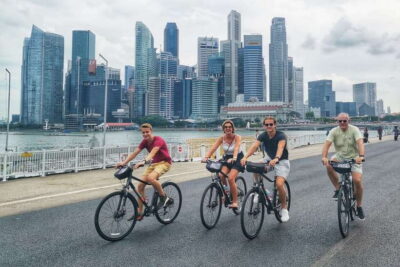

Singapore Private Food, Culture and Heritage Tour with 9 tastings
Read our review →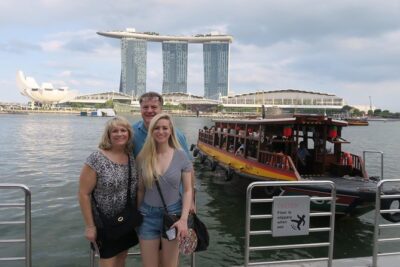
Singapore Group History & Culture Walking Tour
Read our review →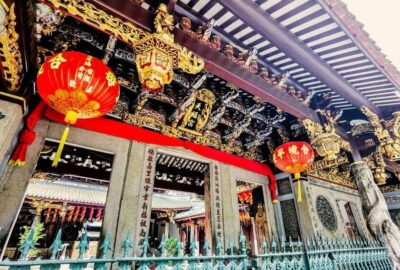
Singapore: Chinatown Historic Walking Tour with Lunch
Read our review →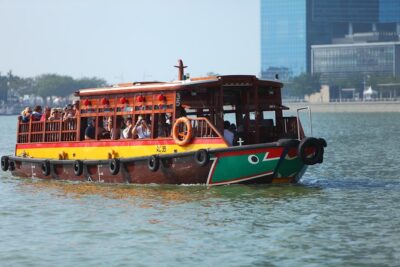
Browse the lists this tour appears in