Reviewed · TICKETS
Singapore: Singapore Oceanarium Entrance Ticket
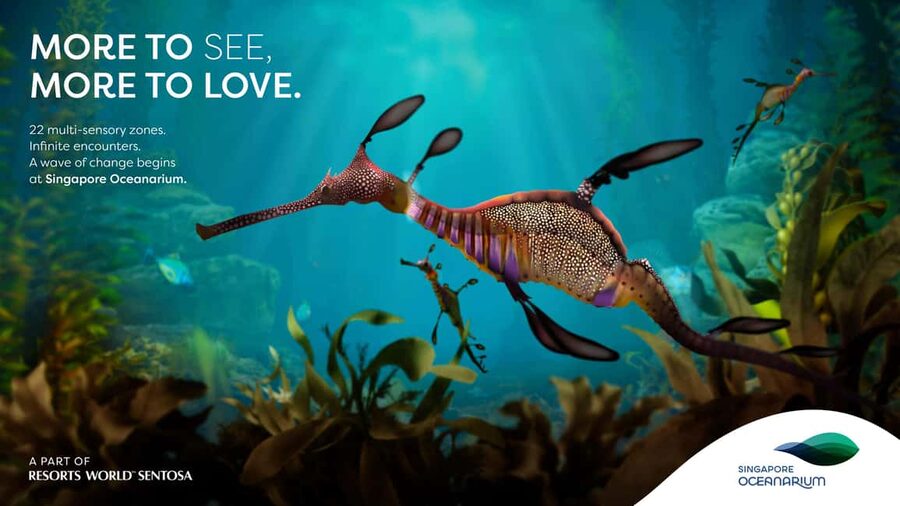
The most striking stop here is the 36-meter-wide viewing panel, where reef manta rays and zebra sharks move through a broad underwater scene. You can also see one of the world’s largest kreisel tanks, filled with more than 5,000 moon jellyfish.
I like the mix of live habitats and hands-on displays, especially the mangrove area where biodiversity comes closer to eye level. I also like that the visit connects sea life with research and conservation rather than treating the aquarium as a row of pretty tanks.
The main drawback is value: $43 per person is a serious ticket price for a visit that many people complete in about two and a half hours. It works best when you take your time, sit by the big tank, and make the Oceanarium part of a wider Sentosa day.
Key points to know before you go
- More than 5,000 moon jellyfish fill one of the world’s largest kreisel tanks.
- Touch-friendly mangrove displays make a usually overlooked habitat easier to understand.
- Life-sized animatronics and fossils trace the move from marine life toward land.
- Whale falls show how a dead whale can support an entire deep-sea ecosystem.
- The 36-meter viewing panel features reef manta rays and zebra sharks.
- A rainy-day choice with wheelchair access and regular park-hour entry.
A full day at Singapore Oceanarium
Singapore Oceanarium sits at Resorts World Sentosa, and the ticket gives you admission for one day during regular park hours. There is no fixed guide, group departure, or timed route in the information provided, so you can set your own pace once inside.
That freedom matters. You can move quickly through sections that interest you less, then spend real time at the jellyfish or main reef display. If you have children with you, the touch-friendly mangrove area may hold attention better than a long run of viewing windows.
The Oceanarium describes itself as an ocean institute as well as an attraction. Its work covers marine education, research, conservation, and the protection of threatened species. For you, that means the visit is designed to explain systems and habitats, not simply identify individual animals.
The building also includes a Research and Learning Centre for conservation, research, and community work. It has Green Mark Platinum Zero Energy certification from Singapore’s Building and Construction Authority and operates fully on solar power. That information will not replace the animal displays, but it gives the visit a useful link to the practical side of conservation.
More Singapore attraction tickets:
- Singapore: Gardens by the Bay Bundle Entry Ticket
★ 4.3 · 3,726 reviews - Singapore: Singapore Flyer Entry Ticket
★ 4.7 · 907 reviews - Singapore: Sentosa Wings of Time Fireworks Symphony Ticket
★ 4.3 · 321 reviews
Moon jellyfish in the giant kreisel tank
Start with the moon jellyfish if you want an immediate sense of scale. More than 5,000 jellyfish move through one of the world’s largest kreisel tanks, a circular tank designed to keep water flowing around delicate animals.
Jellyfish are easy to overlook in small displays. In a tank of this size and number, their movement becomes the main event. Their pale bodies and slow pulses create a calmer stop than the larger animal habitats, and the circular design lets you watch the flow from different angles.
I would not rush past this section. Give yourself a few minutes to watch the group rather than focusing on one animal. The display works well for children because the animals are easy to see, but adults may appreciate the quiet rhythm and the unusual tank design just as much.
The drawback is that this exhibit can feel less dramatic if you expect loud action or large predators. Its appeal comes from scale, motion, and the sheer number of animals, not from spectacle.
Mangroves made easy to understand
The mangrove habitat gives the Oceanarium a strong local and ecological angle. Mangroves often sit between land and sea, yet they can be hard to understand from a standard tank. Here, interactive displays and touch-friendly biodiversity features make the habitat more direct.
You can expect an experience built around seeing and handling information rather than only looking through glass. The exact interactive elements are not specified, so do not expect a detailed list of touch pools or named species before arrival. The useful point is that this section encourages you to notice how many forms of life share a shoreline habitat.
I like this stop because mangroves explain a wider story. They are not just a backdrop for fish. They connect water, land, shelter, and biodiversity, giving younger visitors a practical way to see why coastal habitats matter.
This section may feel less impressive than the huge reef panel. Its value is educational, and it rewards attention. If you are trying to finish in the shortest possible time, it is easy to skip. That would be a mistake if you want the Oceanarium to offer more than large animals and dramatic tanks.
From marine life to life on land
The marine evolution section uses life-sized animatronics and fossils to show how life developed from the sea toward land. It gives the visit a time scale that ordinary aquarium displays rarely provide.
The animatronics help turn an abstract scientific idea into something you can see at full scale. Fossils then add physical evidence to the story. Together, they create a bridge between living habitats and the long process of evolution.
I find this especially useful for families because it gives children a story to follow. Instead of viewing each tank as a separate stop, you begin to see a connection between ancient life, changing environments, and the animals alive today.
Do not expect this area to function like a natural-history museum with a long scholarly display. The supplied details point to life-sized figures and fossils, not a full timeline or specialist lecture. Treat it as a clear introduction to marine evolution, then spend more time in the live habitats if those are your main reason for coming.
Same island, a completely different afternoon:
- Lion City Bike Tour of Singapore
★ 5.0 · 6,211 reviews - Singapore: Big Bus Hop-On Hop-Off Tour by Open-Top Bus
★ 4.5 · 3,261 reviews - Singapore: Lion City Highlights Bike Tour
★ 4.9 · 2,010 reviews - Small Group: Michelin and Local Hawker Food Tour with 9 tastings
★ 5.0 · 1,890 reviews
Whale falls and the hidden life of the deep sea
The whale-fall exhibit focuses on a striking idea: when a whale dies and sinks to the ocean floor, its body can support an entire ecosystem. This is one of the more unusual themes at the Oceanarium because it shows how life can gather around death in a place far from sunlight.
The display gives you a better sense of the deep sea as a connected system. Instead of presenting the ocean as empty water with occasional large animals, it explains how energy and nutrients move through a habitat.
The available details do not specify the exact animals or whether the exhibit uses live creatures, digital features, or a combination of methods. You should expect a dedicated deep-sea presentation built around the whale-fall story, not a guaranteed encounter with a particular species.
This section is valuable if you enjoy the science behind marine life. It may be less satisfying if you are mainly looking for bright coral, fast-moving fish, or large sharks. The Oceanarium works best when you accept both kinds of exhibit: the visually grand and the scientifically surprising.
The 36-meter reef panel
The main reef display is likely to be the natural pause in your visit. A 36-meter-wide panel gives reef manta rays and zebra sharks room to move across a large field of water, creating the sort of view that small tanks cannot match.
This is where I would plan to sit for a while. One visitor spent about two and a half hours walking through the Oceanarium and specifically suggested taking a snack near the big tank before sitting down. That is practical advice, not a minor detail. A large panel changes as animals cross the scene, and you see more by staying put than by taking one quick photograph.
The reef manta rays provide the graceful movement, while zebra sharks bring a different shape and pace. The display should appeal to people who want an immediate visual highlight, and it gives children a clear focal point after the more interpretive sections.
Crowding and viewing space can affect how long you want to stay, but no crowd information is provided, so I would not promise a quiet seat. Still, the scale of the panel makes it the place to protect time for. If you have only two hours, spend some of them here rather than trying to read every label.
Research, conservation, and the purpose behind the displays
The Oceanarium’s mission includes marine education, research, and conservation. It also works with global institutes and holds accreditation from the Association of Zoos and Aquariums, along with memberships in the World Association of Zoos and Aquariums and the Southeast Asian Zoo and Aquarium Association.
These affiliations do not guarantee that every display will interest you, but they help explain the institution’s wider role. The attraction is presenting itself as a working ocean institute, not only as an entertainment venue.
The Research and Learning Centre adds weight to that claim. Its solar-powered, Green Mark Platinum Zero Energy design links the building to the environmental issues discussed inside. You may not spend much time there during a standard visit, yet the centre shows that sustainability is part of the site’s operation.
I appreciate this context because aquariums can otherwise feel disconnected from the problems they describe. Here, the stated mission gives the animal habitats a clear purpose: help people understand aquatic life and take conservation more seriously.
How long should you allow?
The ticket is valid for one day, but that does not mean you need to spend a full day inside. A realistic visit can take about two and a half hours if you walk steadily and stop at the major displays.
I would allow at least three hours if you want time for the moon jellyfish, mangroves, evolution section, whale falls, and the large reef panel. A longer visit makes sense if you plan to sit near the main tank, stop for a snack, or revisit a favorite area.
The one-day validity is useful because it removes pressure to finish on a strict schedule. You can plan the Oceanarium around other Sentosa activities, though no re-entry terms are provided, so you should confirm the current rules before relying on a split visit.
The facility is wheelchair accessible. The ticket is valid only during regular park hours and not for exclusive events, while opening hours may change without notice. Check the operating schedule before setting out.
Is the $43 ticket good value?
At $43 per person, this is not a casual stop for everyone. If you want a quick look at a few fish tanks, the price may feel high, especially if your visit lasts only two hours.
The value improves if you use the full day and care about more than animal size. The ticket covers the moon jellyfish kreisel, mangrove displays, marine evolution section, whale-fall exhibit, and large reef panel, along with the Oceanarium’s wider education and conservation setting.
Rain also changes the calculation. One verified booking described the Oceanarium as an excellent rainy-day choice and praised its size after walking through it. Singapore’s wet weather can disrupt outdoor plans, so an indoor attraction with enough material for a few hours has practical value even if it is not the cheapest Sentosa option.
I would also compare the ticket with your own interests. Families, aquarium fans, and people who enjoy marine science are more likely to feel they received fair value. If you are not interested in ocean habitats, the large price may be harder to justify.
Who should book this experience?
I would recommend Singapore Oceanarium to families who want an indoor activity with clear visual highlights and some hands-on learning. The mangrove displays and evolution section give children different ways to engage, while the manta rays, zebra sharks, and jellyfish provide the big moments.
It also suits anyone planning a rainy day at Sentosa. You can spend several hours indoors without needing a guide or fixed tour route, and the full-day ticket gives you flexibility.
It is a good choice for visitors who want conservation and research included in the experience. The whale-fall section, solar-powered Research and Learning Centre, and habitat-focused displays give the visit more substance than a simple animal showcase.
I would think twice if your budget is tight or if you only have a short gap between other plans. The ticket is non-refundable, so make sure the date works and check the hours before buying. The Oceanarium will be closed to the public on June 13, 2026.
Should you book Singapore Oceanarium?
Book it if you want a polished indoor attraction with several distinct subjects, not just one large tank. The moon jellyfish, touch-friendly mangroves, whale-fall story, and 36-meter reef panel give you a varied visit, and the conservation focus adds useful context.
Skip it if $43 feels too steep for roughly two and a half hours or if you are unlikely to stop and watch the displays. My best advice is to plan enough time for the main reef panel, bring patience for the quieter scientific sections, and use the full day if your schedule allows.
FAQ
Where is Singapore Oceanarium located?
Singapore Oceanarium is located at Resorts World Sentosa in Singapore.
How much does admission cost?
The listed admission price is $43 per person.
How long is the ticket valid?
The ticket is valid for one day during regular park hours.
Is the ticket valid for exclusive events?
No. The ticket is not valid for exclusive events.
Is Singapore Oceanarium wheelchair accessible?
Yes, the activity is wheelchair accessible.
Is the ticket refundable if plans change?
No. This activity is non-refundable.
When will Singapore Oceanarium be closed?
The Oceanarium will be closed to the public on June 13, 2026. Opening hours may also change without notice.
What animals and exhibits can you see?
The experience includes more than 5,000 moon jellyfish, a mangrove habitat with interactive biodiversity displays, life-sized animatronics and fossils about marine evolution, a whale-fall deep-sea exhibit, and a 36-meter-wide panel with reef manta rays and zebra sharks.
Recently added around Singapore
- The Real Singapore Heartland Walking Food Tour★ 5.0 · 4 reviews
- Vegetarian Culinary Adventure in Singapore★ 5.0 · 7 reviews
- Singapore’s Marina Bay Wonders and Heritage Tales, Chinatown★ 5.0 · 5 reviews
- Singapore’s Hidden Treasures: A Cultural Private Tour★ 5.0 · 3 reviews
- Private Tour Singapore Street Food & Night Tour★ 5.0 · 4 reviews
- Singapore – Albatross Speedboat Adventures Cruising in Sentosa★ 5.0 · 3 reviews
- Small Group Full Day Singapore City Tour with Roundtrip Transfers★ 4.0 · 11 reviews
- Tastes of Chinatown★ 5.0 · 4 reviews
Tickets, compared.
Singapore: Gardens by the Bay Bundle Entry Ticket
Read our review →
Singapore: Sentosa Wings of Time Fireworks Symphony Ticket
Read our review →



Singapore: National Gallery Singapore Admission Ticket
Read our review →