
Reviewed · WALKING TOURS
Splendour of Colonial Singapore Walking Tour with Lunch
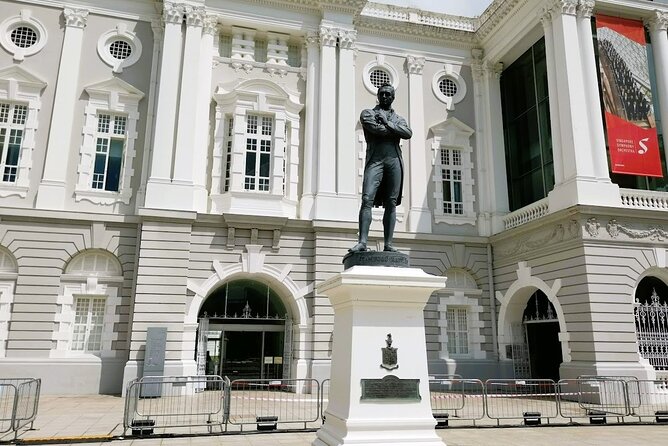
Singapore’s colonial past is easiest to understand on foot, where grand government buildings, bridges, churches, and old civic institutions sit within a compact part of the city. This tour follows that story from Raffles’ arrival in 1819 through Singapore’s development as a British colony and on to independence in 1965.
I like the clear historical path and the three-course lunch at Boat Quay, which gives the walking a welcome pause. I also like the practical touches: a licensed guide, a rain poncho, and planned stops inside or near cool buildings during a hot day. The main consideration is Singapore’s weather. You’ll be outside for much of the 3.5 hours, and the tour runs rain or shine.
Key points to know
- Follow Singapore from 1819 to 1965: The tour links buildings to the political and social changes that shaped the modern city.
- See the Civic District’s grandest landmarks: St. Andrew’s Cathedral, National Gallery Singapore, The Fullerton Hotel, and Victoria Theatre are all part of the route.
- Pause for a three-course riverside lunch: Boat Quay breaks up the walk and adds a relaxed meal beside the Singapore River.
- Expect a strong guide-led experience: Ping is known for clear explanations, personal stories, humor, and careful attention to the group.
- Plan for heat and rain: Wear comfortable shoes, carry water, and use the provided disposable poncho if the weather turns.
- Good value at $49: The price includes the guide and lunch, not just a commentary walk.
A walking introduction to Singapore’s colonial center
The tour begins at City Hall MRT Station Exit B at 9:55 a.m. This is a sensible meeting point because the Civic District is close by, and you can reach it easily by Singapore’s excellent MRT system. Hotel pickup and drop-off are not included, so you’ll need to make your own way there.
This is not simply a parade of old buildings. The guide uses the architecture to explain how Singapore changed from a British trading post into a major port and then an independent nation. You’ll hear about the East India Company, the Straits Settlements formed in 1826, and Singapore’s later status as a separate British crown colony.
That broad time frame gives the walk a useful shape. Instead of hearing disconnected facts, you can see how town planning, law, education, infrastructure, and government institutions developed around the river and civic center.
The colonial theme is also presented with some balance. The tour pays attention to the systems and buildings left by British rule, while the larger story leads toward Singapore’s own national development. If you want a tour focused mainly on food, modern architecture, or local neighborhoods, this is not the right choice. If you want a solid first look at how the city was organized and governed, it makes good sense.
A few more Singapore experiences worth comparing
- Singapore: Chinatown Historic Walking Tour with Lunch
★ 5.0 · 134 reviews - Splendour of Colonial Singapore Walking Tour with Lunch
★ 5.0 · 59 reviews - SMALL GROUP: Batam day tour with Ferry, 1-hour Massage, and Lunch from Singapore
★ 4.0 · 29 reviews
St. Andrew’s Cathedral and the first civic views
St. Andrew’s Cathedral is the first major stop. You’ll have about 15 minutes for a guided visit and photographs. Its white exterior and formal design provide an early example of the colonial city’s religious and civic architecture.
This stop helps set the tone for the rest of the walk. The buildings here were not thrown together as temporary trading-post structures. They were part of a planned colonial center, designed to project order, authority, and permanence.
You should have time to listen and take photographs, but this is still a walking tour rather than a long cathedral visit. If you want extensive time inside every building, the schedule may feel brisk.
National Gallery Singapore and the heart of the Civic District
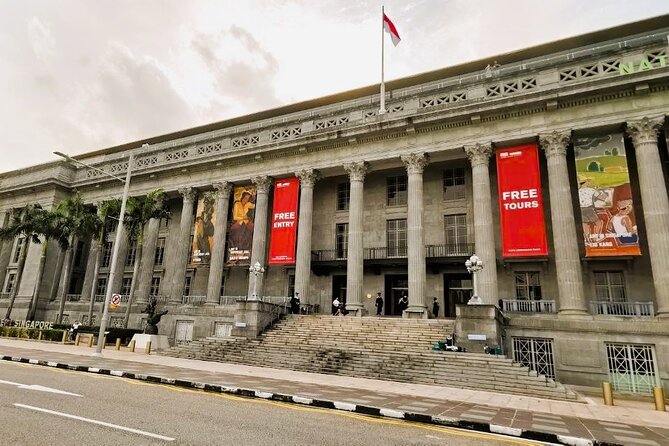
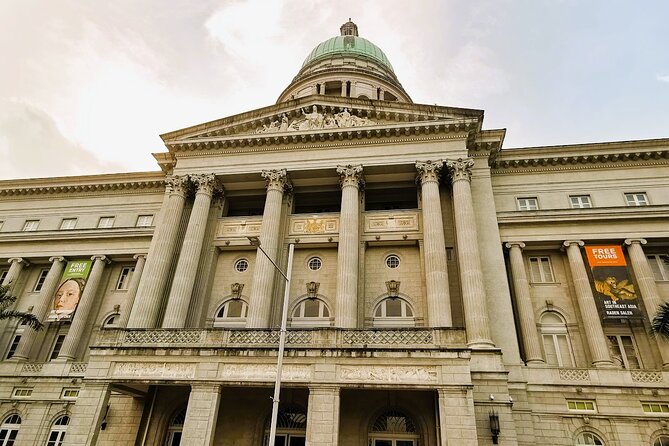
The National Gallery Singapore receives the longest stop before lunch, about 40 minutes. It occupies two former government buildings, the former City Hall and former Supreme Court, so it is one of the most useful places on the route for understanding Singapore’s colonial administration.
The building’s scale tells you something before the guide says a word. Wide steps, imposing facades, and formal spaces reflect the role of government under British rule. The site also connects the colonial period with Singapore’s later political story, making it more than a pretty photograph.
This is likely to be one of the more rewarding stops for first-time visitors. You can see how architecture, law, and power came together in one place. A guide such as Ping can add the human side, explaining what happened here and why the buildings matter to Singapore today.
The 40-minute visit is long enough for a proper explanation, though not enough for a full art museum experience. Don’t expect to explore every gallery. The point is the building, its civic role, and the link between colonial government and modern Singapore.
The Arts House and the former Parliament
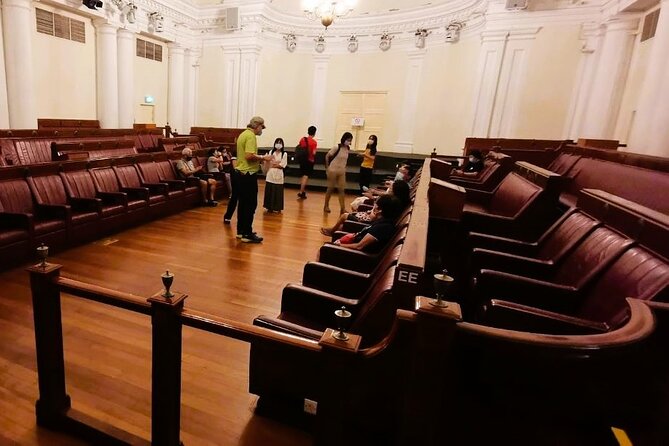
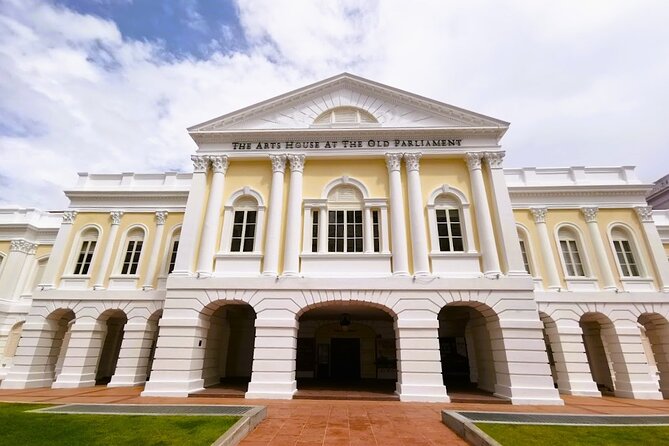
The walk continues to The Arts House, with about 20 minutes for commentary and photographs. This former Parliament building brings the political story into sharper focus.
Here, the tour moves beyond British administration and toward Singapore’s own government. The building’s continued cultural use also shows how older institutions can be given a new role instead of being left as museum pieces.
You’ll want to listen closely at this point. The value is not only in the facade, but in understanding how a colonial legislative building became part of the country’s post-colonial civic life.
More walking tours in Singapore:
- Singapore: Private Walking Tour with a Local
★ 4.7 · 410 reviews - Private Customised Singapore Walking Tour
★ 5.0 · 370 reviews - Singapore: Chinatown and Little India Guided Walking Tour
★ 4.8 · 190 reviews - Singapore: Customized Private Tours (Car/Bus/Walking)
★ 5.0 · 181 reviews
Victoria Theatre, the Asian Civilisations Museum, and Cavenagh Bridge
Victoria Theatre and Concert Hall gets a shorter 10-minute stop. The paired buildings are easy to recognize, with their formal facades and clock tower. The guide’s job here is to explain their place in Singapore’s public life, while you take in the architecture and photographs.
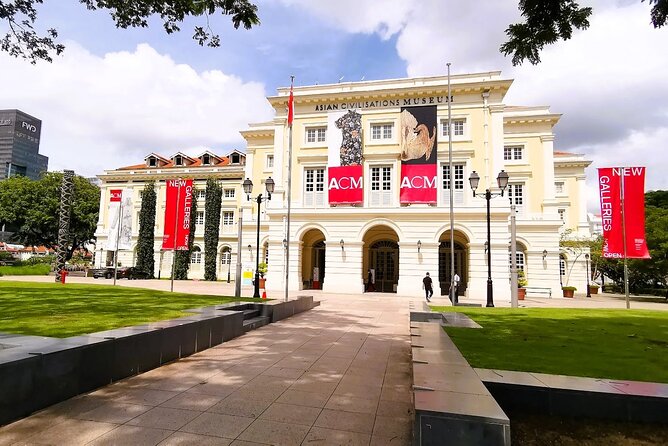
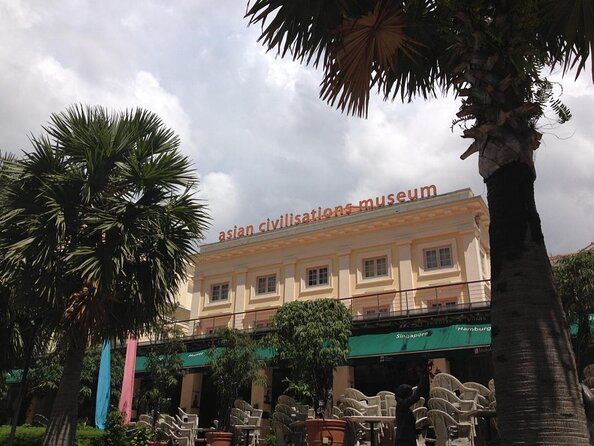
The Asian Civilisations Museum follows, but only for a very brief guided stop of about a minute. Treat this as a passing landmark rather than a museum visit. You’ll see where it fits into the riverfront district, but you should not expect time to tour its collections.
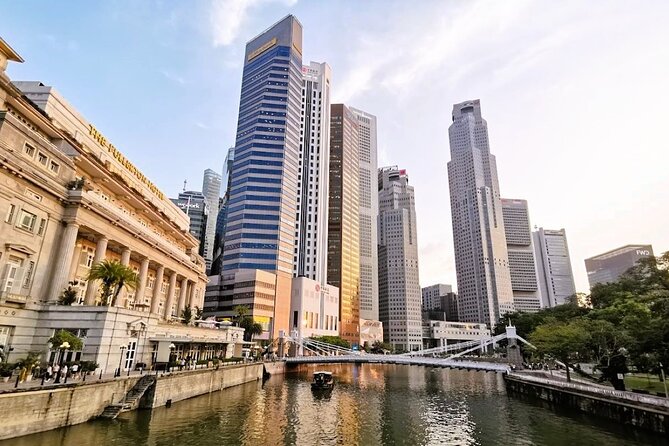
Cavenagh Bridge receives about 10 minutes. This historic bridge gives the walk a change of scale. After several grand civic buildings, you are looking at a piece of practical infrastructure that helped connect the riverfront.
The stop also gives you a chance to look across the Singapore River and understand why this waterway mattered to the city’s growth. The river was central to trade, movement, and the development of Boat Quay, which is where lunch takes place.
The Fullerton Hotel and Singapore’s riverfront story
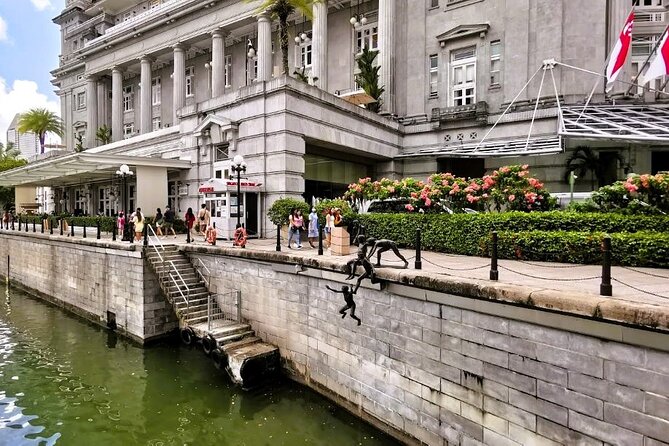
The Fullerton Hotel is another major colonial landmark, with about 15 minutes of guided commentary. The building occupies an important position beside the river and helps explain the relationship between administration, commerce, and transport.
This part of the walk is especially useful if you are trying to connect Singapore’s polished modern center with its older port city. The architecture is grand, but the river nearby keeps the story grounded in trade and daily work.
You’ll have more than a quick photo stop, but the schedule still moves at a steady pace. Wear shoes that handle pavement well, and keep water within reach. Singapore’s heat can make even a moderate city walk feel tiring by late morning.
Boat Quay lunch beside the Singapore River
Around midday, the group stops at Boat Quay for a 40-minute lunch. The meal is a three-course lunch at a riverside restaurant, and it is included in the $49 price.
This is an important part of the experience, not just an add-on. A long walking tour in Singapore benefits from a proper pause, and Boat Quay gives you a place to sit, eat, and continue looking at the riverfront setting. The meal also makes the price easier to justify compared with a walking tour that charges only for guiding.
The food selection has been described as solid, with a good range of choices. Still, the supplied details do not name the restaurant or spell out the menu, so you should not book this expecting a particular cuisine or dish. If you have strict dietary needs, ask before booking rather than assuming the three-course meal will suit you.
The break is also a good chance to ask the guide questions. Ping is especially well regarded for answering open questions, adding personal stories, and adjusting explanations to the interests of the group. She has also been praised for remembering names, taking photographs for solo visitors, and keeping the pace comfortable.
One unusual bonus mentioned in connection with Ping’s tours is the chance to see river otters near Boat Quay. Do not treat that as a guaranteed part of the itinerary, but keep your eyes open around the water.
Old Hill Street Police Station and Central Fire Station
After lunch, the route moves to Old Hill Street Police Station. The guided stop is listed as very brief, about two minutes, so this is mainly a quick look and explanation rather than a substantial visit.
The building is easy to recognize for its colorful window shutters, but the useful detail is its former police role. It shows another side of colonial administration: not grand government ceremony, but the systems used to manage a growing port city.
Central Fire Station receives about 20 minutes, giving the guide more time to explain the building and its place in Singapore’s civic services. Its red-and-white design is one of the area’s most distinctive sights.
These final stops broaden the story. The tour is not limited to governors, courts, and grand hotels. It also considers the practical infrastructure needed for a dense, growing city. Police and fire services tell you how colonial Singapore functioned day to day.
St. Gregory the Illuminator and the close of the walk
The final listed stop is St. Gregory the Illuminator, with around 15 minutes for a guided visit and photographs. This Armenian church adds another community to the colonial story.
That matters because Singapore was never only a British town. Its port attracted people from many places, and different religious and cultural groups helped shape the city. St. Gregory’s gives the tour a chance to move beyond official British buildings and acknowledge the communities that lived and worked in colonial Singapore.
The activity ends back at the meeting point. The supplied details do not give a precise finishing time beyond the total duration of 3.5 hours, so allow some flexibility if you have a tightly timed afternoon plan.
How Ping shapes the experience
The guide can make or break a history walk, and Ping receives especially strong praise for her delivery. Her strengths are not just factual knowledge. She uses humor, personal and family stories, and simple explanations to make a long timeline easier to follow.
Ping also appears attentive to the practical needs of a group. Her tours have included rest and bathroom breaks, time in air-conditioned buildings, and a pace that suits people of average fitness. She has tailored information to what participants wanted to know rather than delivering a rigid speech.
That personal approach is helpful for families. Children may not care about a list of dates, but they can follow stories about people, buildings, political change, and daily life. Solo visitors also benefit from a guide who takes photographs, since the route has plenty of good backdrops but few natural ways to photograph yourself.
A guide may vary by date, so Ping should not be treated as guaranteed unless the booking confirms her name. When she is leading the tour, her contribution is a major part of the value.
What the $49 price really covers
At $49 per person, this is priced above a basic free walking tour, but the comparison is not exact. You are paying for a licensed guide, a structured route through the Civic District, and a three-course lunch beside the river.
You also get a disposable poncho if rain arrives. That is a small detail, but useful in Singapore, where a sudden shower can otherwise interrupt a carefully planned morning.
The best value comes if you want context rather than just photographs. A self-guided walk can take you past these buildings, but it may not explain how they connect from 1819 to 1965. The tour also saves you the trouble of choosing a lunch stop during the walk.
The limitations are clear. Hotel transfers are not included, and the tour is in English only. The museum stops are mostly exterior or short guided visits, so this is not a substitute for spending half a day inside the National Gallery or Asian Civilisations Museum.
Who should book this walk
I would choose this tour for a first or second day in Singapore, especially if you want historical bearings before exploring Chinatown, Little India, or the newer parts of the city.
It suits:
- First-time visitors who want a clear introduction to Singapore’s past
- Families looking for an active but manageable history tour
- Solo visitors who value help with photographs
- People who prefer buildings, civic stories, and city planning to shopping
- Anyone who wants lunch included rather than finding a restaurant mid-tour
You should think twice if you dislike walking in hot weather, need a slow pace with frequent seated breaks, or want long interior visits at museums. The route is manageable for average fitness, but Singapore’s humidity is a real factor.
Wear comfortable shoes and bring water. A hat can also help, though only comfortable shoes and water are specifically listed as recommended items. Since the tour runs rain or shine, check the forecast but do not assume rain will cancel it.
Free cancellation is available up to 24 hours in advance, and you can reserve now and pay later. Those policies are useful if your Singapore schedule is still shifting.
Should you book the Splendour of Colonial Singapore walk?
Book it if you want a well-organized introduction to Singapore’s colonial center, with enough explanation to connect impressive buildings to the country’s larger story. The lunch, rain poncho, and licensed guide make $49 a fair price, especially when Ping is leading.
The strongest reason to choose it is the guide-led storytelling. Ping brings warmth, humor, personal detail, and practical care to what could otherwise be a dry architecture walk. The main caution is the weather and the limited time inside some buildings.
For a history-minded visitor, a family, or a solo visitor arriving in Singapore without much local context, this is a smart half-day choice. It gives you a useful framework for seeing the city, then leaves the rest of the afternoon free.
FAQ
Where does the tour start?
Meet at 9:55 a.m. at City Hall MRT Station Exit B, at street level.
Where does the tour finish?
The activity ends back at the meeting point.
How long does the tour last?
The walking tour lasts 3.5 hours. Check availability for the starting time.
Is lunch included?
Yes. The price includes a three-course lunch at a riverside restaurant in Boat Quay.
Is the tour conducted in English?
Yes. The live tour guide and tour commentary are in English.
What happens if it rains?
The tour runs rain or shine. A disposable poncho is provided if needed.
Is hotel pickup included?
No. Hotel pickup and drop-off are not included, so you must travel to and from City Hall MRT Station yourself.
Recently added around Singapore
- The Real Singapore Heartland Walking Food Tour★ 5.0 · 4 reviews
- Vegetarian Culinary Adventure in Singapore★ 5.0 · 7 reviews
- Singapore’s Marina Bay Wonders and Heritage Tales, Chinatown★ 5.0 · 5 reviews
- Private Tour Singapore Street Food & Night Tour★ 5.0 · 4 reviews
- Singapore’s Hidden Treasures: A Cultural Private Tour★ 5.0 · 3 reviews
- Singapore – Albatross Speedboat Adventures Cruising in Sentosa★ 5.0 · 3 reviews
- Small Group Full Day Singapore City Tour with Roundtrip Transfers★ 4.0 · 11 reviews
- Tastes of Chinatown★ 5.0 · 4 reviews
Walking Tours, compared.
Singapore: Chinatown and Little India Guided Walking Tour
Read our review →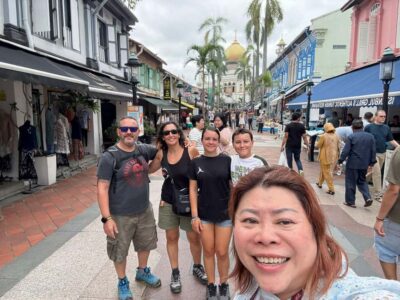
Singapore: Customized Private Tours (Car/Bus/Walking)
Read our review →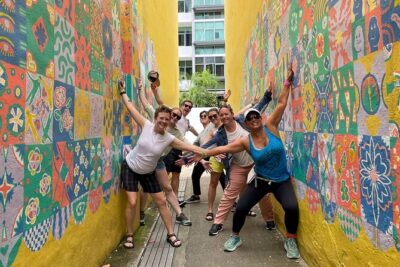
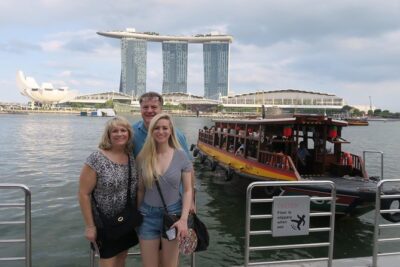
Singapore Group History & Culture Walking Tour
Read our review →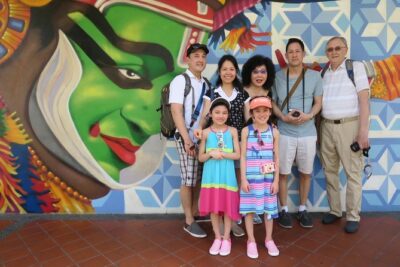
Half Day or Full Day Private Custom Walking Tour of Singapore
Read our review →
Singapore: Chinatown Historic Walking Tour with Lunch
Read our review →Browse the lists this tour appears in