
Reviewed · SINGAPORE STREET FOOD AND HAWKER TOURS
Street Food, Cultural & Historical Tour of 3 Ethnic Quarters
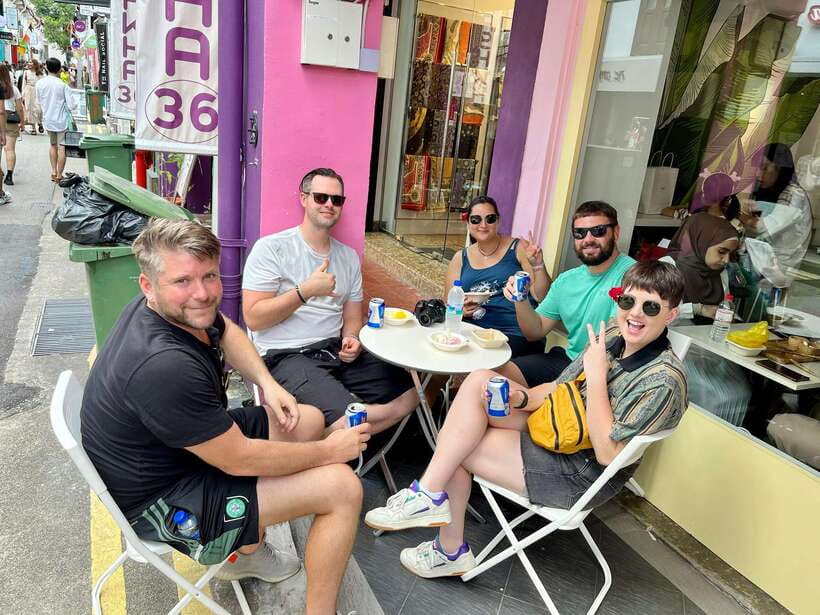
Singapore’s food story makes the most sense when you see where people shop, work, worship, and eat. This six-hour tour connects Chinatown, Little India, and Kampong Glam, with generous tastings, market visits, old photographs, and the everyday details that a quick sightseeing stop can miss.
I like the personal angle: Gerry is a Singapore-born Chinese Peranakan whose great grandparents came from Fujian in 1910. I also like the practical design, with public transport linking the three districts and a small group capped at eight people. The main caution is the pace. You will walk about 6,000 steps, eat through several stops, and spend much of the day on your feet.
Key points at a glance
- Three historic quarters in one day: Visit Singapore’s Chinese, Indian, and Malay districts, each with its own food, markets, buildings, and customs.
- Gerry’s family connection: Your guide brings a local viewpoint shaped by Chinese Peranakan heritage and family roots reaching back to Fujian.
- Food is part of the history lesson: Taste hawker food, Indian and Malay dishes, drinks, snacks, and dessert, including Michelin-listed food.
- Markets before meals: See seafood, meat, produce, herbs, spices, clothing, textiles, and street stalls that explain how local food reaches the table.
- Public transport included: Ride Singapore’s clean and well-connected network between the neighborhoods, with tickets covered.
- A full six-hour outing: Plan for roughly 6,000 steps, comfortable clothes, and enough appetite for repeated tastings.
Three neighborhoods, one useful introduction to Singapore
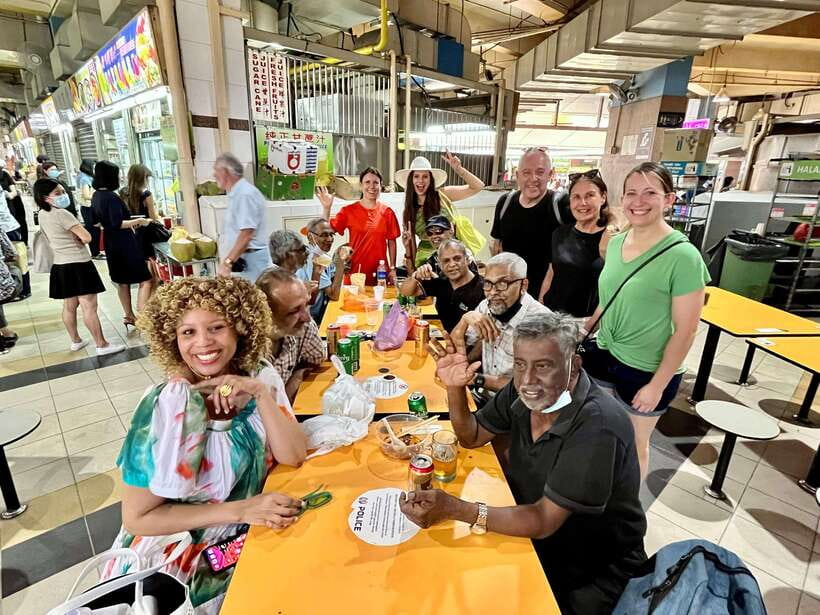
The smart idea here is not simply to eat in three districts. You use food and streets as a way to understand how Singapore grew from immigrant settlements into a modern city.
The British laid out the main ethnic quarters in 1822. Chinatown served the Chinese community, Little India the Indian community, and Kampong Glam the Malay community. Those labels only tell part of the story, but they give the day a clear shape. You see how each area developed, then taste the food connected to its people and businesses.
Gerry keeps the day moving with stories, old images, and plenty of conversation. His background gives him a natural connection to the Chinese side of Singapore, but the tour covers all three communities. The best use of a guide here is not to recite dates. It is to explain why a market, a row of shophouses, or a particular food still matters.
The tour is limited to eight people. That is small enough for questions and conversation without the formal feel of a large coach group. It also makes food sharing and movement through markets easier.
More hawker centre crawls:
- Small Group: Michelin and Local Hawker Food Tour with 9 tastings
★ 5.0 · 1,890 reviews - Small Group: Singapore Street Food & Night Tour with 9 tastings
★ 5.0 · 1,240 reviews - Singapore: UNESCO Street Food & Cultural Experience
★ 5.0 · 524 reviews
Chinatown: food, faith, and the old immigrant quarter
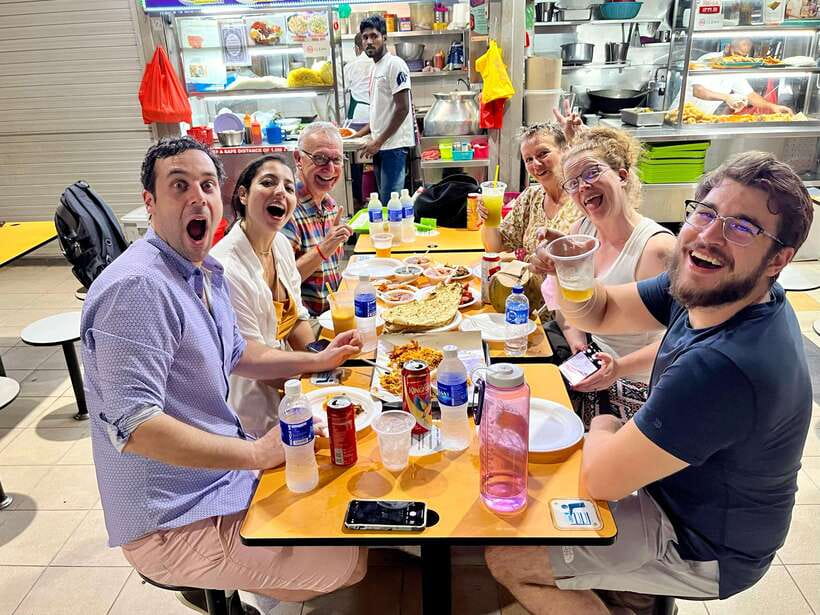
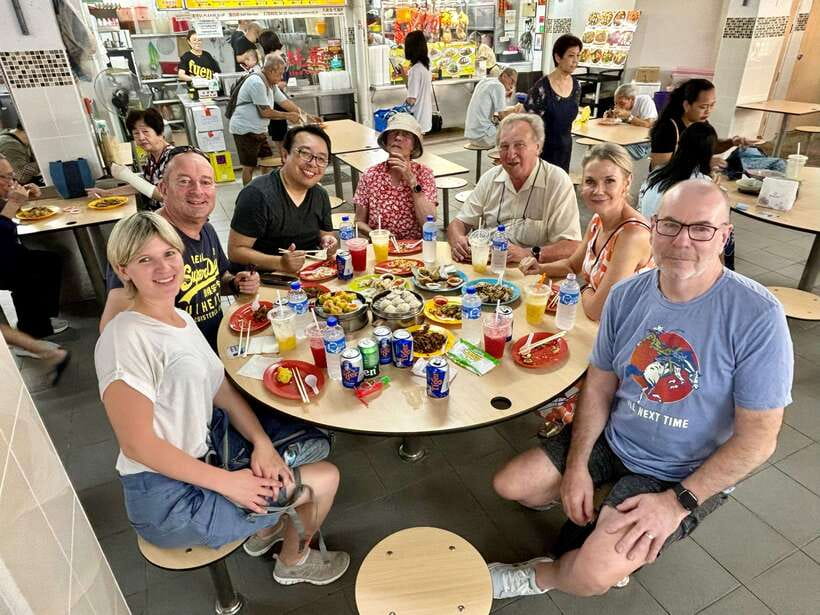
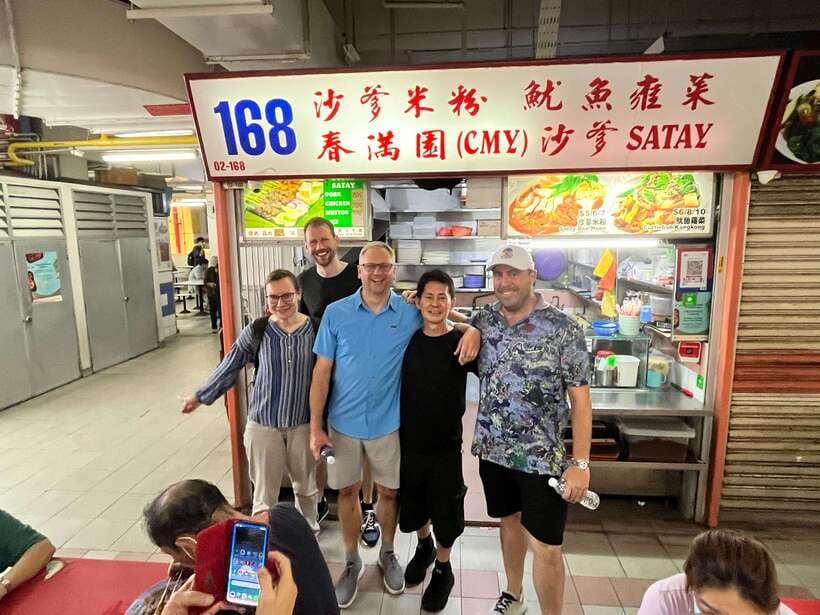
The Chinatown portion begins with local Chinese food and drink at a hawker centre. Singapore’s hawker centres are UNESCO-inscribed cultural spaces, and they are central to the country’s food life. You are not eating in a staged restaurant setting. You are visiting a place where family-run stalls and independent hawkers serve everyday dishes to the local community.
The exact food selection can vary, but the day includes a spread of local favorites, drinks, and food listed in the Michelin Guide. That combination makes the experience useful for first-time visitors. You can try dishes with a guide beside you, rather than ordering blindly from a menu filled with unfamiliar names.
Gerry also introduces the street market stalls and a Buddhist temple. The temple adds balance to the food stop, reminding you that Chinatown is a working neighborhood and religious center, not just a dining district.
The historical stories are darker and more revealing. You hear about the Street of the Dead, red lanterns and private chambers, and opium dens. These subjects point to the hardships faced by early immigrants and the difficult conditions that shaped the district. Old photographs help connect the past to the streets you are seeing now.
I appreciate that the tour does not present Chinatown as a polished backdrop with the uncomfortable parts removed. Singapore’s progress came after generations of struggle, crowded living, hard labor, and changing government policies. Those details give the food more meaning.
Allow about an hour for this first section. It is a short period for a district with so much to see, so you should treat it as an introduction rather than a full Chinatown tour. The advantage is that the day continues quickly into two other communities.
Riding between districts by Singapore’s public transport
The transfers between neighborhoods take about ten minutes each, and public transportation tickets are included. This is more than a cost-saving detail. It lets you see how the three historic quarters fit into modern Singapore.
The network is described as clean, efficient, comfortable, and well connected. For a visitor, that means you spend less time dealing with directions and more time listening to the guide. Gerry handles the practical side while you move from one part of the city to the next.
There is a small physical trade-off. Public transport means walking to stations and standing or moving through busy public spaces. The tour is not suitable for wheelchair users, people with mobility impairments, mobility scooters, non-folding wheelchairs, walking frames, or non-folding strollers. It is also not recommended for people with back problems, vertigo, respiratory issues, or a low level of fitness.
The pickup and drop-off arrangement depends on location. City-area hotel pickup and drop-off may be available, or you can meet at the first stop or the nearest MRT station. Confirm the meeting point before the day begins, since the exact arrangement is location dependent.
Little India: produce, spices, clothing, and a serious lunch
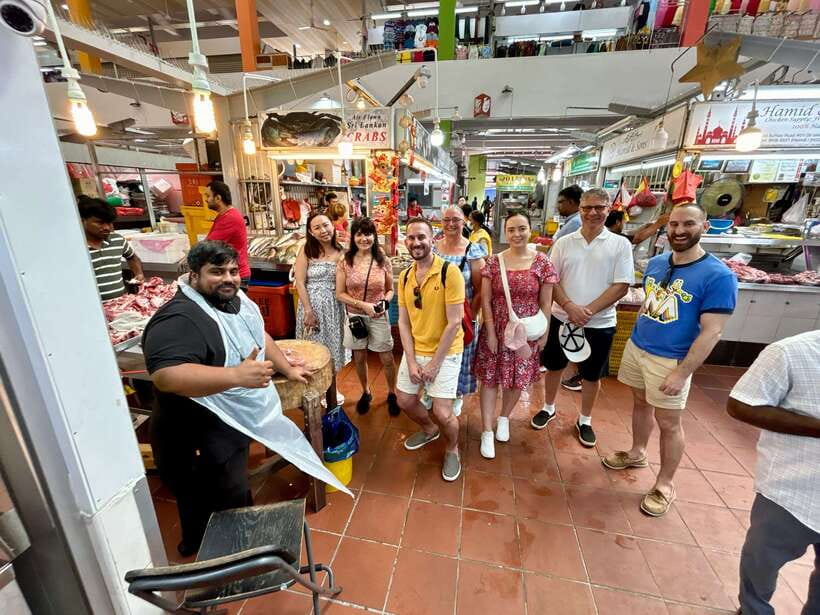
Little India is where the market side of the tour becomes especially useful. You visit wet and dry produce markets with seafood, meat, fruit, vegetables, herbs, and spices. The sights and smells here give you a better sense of how Indian and other local meals begin.
A market visit also helps explain why food is such a strong part of Singapore’s culture. You see the ingredients in their everyday setting before sitting down to eat. If you are curious about the spices used in local cooking, this is a more direct lesson than a short explanation in a restaurant.
The route also includes Indian clothing stalls and street stalls. Clothing, food, and religious life all overlap in Little India, so the district feels different from Chinatown even when the city’s modern buildings are nearby. Gerry uses stories and old images to explain how the area changed over time.
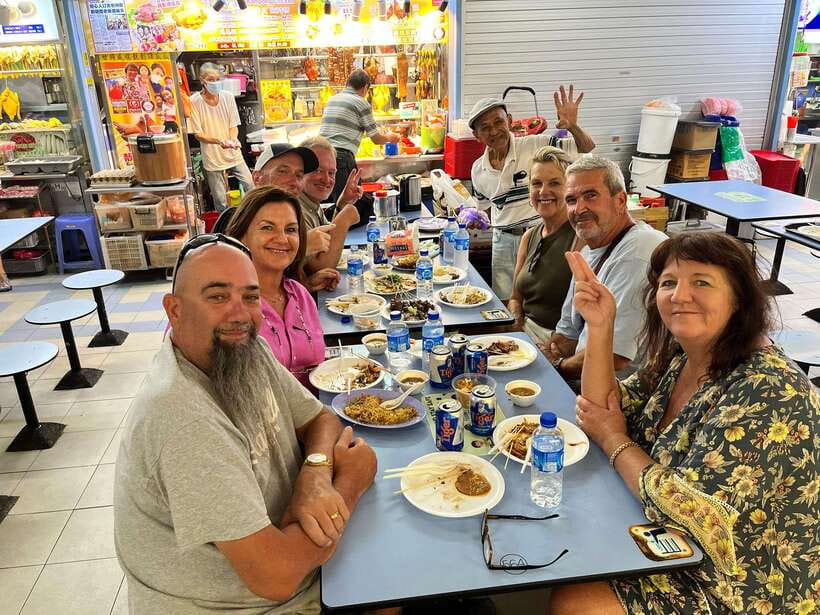
Lunch comes at a family eatery, with local Indian and Malay food and drink. Beer, coffee, tea, local snacks, and welcome refreshments are part of the included food and drink. Beer is specifically included, but you should tell the guide about any dietary needs before booking.
The food is a major strength of this tour, but it can also be a lot. You may have already eaten at the first stop, then face several more tastes in Little India. The practical advice is simple: do not eat a large breakfast, and arrive ready to share or sample rather than order a full meal for yourself.
Vegans and people with gluten intolerance are listed as unsuitable for the tour. That does not mean every dish contains the same ingredients, but the food program is broad and fixed enough that strict dietary needs may be difficult to manage. Fussy eaters may have some options, but you should ask before booking if your diet is limited.
More food tours in Singapore:
- The Award-Winning PRIVATE Food Tour: 10 Tastings of 3 Cultures
★ 4.5 · 1,017 reviews - Singapore: Chinese, Indian & Arabic Quarters, Culture & Food Tour
★ 5.0 · 789 reviews - Small-Group Food Tour With Hawker Center: Eat Like A Local
★ 5.0 · 420 reviews - Singapore Private Food, Culture and Heritage Tour with 9 tastings
★ 5.0 · 394 reviews
Kampong Glam: Haji Lane, Arab Street, and a sweet finish
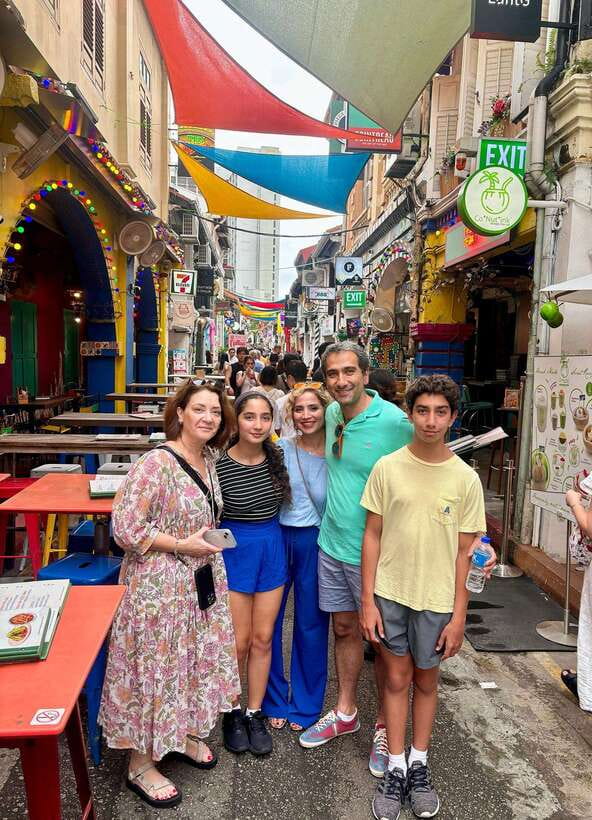
The final neighborhood is Kampong Glam, the Malay quarter. The route includes Haji Lane, colorful neighborhood graffiti walls, and textile shops on Arab Street. After the markets and hawker centre, this section gives you a different view of local commerce, with fabrics, clothing, and small shops taking center stage.
You are also introduced to Singapore’s first Sultan Mosque. The tour does not simply pass through the area as a photo stop. Its purpose is to connect Kampong Glam with the Malay and Muslim communities that shaped the district.
Dessert is served in an old shophouse accommodation once used by Muslim pilgrims in the 19th century. That setting adds a useful layer to the final stop. The building is part of the story, not just a place to sit down with something sweet.
The food here is lighter than the earlier sections, but do not expect another full meal. The published plan focuses on dessert, drinks, and local snacks. If you want savory food in every neighborhood, this final stop may feel less substantial. One sensible approach is to save a little room for dessert and not treat the earlier tastings as a race.
Kampong Glam is also the most visually playful part of the route, with Haji Lane and graffiti walls offering a contrast to the older stories of Chinatown and the market work of Little India.
What Gerry adds to the day
A good food tour guide needs more than restaurant recommendations. Gerry’s value comes from connecting the food to family history, immigration, urban change, and small business life.
He was born in Singapore six years after independence in 1965, and his Chinese Peranakan background gives him a personal starting point for explaining the city. His great grandparents arrived from Fujian in 1910, so the wider story of migration is not an abstract subject.
Gerry also brings old photographs. That matters in a city that has changed quickly. A picture of an earlier street or neighborhood can show how much has been rebuilt, cleaned up, or preserved. You can compare the image with the present surroundings instead of hearing a list of dates and names.
His style appears to be friendly and humorous, with time for questions and stories. That suits a small group. You are likely to get more from the day if you ask about foods, markets, family businesses, and the changes you notice along the route.
The tour also places attention on small businesses and the families who run them. That is a worthwhile feature for anyone who wants to spend money in local food stalls, markets, and independent shops rather than only in large commercial venues.
Is $148 good value?
At $148 per person, this is not a cheap hawker-centre crawl. It is a full six-hour experience with a guide, multiple food and drink tastings, public transportation tickets, and possible city-area hotel pickup and drop-off.
The value depends on how you would otherwise spend your day. If you would visit the three districts independently, pay for transport, try several meals, and arrange a way to sample unfamiliar food, the price covers a lot. The guide also saves you time and gives the neighborhoods a shared historical thread.
The food portion is generous. You should not plan breakfast immediately before the tour, and you may not need a large dinner afterward. Drinks include beer, coffee, tea, and other local options, although the exact spread can vary.
The tour is less good value if you mainly want one big meal or a deep tour of a single district. Six hours across three areas means you get a broad introduction rather than a specialist tour of Chinatown, Little India, or Kampong Glam alone.
The perfect score from all 23 published ratings points to strong satisfaction with Gerry, the food, and the organization. I would still judge the purchase by your interests. You are paying for context, variety, and convenience, not just calories.
Who should book it, and who should skip it?
I would recommend this tour to first-time visitors who want Singapore’s food and communities explained in one day. It suits couples, friends, and families with older children. A 15-year-old, for example, can get a lot from the mix of food, walking, markets, old photographs, and stories.
It is also a good choice if you feel unsure about ordering at hawker centres. Gerry can explain the setting and guide you through a wide selection of local tastes. The small group makes it easier to ask questions without holding up a large crowd.
You should skip it if you want a slow day, have serious mobility limitations, or prefer to control every meal. The route includes walking, public transport, markets, and repeated tastings. Pregnant women, babies under one year, people with respiratory issues or vertigo, and people with low fitness are specifically advised not to join.
Wear comfortable shoes and clothes. Do not bring oversize luggage, large bags, baby strollers, luggage, mobility scooters, or other bulky equipment that makes public transport and market walking harder.
Cancellation is flexible up to 24 hours before departure, with a full refund, and you can reserve now and pay later. Starting times depend on availability, so check the schedule before committing.
The final call
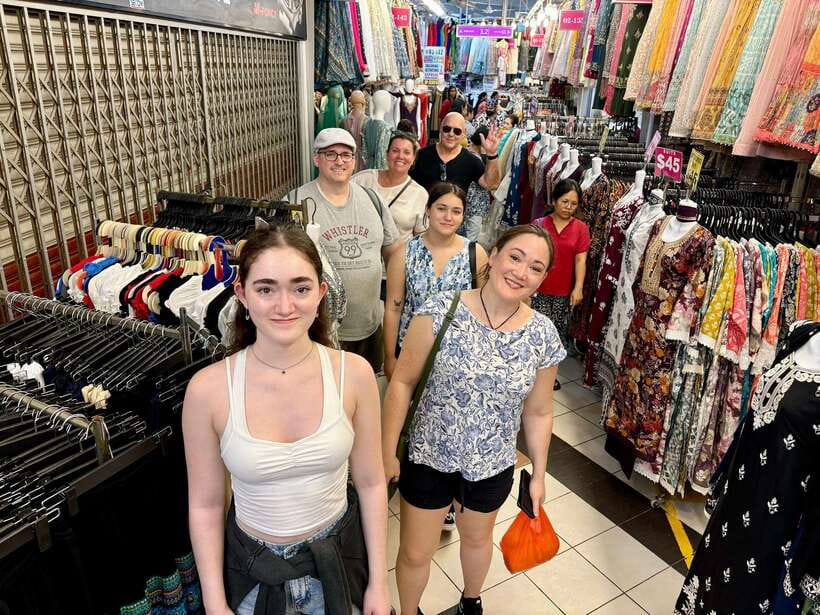
Book this if you want Singapore explained through food, family businesses, and neighborhood life, not only through famous buildings. Gerry’s personal background, old photographs, humor, and care for local businesses give the day a human scale.
Skip it if six hours of walking and frequent tastings sounds tiring, or if your diet cannot handle a mixed food program. For most first-time visitors with a healthy appetite and comfortable shoes, $148 buys a useful, well-organized introduction to three of Singapore’s most important cultural districts.
FAQ
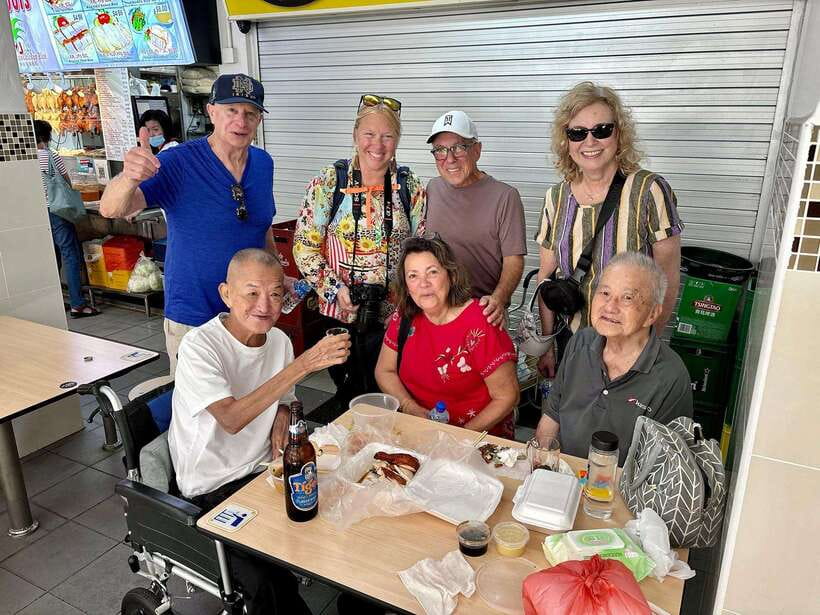
How long does the tour last?
The tour lasts six hours and includes walking, food tastings, market visits, guided sightseeing, and public transport between the three districts.
Which neighborhoods does the tour visit?
It visits Chinatown, Little India, and Kampong Glam, representing Chinese, Indian, and Malay communities.
Who leads the tour?
The tour is led in English by Gerry, a Singapore-born Chinese Peranakan guide whose great grandparents arrived from Fujian, China, in 1910.
Is food and drink included?
Yes. Food and drink are included, including beer, coffee, tea, local snacks, lunch items, and dessert. Some of the food is listed in the Michelin Guide.
Is public transportation included?
Yes. Public transportation tickets between the three quarters are included.
Is hotel pickup available?
Hotel pickup and drop-off are available for some city-area locations. You may instead meet at the first stop or the nearest MRT station. Confirm the exact arrangement through your booking.
How much walking is involved?
The tour involves about 6,000 steps. Comfortable shoes and clothes are recommended, and the experience is not suitable for people with mobility impairments or a low level of fitness.
More Heritage Tours in Singapore
- Historical Singapore Bike Tour on Full-Sized Bicycles
★ 5.0 · 1,421 reviews - Singapore: Historical Half-Day Bike Tour
★ 4.8 · 399 reviews - Singapore Group History & Culture Walking Tour
★ 5.0 · 160 reviews - Singapore: Chinatown Historic Walking Tour with Lunch
★ 5.0 · 134 reviews
Recently added around Singapore
- The Real Singapore Heartland Walking Food Tour★ 5.0 · 4 reviews
- Vegetarian Culinary Adventure in Singapore★ 5.0 · 7 reviews
- Singapore’s Marina Bay Wonders and Heritage Tales, Chinatown★ 5.0 · 5 reviews
- Singapore’s Hidden Treasures: A Cultural Private Tour★ 5.0 · 3 reviews
- Private Tour Singapore Street Food & Night Tour★ 5.0 · 4 reviews
- Singapore – Albatross Speedboat Adventures Cruising in Sentosa★ 5.0 · 3 reviews
- Small Group Full Day Singapore City Tour with Roundtrip Transfers★ 4.0 · 11 reviews
- Tastes of Chinatown★ 5.0 · 4 reviews
Singapore Street Food and Hawker Tours, compared.
Small Group: Michelin and Local Hawker Food Tour with 9 tastings
Read our review →
Small Group: Singapore Street Food & Night Tour with 9 tastings
Read our review →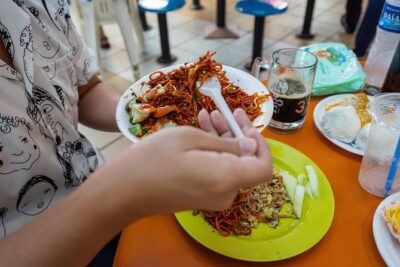
Singapore: UNESCO Street Food & Cultural Experience
Read our review →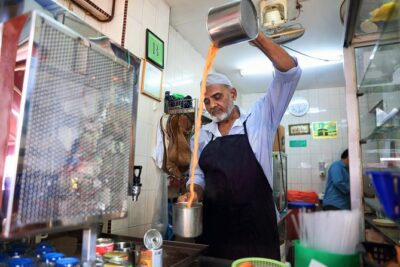
Small-Group Food Tour With Hawker Center: Eat Like A Local
Read our review →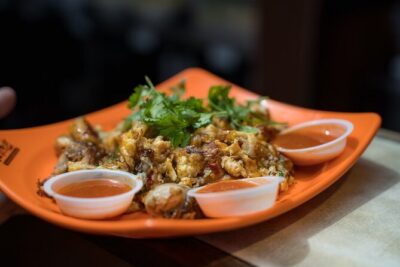
Singapore: Chinatown Hawker Market Food Tour with 7 Food Tastings
Read our review →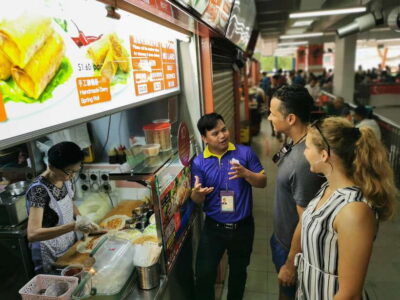
Singapore: Local Hawker Food Tour with Tastings
Read our review →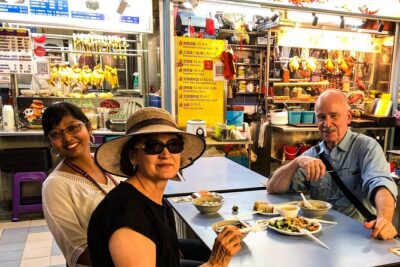
Singapore Street Food Tour with a Local: A Feast for Foodies 100% Personalized
Read our review →
A Taste of Singapore: Hawker Center Private Customized Food Tour
Read our review →Browse the lists this tour appears in