
Reviewed · SINGAPORE CHINATOWN TOURS
Nostalgic Chinatown of Singapore
Singapore’s Chinatown is more than red lanterns and souvenir shops. This small-group walking tour follows the neighborhood from its wet market and hawker stalls to restored shophouses, a major temple, and streets once known for a much rougher life. The local perspective gives the district some needed edges, not just its polished tourist face.
I like the maximum group size of eight, which makes questions and conversation much easier. I also like the local breakfast at Chinatown Complex, a simple but useful way to understand how Singapore eats. The main drawback is the pace: two and a half hours covers a lot of ground, so anyone wanting a long museum visit or a slow food crawl may find the stops brief.
Key Things to Know Before You Go
- A local breakfast starts the morning: You visit the Chinatown Complex and eat at the hawker centre inside it.
- The past is told through ordinary lives: The Chinatown Heritage Centre focuses on early residents and their living conditions.
- The tour includes Chinatown’s darker side: Your guide discusses the neighborhood’s former reputation and difficult past.
- The walk ends near Maxwell Food Centre: You can continue eating or walk about 5 to 10 minutes to Tanjong Pagar MRT Station.
- The group is limited to eight people: This is a better setup for questions than a large coach tour.
- Jasmine brings personal experience: The guide has spoken about growing up in the area during what she calls its bad old days.
Chinatown Before the Souvenir Shops
Meet at 9:00 a.m. near 151 New Bridge Road and Upper Cross Street. The tour begins on foot, so wear comfortable shoes and expect a morning spent outdoors, moving through covered market areas, pedestrian streets, and old commercial lanes.
The first useful idea to keep in mind is that Chinatown is not one neat historic block. It is a working part of central Singapore, with food centres, shops, religious buildings, restaurants, offices, and restored homes sharing the same streets. That mix is one reason this tour is more worthwhile than simply walking through Pagoda Street with a camera.
A local guide can explain how the area changed and what caused those changes. One of the strongest parts of the experience is its willingness to discuss both the attractive and difficult sides of Chinatown. The past is not presented as a tidy postcard. You hear about the lives and conditions of people who lived here, as well as the forces that reshaped the district.
The small size matters. With no more than eight people, the guide can answer questions without turning every explanation into a speech for a crowd. You should also expect personal stories alongside dates and facts. Jasmine, the guide named in the tour information, has a direct connection to the neighborhood and has described living there as a child during its less respectable period.
More Chinatown walks and food stops:
- Chinatown, Little India, Kampong Gelam City Highlights Tour
★ 5.0 · 224 reviews - Singapore: Chinatown Hawker Market Food Tour with 7 Food Tastings
★ 5.0 · 213 reviews - Singapore: Chinatown and Little India Guided Walking Tour
★ 4.8 · 190 reviews
A Local Breakfast at Chinatown Complex
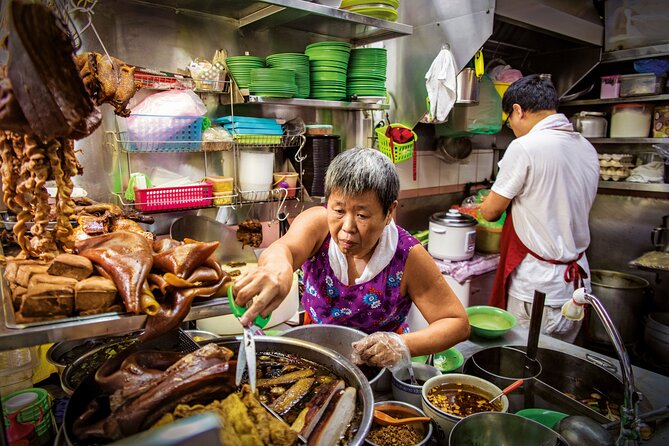
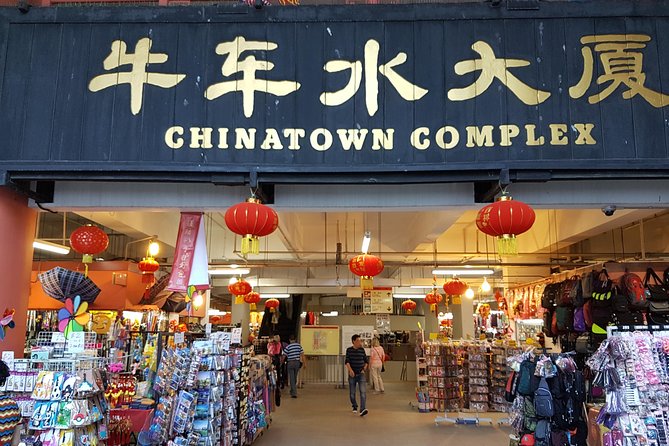
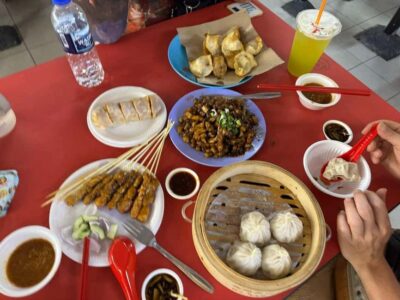
Your first stop is Chinatown Complex, home to one of Singapore’s oldest wet markets and a large hawker centre. You have about 30 minutes here, including a local breakfast.
This is a smart opening stop. Singapore’s food centres are not just places to grab something cheap. They are part of daily life, and the combination of wet market stalls, sundry goods, and cooked food shows how practical the district remains beneath its tourist surface.
The breakfast is included as part of the experience, but the supplied information does not specify the exact dish or drink. That is worth keeping in mind if you have strict dietary needs or are hoping for one famous Singaporean specialty in particular. The useful part is the setting: you eat in a real hawker centre rather than receiving a staged tasting in a private restaurant.
One person described the breakfast as surprisingly good, while also praising the explanation of what Singapore used to be and what drove its changes. That pairing is important. The food is not meant to be the whole point. It gives you something concrete to taste while the guide explains how people used the neighborhood.
The 30-minute stop will feel short if you want to browse the market carefully or linger over breakfast. I would treat it as an introduction, then return to Chinatown Complex or Maxwell Food Centre later if food is a main reason for your visit.
Early Lives at the Chinatown Heritage Centre
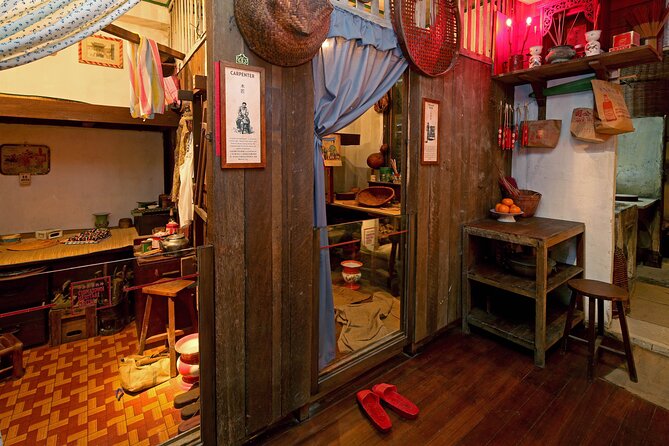
Next comes the Chinatown Heritage Centre on Pagoda Street, with about 45 minutes set aside. It occupies three restored shophouses and focuses on the early residents of Chinatown.
This is the most direct history stop of the morning. The centre gives you a look at how ordinary people lived, worked, and shared space in the district. The emphasis is not only on grand buildings or famous figures. You are shown the human side of Chinatown, including the hard conditions that shaped the community.
Forty-five minutes is enough for an introduction, but it is not a long museum session. Your guide’s explanations help put the displays into context, especially if you are not familiar with Singapore’s development. The personal storytelling also helps connect the exhibits to the streets outside.
I particularly like that the tour does not skip unpleasant subjects. One German-language comment praised the guide for presenting the shadows as well as the good parts and for making the stories feel alive. That is a useful clue about the tone. You should expect frank discussion rather than a polished account that only celebrates progress.
The centre is also a good reason to book this walk early in your Singapore visit. Afterward, the shophouses and narrow streets have more meaning. You are no longer seeing only colorful facades. You have some sense of the people who once occupied them and the conditions behind the preserved architecture.
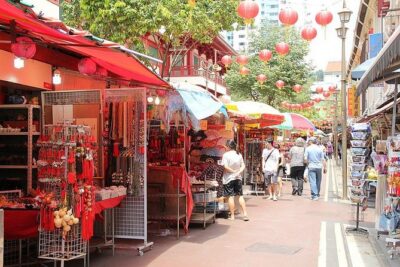
Walking the Chinatown Street Market
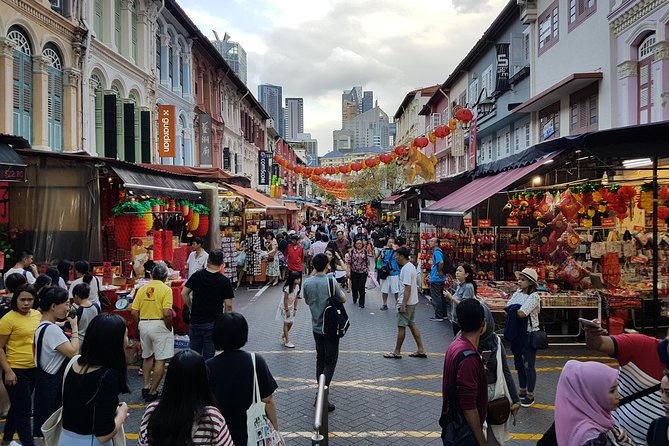
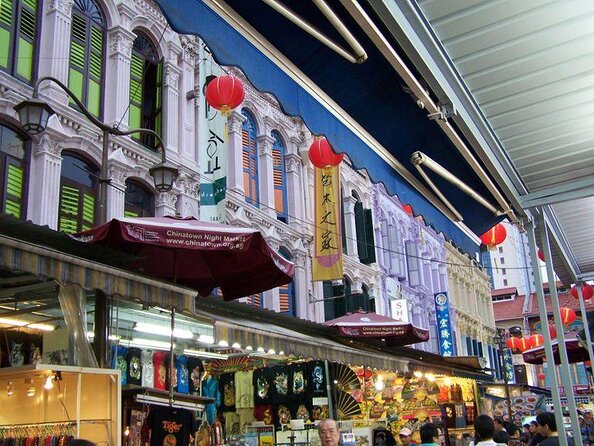
The street-market portion takes about 30 minutes. Many of the roads in this central section are pedestrianized, making the walk easier and more relaxed than a route beside heavy traffic.
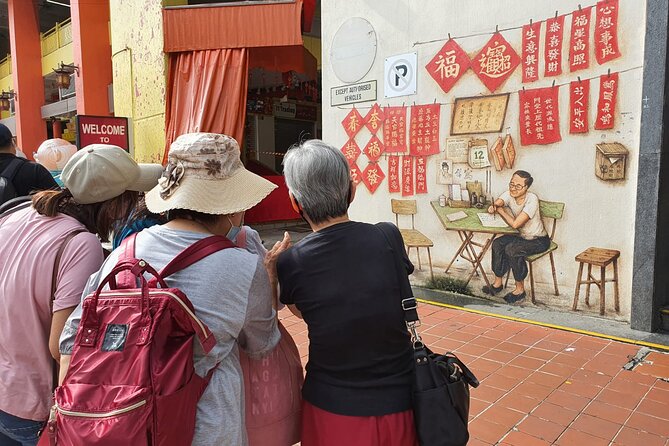
This is the part where you can absorb the visual side of Chinatown: shopfronts, old lanes, market goods, and the steady movement of people through a district that has changed but has not become only a museum. The guide’s earlier comments about history and redevelopment give the streets a stronger frame.
A short walk is useful here because it keeps the group moving. You are not left to guess which details matter. A local can point out how a street functions today and explain what it once meant to the neighborhood.
Still, set your expectations properly. This is not a dedicated shopping excursion, and 30 minutes is not enough for serious browsing. If you see something you want to buy, note the location and return after the tour. The value of this section is understanding the area’s layout and character, not checking off every stall.
Same island, a completely different afternoon:
- Lion City Bike Tour of Singapore
★ 5.0 · 6,211 reviews - Singapore: Gardens by the Bay Bundle Entry Ticket
★ 4.3 · 3,726 reviews - Singapore: Big Bus Hop-On Hop-Off Tour by Open-Top Bus
★ 4.5 · 3,261 reviews - Singapore: Lion City Highlights Bike Tour
★ 4.9 · 2,010 reviews
The Buddha Tooth Relic Temple and Chinatown’s Hard Past
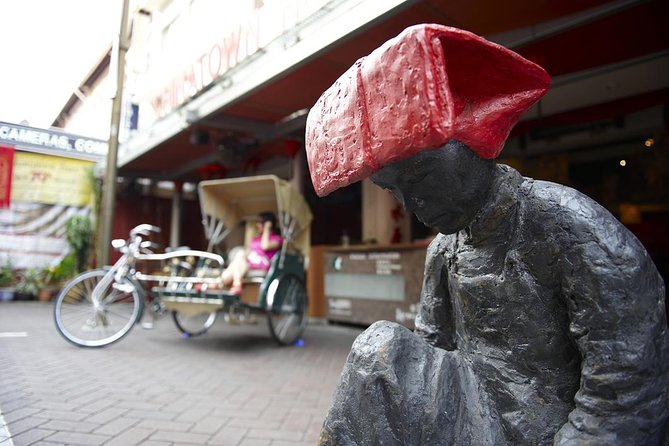
The Buddha Tooth Relic Temple and Museum receives about 15 minutes. The stop is brief, but the surrounding story appears to be one of the tour’s sharper moments.
The temple sits on a street with a difficult past. Jasmine has personal memories of the area and describes it as dangerous in earlier years. That contrast between the impressive religious building and the street’s former reputation gives the stop more weight than a quick photo opportunity.
Fifteen minutes is enough for an outside look and a focused explanation, but do not expect an extensive visit to the museum. The tour does not promise a long examination of the temple’s religious objects or architecture. If the temple is a major priority for you, plan additional time on your own.
The benefit here is context. You hear how quickly a neighborhood’s identity can change, and why the present-day version of Chinatown should not be confused with its earlier life. That frankness is one of the strongest reasons to choose a local-led walk instead of exploring without a guide.
Ann Siang Hill and the New Chinatown
The final walking section takes about 30 minutes around Ann Siang Hill. Here, restored shophouses contain a mix of shopping, dining, and modern businesses.
Ann Siang Hill shows another side of the district. The streets are more polished, and the old buildings now support a sophisticated mix of uses. Your guide explains how history and modern life meet here, rather than presenting restoration as if it happened without tradeoffs.
I like this stop because it prevents the tour from becoming a simple story of decline and hardship. Chinatown is also a place that has adapted. Old buildings remain, but their role has shifted. You see how a neighborhood can keep its visual identity while serving a new economy.
The 30-minute walk should suit anyone who wants a compact introduction to Singapore’s shophouse districts. It may feel too quick if you want to stop for coffee, inspect every doorway, or shop. Save those activities for after the tour, when you can move at your own speed.
Finishing at Maxwell Food Centre
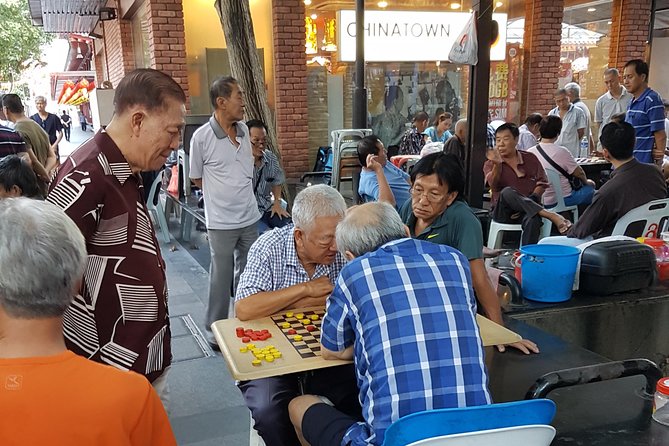
The tour ends at Maxwell Food Centre on Kadayanallur Street. This is a practical finish because you can have another meal, continue sampling local food, or simply use the area as a base for the rest of your day.
The end point also connects well with public transport. Tanjong Pagar MRT Station is about a 5 to 10-minute walk away. That makes the tour easy to combine with a wider day in central Singapore.
You are not rushed into leaving immediately after the final stop. The location gives you a natural chance to continue eating or look back over the morning’s discoveries. If the breakfast at Chinatown Complex only whetted your appetite, Maxwell Food Centre is the obvious place to keep going.
Is the $52.46 Price Fair?
At $52.46 per person, this is not the cheapest way to walk through Chinatown. You could visit the streets and markets without paying an admission fee, and each listed stop has free entry.
The value comes from the interpretation, small group, and breakfast rather than from paid attractions. A group of eight or fewer allows the guide to respond to questions and adjust explanations. You also receive a planned route that links food, social history, architecture, redevelopment, and personal memory.
I would consider the price fair if you want an introduction with human context and do not enjoy piecing a neighborhood together from signs and guidebook paragraphs. It is less compelling if you mainly want to shop, eat at your own pace, or spend a long time inside the heritage centre and temple.
The breakfast adds practical value, but it should not be treated as a full food tour. The experience is best understood as a history and culture walk with food included, not as a morning of multiple tastings.
Timing, Group Size, and What to Wear
The tour begins at 9:00 a.m. and lasts about two hours and 30 minutes. Starting early helps you reach Chinatown Complex before the day becomes too hot and leaves most of the afternoon free.
You will walk through markets and streets for the full experience, so comfortable shoes are essential. Singapore’s weather can affect the outing, and the activity requires good weather. If poor weather forces cancellation, you are offered another date or a full refund.
The maximum of eight people is one of the clearest advantages. It gives the morning a more personal feel and makes it easier to hear stories about the neighborhood rather than only general facts. Most people can participate, and the meeting point is near public transportation.
The mobile ticket keeps the arrival simple. Confirmation is provided when you book, and free cancellation is available up to 24 hours before the start time. Changes or cancellations made less than 24 hours ahead are not accepted for a refund.
Who Should Book This Chinatown Walk?
I would recommend it to first-time visitors who want Chinatown explained rather than merely photographed. It is also a good fit if you enjoy local food, social history, restored architecture, and personal stories in equal measure.
The tour suits you especially well if you prefer a small group and want to ask questions. The frank treatment of Chinatown’s difficult past is another reason to choose it. You get a more rounded picture than a walk focused only on temples and colorful streets.
I would hesitate if your main goal is an extended museum visit, a serious food crawl, or independent shopping time. The stops are short by design, and the tour keeps moving. You may also want a separate visit to the Buddha Tooth Relic Temple or Chinatown Heritage Centre if you want to explore either one in detail.
Should You Book Nostalgic Chinatown of Singapore?
Book this tour if you want Chinatown to make sense as a living neighborhood, not just a tourist quarter. The local breakfast, compact group, restored shophouses, and direct discussion of difficult history give the walk a clear purpose.
The best reason to choose it is the human angle, especially the personal connection offered by guide Jasmine. At $52.46, you are paying for guidance and context rather than admission tickets. For a focused introduction to Singapore’s Chinatown, that is a reasonable trade.
FAQ
How long does the Chinatown tour last?
The tour lasts approximately 2 hours and 30 minutes.
What time does the tour begin?
The tour starts at 9:00 a.m.
Where does the tour begin and end?
It begins near 151 New Bridge Road and Upper Cross Street in Singapore. It ends at Maxwell Food Centre on Kadayanallur Street.
Is breakfast included?
The tour includes a local breakfast at the hawker centre inside Chinatown Complex.
How many people can join the tour?
The maximum group size is eight people.
What happens if bad weather cancels the tour?
You will be offered a different date or a full refund if poor weather causes the tour to be canceled.
Recently added around Singapore
- The Real Singapore Heartland Walking Food Tour★ 5.0 · 4 reviews
- Vegetarian Culinary Adventure in Singapore★ 5.0 · 7 reviews
- Singapore’s Marina Bay Wonders and Heritage Tales, Chinatown★ 5.0 · 5 reviews
- Singapore’s Hidden Treasures: A Cultural Private Tour★ 5.0 · 3 reviews
- Private Tour Singapore Street Food & Night Tour★ 5.0 · 4 reviews
- Singapore – Albatross Speedboat Adventures Cruising in Sentosa★ 5.0 · 3 reviews
- Small Group Full Day Singapore City Tour with Roundtrip Transfers★ 4.0 · 11 reviews
- Tastes of Chinatown★ 5.0 · 4 reviews
Singapore Chinatown Tours, compared.
Chinatown, Little India, Kampong Gelam City Highlights Tour
Read our review →
Singapore: Chinatown Hawker Market Food Tour with 7 Food Tastings
Read our review →
Singapore: Chinatown and Little India Guided Walking Tour
Read our review →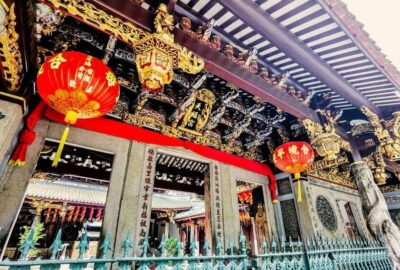
Singapore: Chinatown Historic Walking Tour with Lunch
Read our review →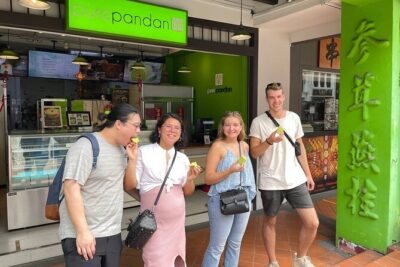
Kampong Glam, Little India & Chinatown with Local Street Food Tastings
Read our review →
Tasting Trails: Chinatown OR with Kampong Glam, Little India
Read our review →Browse the lists this tour appears in