
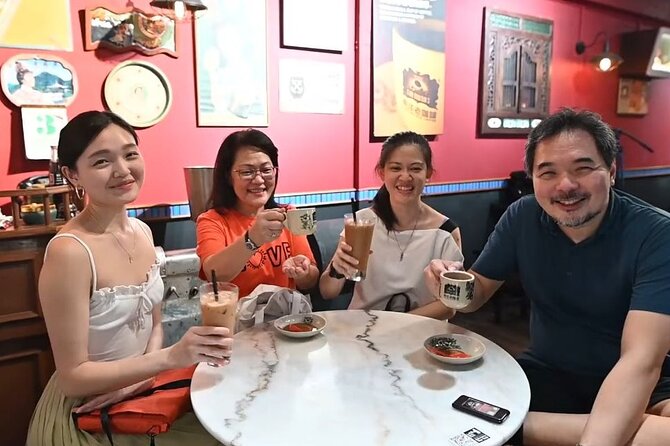
Reviewed · SINGAPORE CHINATOWN TOURS
Chinatown Hidden Treasures Local Guided Walking Tour
Singapore’s Chinatown is more than a row of souvenir shops. This three-hour walk takes you from Pagoda Street’s immigrant stories to painted alley scenes, Hindu carvings, restored shophouses, and a hawker center where your guide can point out what to eat. The personal storytelling and the quiet lanes are the strongest parts.
I like that the pace leaves room for questions, and that guides such as Ronnie, Kelvin, and Jeanette have been praised for tailoring the walk to the group. I also like the simple food stop: coffee or milk tea with kaya toast gives you a taste of local café culture without turning the tour into a full meal. The main consideration is that the walk is not wheelchair-accessible, and food at Maxwell Food Centre costs extra.
Key points at a glance
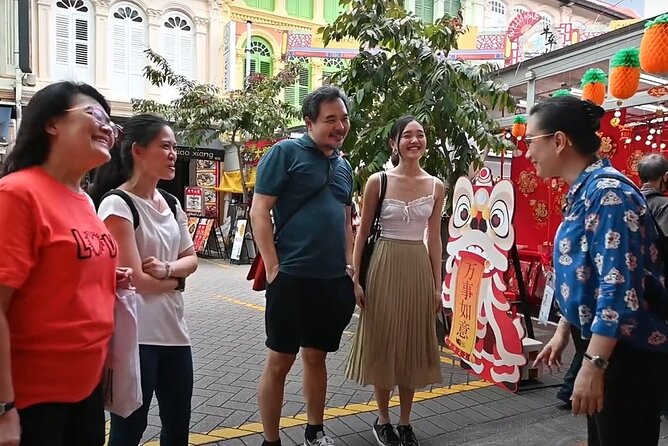
- Immigrant stories on Pagoda Street: Learn about Chinese coolies and Samsui women, not just dates and building names.
- Yip Yew Chong’s alley murals: Find three-dimensional painted scenes in lanes you could easily miss alone.
- A cross-cultural temple stop: Visit Sri Mariamman Temple, Singapore’s oldest Hindu temple, alongside Chinatown’s Chinese Buddhist sites.
- Local food guidance at Maxwell Food Centre: Get practical suggestions for chicken rice, Fuzhou oyster cakes, and other hawker dishes.
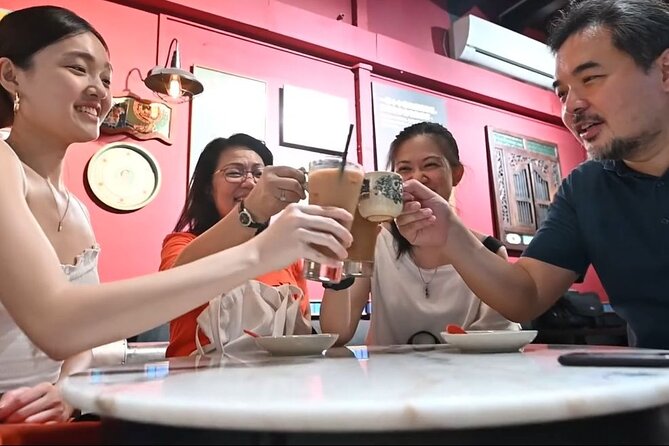
- A small but welcome refreshment: Coffee or milk tea and a shared kaya toast set are included.
- A relaxed private option: Private groups are available, and the guide can give closer attention to your interests and walking needs.
Pagoda Street puts Chinatown’s past first
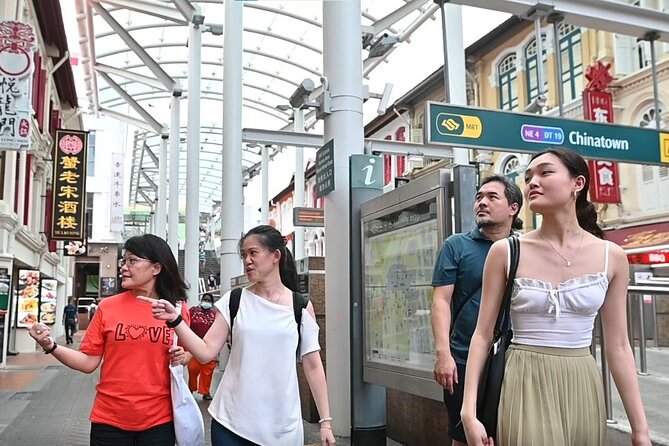
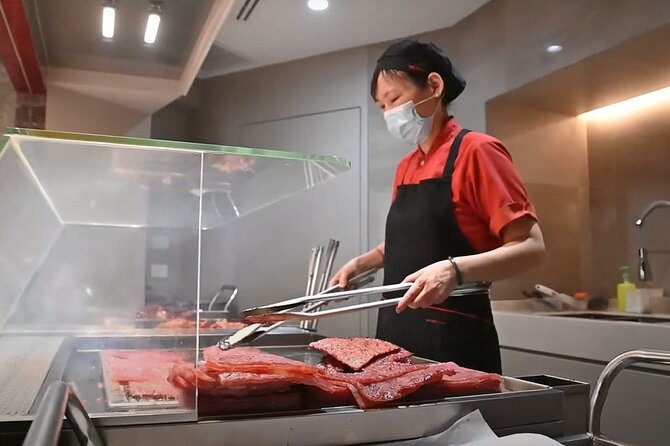
Meet your guide at Chinatown MRT Station, Exit A, at street level in front of Bee Chiang Heng Bak Kwa Store. This is a useful meeting point because it is easy to reach by public transport, but give yourself a few minutes to find the correct exit and storefront.
The first substantial stop is the Chinatown Heritage Centre on Pagoda Street. The focus here is not simply on old buildings. Your guide explains the Chinese immigrant experience, including the difficult lives of coolies and Samsui women who came to Singapore hoping to improve their fortunes.
That human scale makes this opening worthwhile. You begin to see Chinatown as a working district shaped by labor, family separation, ambition, and hard conditions. The tour’s historical value comes from connecting those stories to the streets under your feet.
The exact balance between entering, viewing, and passing by can depend on the day and the group. If you want a long museum visit, this may feel brief. If you prefer a guide who explains the setting while walking, it fits well.
More Chinatown walks and food stops:
- Chinatown, Little India, Kampong Gelam City Highlights Tour
★ 5.0 · 224 reviews - Singapore: Chinatown Hawker Market Food Tour with 7 Food Tastings
★ 5.0 · 213 reviews - Singapore: Chinatown and Little India Guided Walking Tour
★ 4.8 · 190 reviews
The alleys reveal a quieter side of Chinatown
From Pagoda Street, the route turns toward Chinatown’s smaller lanes. Here, the appeal is less about grand monuments and more about noticing details: painted shutters, narrow passages, ethnic shophouses, and wall scenes by local artist Yip Yew Chong.
His three-dimensional murals give the lanes a sense of everyday life. They are also useful photo stops, but the guide adds the context that a quick picture cannot provide. You may find yourself looking at a painted shop scene, then comparing it with the real shophouses around you.
This is where a local guide earns the fee. Chinatown’s main streets are easy to find, but the smaller alleys are easier to overlook, especially when you are watching traffic, signs, and maps. The walk gives you a route and a story at the same time.
The pace is described as slow and gentle, which suits anyone who wants time for photos or questions. It also helped one participant with a foot injury, with the guide checking on steps and comfort. Still, you should wear comfortable shoes and expect uneven walking and stairs in parts of the route.
Sri Mariamman Temple changes the cultural picture
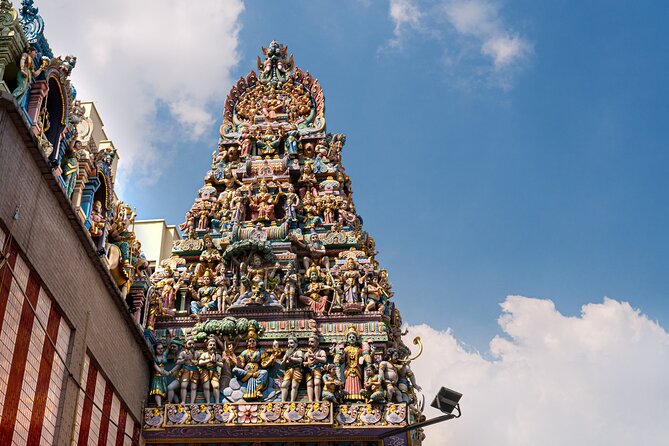
Sri Mariamman Temple is Singapore’s oldest Hindu temple, and its ornate entrance makes a sharp visual change from Chinatown’s Chinese shophouses. The towering gopuram is covered with Hindu deities and figures, with layers of color and detail that reward a close look.
Your guide helps explain why this temple belongs on a Chinatown walk. The district is not a single-culture display. It reflects the overlapping communities that lived, worked, worshipped, and traded in the area.
You get a guided visit and time for photographs, though respectful behavior is essential in any active place of worship. The tour description does not promise a long religious service visit or a formal ceremony, so think of this as a focused cultural stop within a wider neighborhood walk.
I like the contrast here. After hearing about Chinese immigrant life, you see another major tradition in the same compact district. It keeps the tour from presenting Chinatown as a sealed-off attraction.
Ann Siang Hill adds old streets and film locations
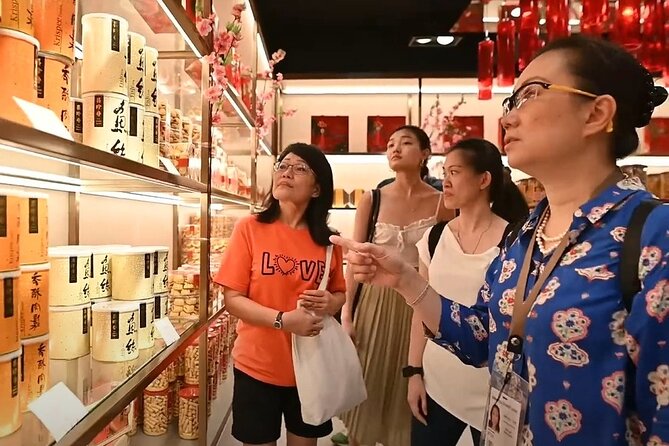
The route then crosses to Ann Siang Hill and Club Street. This area once served as a business center for Chinese immigrants and now mixes restored shophouses with restaurants, bars, shops, and photo-ready streets.
The guide points out a location associated with the film Crazy Rich Asians. That makes for an easy picture, but the more useful part is seeing how the district’s buildings have been reused while retaining their older forms.
Ann Siang Hill gives the tour a different mood. You move from Chinatown’s heritage displays and temple details into a polished historic quarter where old façades meet modern commercial life. It is a good place to ask your guide how Singapore handles preservation and redevelopment, especially if architecture interests you.
This part is also a reminder that the tour is not only about the Chinese immigrant past. It shows how the neighborhood continues to change. You will see attractive streets, but some visitors may prefer the less polished alleys earlier in the route.
More offbeat corners of Singapore:
- Private Singapore Tour with a Local, Highlights & Hidden Gems 100% Personalised
★ 5.0 · 475 reviews - Singapore PRIVATE TOUR: Highlights & Hidden Gems by CAR or Foot
★ 5.0 · 227 reviews - Disappearing Trades
★ 4.5 · 126 reviews - Private Singapore Walking Tour: City Highlights & Hidden Gems
★ 5.0 · 84 reviews
Maxwell Food Centre is your practical lunch lesson
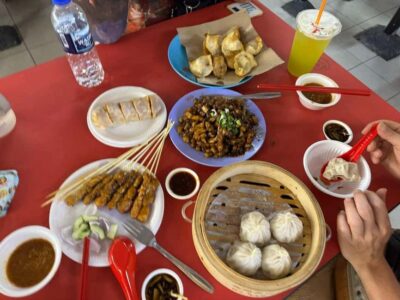
Maxwell Food Centre is the tour’s food-focused stop. Your guide can recommend local dishes such as Hainanese chicken rice, Fuzhou oyster cakes, and other hawker specialties. The value here is guidance rather than a prepaid tasting menu.
Food is not included beyond the coffee or milk tea and shared kaya toast set. You pay for any hawker dishes yourself, and there is no table booking or food pre-ordering. Lines and waiting times are possible, so do not schedule an immediate appointment after the walk.
This arrangement suits you if you want choice. You can order a full meal, sample one dish, or return later using the recommendations you receive. It also avoids forcing every person in a group to eat the same food.
The weakness is that a three-hour walk leaves limited time for a leisurely meal. Treat Maxwell as a guided introduction and a place to collect ideas, not as a guaranteed food tour with several courses. The center is conveniently close to the Buddha Tooth Relic Temple, so you can arrange your own meal after the tour if you want more time.
The included kaya toast stop is smaller but more predictable. Kaya is a sweet coconut and egg spread commonly served with toast, and the coffee or milk tea gives you a quick taste of local café habits. It may happen during the route or toward the end, depending on the guide and the day.
The Buddha Tooth Relic Temple brings the route back to Buddhism
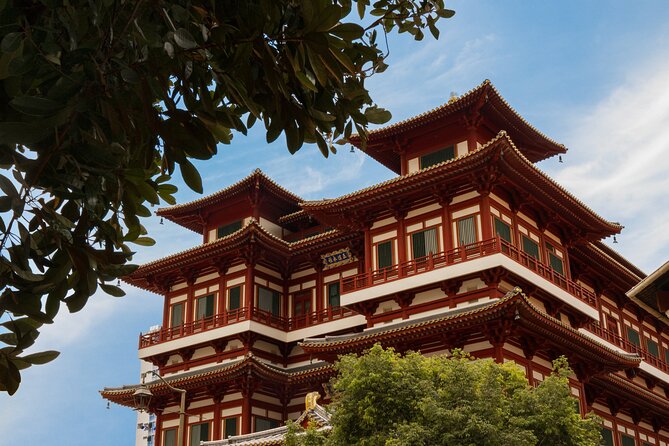
The Buddha Tooth Relic Temple and Museum is a Tang-style Chinese Buddhist temple with displays of Buddhist art and history. The tour introduces the revered relic said to be a Buddha tooth, along with the building’s religious and cultural role.
The stop is especially useful after Maxwell Food Centre because it places everyday food culture beside a major sacred site. You can see how close these parts of Chinatown are, yet how different the experience feels.
One detail worth asking about is the temple’s upper area. A participant particularly enjoyed the orchid garden above the Buddhist temple. The supplied information does not promise access on every tour, so consider it an added possibility rather than a guaranteed feature.
Nearby, Sago Lane is associated with the Cantonese phrase street of the dead. That name opens a window onto older funeral customs and the district’s less comfortable stories. It is a small detail, but it gives the walk a more complete picture of Chinatown’s past.
Chinatown Complex finishes with architecture and daily life
The final stop is Chinatown Complex. The guide highlights its architectural character, including two and three-storey shophouses decorated with traditional Chinese tile ornaments.
Ending here works well because the complex is also a practical place to continue your day. You finish near food, public transport, and the surrounding Chinatown streets rather than at an isolated attraction.
The tour does not end with a formal meal or a long final presentation. Instead, you leave with a better sense of where to eat, which streets deserve another look, and how the district’s buildings fit together.
If you are taking photographs, save some attention for rooflines, tile details, and shop-house proportions. These features are easy to miss when you focus only on the large temples and murals.
What the $63 price really covers
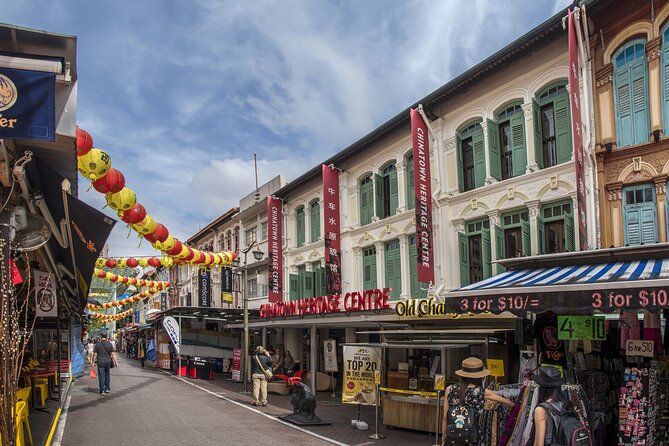
At $63 per person, the experience is priced as a guided neighborhood walk rather than a basic orientation stroll. You receive three hours with a licensed guide, the coffee or milk tea and shared kaya toast set, and access to a route that links several distinct parts of Chinatown.
The value is strongest if you care about context. You could walk past Pagoda Street, Sri Mariamman Temple, Ann Siang Hill, Maxwell Food Centre, and the Buddha Tooth Relic Temple on your own. The fee pays for the connections between them, the stories behind the locations, and help finding the smaller lanes and murals.
It is less attractive if you mainly want a meal. Your hawker food is extra, seating may take time, and the tour does not include a set of tastings. In that case, a self-guided visit to Maxwell Food Centre may cost less.
Private groups are available. A private format can be useful if you want to ask many questions, adjust the pace, or focus more on food, architecture, or history. The standard information does not state that every booking is private, so check the group arrangement before paying.
The experience has a 4.9 rating from 12 reviews, with repeated praise for the guides’ historical background, friendly explanations, and willingness to adapt. That pattern matters because this route depends heavily on the quality of the person leading it. Guides named Kelvin, Jeanette, Ronnie, and Ronny received especially strong praise for answering questions, offering food suggestions, and keeping the walk enjoyable.
Who will get the most from this Chinatown walk
I would choose this tour if you are visiting Singapore for the first time and want Chinatown explained in one compact outing. It gives you history, religion, architecture, street art, and food advice without making you build the route yourself.
It also suits couples and small groups who prefer conversation over a large scheduled crowd. A private option is available, and the relaxed pace can work well for older adults who can manage the walking.
Families with very young children should note that children aged 0 to 2 can join free. The child ticket policy limits the number of child tickets according to the number of adults, and any additional child must pay the adult price.
You should think twice if you use a wheelchair, since the activity is not wheelchair-accessible. If you have limited mobility but can walk with care, contact the operator before booking and explain your needs. The guide may be able to help with pacing, but accessibility cannot be assumed.
Food allergies and special diets also deserve advance discussion. Special dietary needs may not be catered to unless you book a private tour, so contact the operator before committing.
Bring water, wear comfortable footwear, and carry an umbrella or poncho. Singapore’s rain can interrupt an outdoor walking route, and most of the experience takes place outside.
Booking and cancellation details worth knowing
You can cancel or reschedule up to 24 hours before the scheduled date and time for a full refund. Cancellations within 24 hours and no-shows are not refunded unless the operator cancels or changes the booking.
Reserve-now, pay-later booking is available, which helps if you are still arranging a Singapore itinerary. Make sure your phone number and email are accurate, since the operator is not responsible for problems caused by incorrect contact details.
The tour is offered in Chinese, English, and Japanese. Starting times vary, so check availability when booking.
Should you book the Chinatown Hidden Treasures tour?
Book it if you want Chinatown to make sense as a living district, not just a collection of temples and pretty shophouses. The strongest reasons are the guide-led stories about coolies and Samsui women, the smaller lanes with Yip Yew Chong’s murals, and the practical food advice at Maxwell Food Centre.
The $63 price is fair when you value a personal guide and a carefully connected route. Just budget extra for any hawker food, expect some walking and possible steps, and do not mistake the included kaya toast for a full meal.
Skip it if you prefer exploring alone, need guaranteed wheelchair access, or want a dedicated food tour with prepaid tastings. For most first-time visitors who enjoy history, architecture, and local eating tips, this is a useful three-hour introduction with enough character to make you want to keep exploring after it ends.
FAQ
Where does the Chinatown Hidden Treasures tour start?
It starts at Chinatown MRT Station, Exit A, at street level in front of the Bee Chiang Heng Bak Kwa Store.
Where does the tour finish?
The tour finishes at Chinatown Complex.
How long is the walking tour?
The experience lasts three hours.
What food and drink are included?
One coffee or milk tea and a shared set of kaya toast are included. Other food and personal expenses are not included.
Is the tour wheelchair-accessible?
No. The activity is not wheelchair-accessible.
What languages are available?
The tour is available in Chinese, English, and Japanese.
More Walking Tours in Singapore
- Singapore: Private Walking Tour with a Local
★ 4.7 · 410 reviews - Private Customised Singapore Walking Tour
★ 5.0 · 370 reviews - Singapore: Customized Private Tours (Car/Bus/Walking)
★ 5.0 · 181 reviews - Eat Snap Katong Walking Food Tour
★ 5.0 · 174 reviews
Recently added around Singapore
- The Real Singapore Heartland Walking Food Tour★ 5.0 · 4 reviews
- Vegetarian Culinary Adventure in Singapore★ 5.0 · 7 reviews
- Singapore’s Marina Bay Wonders and Heritage Tales, Chinatown★ 5.0 · 5 reviews
- Singapore’s Hidden Treasures: A Cultural Private Tour★ 5.0 · 3 reviews
- Private Tour Singapore Street Food & Night Tour★ 5.0 · 4 reviews
- Singapore – Albatross Speedboat Adventures Cruising in Sentosa★ 5.0 · 3 reviews
- Small Group Full Day Singapore City Tour with Roundtrip Transfers★ 4.0 · 11 reviews
- Tastes of Chinatown★ 5.0 · 4 reviews
Singapore Chinatown Tours, compared.
Chinatown, Little India, Kampong Gelam City Highlights Tour
Read our review →
Singapore: Chinatown Hawker Market Food Tour with 7 Food Tastings
Read our review →
Singapore: Chinatown and Little India Guided Walking Tour
Read our review →
Singapore: Chinatown Historic Walking Tour with Lunch
Read our review →
Kampong Glam, Little India & Chinatown with Local Street Food Tastings
Read our review →
Tasting Trails: Chinatown OR with Kampong Glam, Little India
Read our review →Browse the lists this tour appears in