
Reviewed · SINGAPORE CHINATOWN TOURS
Feel the Heartbeat: A Singapore Chinatown Walking Tour
Singapore Chinatown is at its best when you connect the food on your plate with the people and places around you. This small-group walk does that well, pairing local dishes with the Street of Harmony, Chinatown Complex, old shophouses, murals, and three major religious sites.
I like the small group of no more than eight and the sensible rhythm: eat first, walk at an easy pace, then finish with Chinese tea. Guides including Serene and Ronald are praised for friendly storytelling, while Roland is also named as a guide. The main drawback is that the food menu is fixed, so this is not a good fit if you need dietary changes.
Key points
- Local food comes first: Expect a shared tasting of Singapore dishes, with roast pork, char siu, laksa, and other selections mentioned as part of the food program.
- Three faiths in one short walk: The route links Buddha Tooth Relic Temple, Sri Mariamman Temple, and Jamae Mosque.
- A calm finish: The Chinese tea session gives the tour a slower ending after the food and sightseeing.
- Early timing can help: A 10 a.m. start may feel cooler and less crowded than later in the day.
- Small groups matter: The maximum is eight people, allowing more room for questions and conversation.
- Plan for flexibility: The walk is listed as two hours but can take two to two and a half hours depending on the group’s pace.
Why this Chinatown walk works
Many Chinatown tours give you either food or history. This one tries to make the two explain each other. You do not simply pass a temple, hear its name, and move on. You get a look at how Singapore’s Chinese, Indian, Muslim, and wider immigrant communities shaped this compact neighborhood.
The route also avoids the pressure of a long sightseeing march. You begin with a shared local dish, walk through the neighborhood, stop to take in religious buildings and murals, and end with tea. That structure makes sense in Singapore’s heat. You get regular pauses, and the final tea session gives the morning a quieter close.
The advertised price is $62.08 per person. That is not the cheapest way to eat in Chinatown, where hawker food can be very affordable. But you are paying for more than individual dishes. The fee includes an English-speaking guide, meals, and Chinese tea, along with a planned route and a small group. If you would otherwise spend time guessing what to order and searching for the right streets, the price can be fair.
The value depends on what you want. If your priority is maximum food for minimum cost, eat independently at Chinatown Complex. If you want someone to connect the dishes, temples, and neighborhood stories, this tour makes a stronger case.
More Chinatown walks and food stops:
- Chinatown, Little India, Kampong Gelam City Highlights Tour
★ 5.0 · 224 reviews - Singapore: Chinatown Hawker Market Food Tour with 7 Food Tastings
★ 5.0 · 213 reviews - Singapore: Chinatown and Little India Guided Walking Tour
★ 4.8 · 190 reviews
Starting at Chinatown MRT Station
The meeting point is Chinatown MRT Station, at 91 Upper Cross Street. This is a practical starting place because the neighborhood is well served by public transportation, and the station is easy to reach from other parts of Singapore.
You should arrive ready to walk outdoors. The route is designed to be comfortable, but Singapore’s weather can still affect the pace. Wear light clothing, use sun protection, and carry water. The tour requires good weather, and a poor-weather cancellation may lead to a different date or a full refund.
The walk usually lasts about two hours. The timing can stretch to two and a half hours if the group moves slowly or spends longer at the food and cultural stops. That extra half hour matters if you have a tightly packed sightseeing schedule, so avoid placing an important timed booking immediately afterward.
A 10 a.m. departure is worth considering. It gives you a useful start to the day and may be less hot and less crowded than later hours. It also leaves your afternoon open for other parts of Singapore.
Beginning with Singaporean food
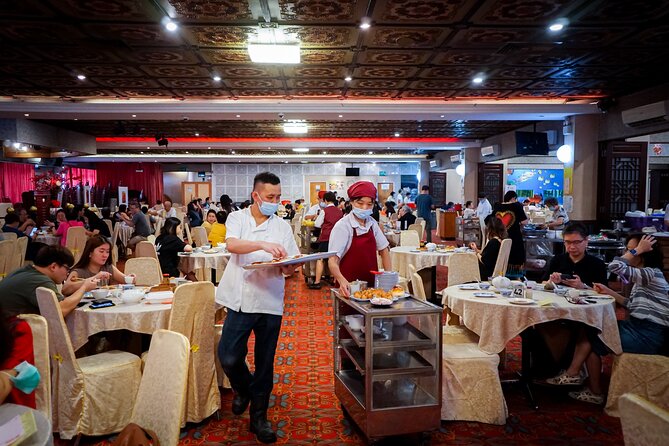
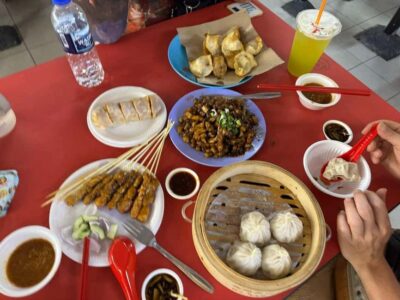
The food portion is not an afterthought. You start with a shared tasting of a local dish, then continue with selected food stops during the walk. Dishes mentioned in connection with the tour include Cantonese-style roast pork, char siu, and laksa.
That mix gives you a quick look at Singapore’s food culture from more than one angle. Roast pork and char siu point to Cantonese traditions, while laksa brings a different set of flavors and influences. The food is tied to the neighborhood’s communities rather than treated as a separate restaurant visit.
You should understand the format before booking. The selections are fixed and cannot be adjusted for personal preferences or dietary requirements. This is the most important limitation of the tour. If you have allergies, strict religious food rules, or a special diet, contact the operator before paying, but the published terms clearly say that changes are not available.
The food is also shared, which makes the tasting social and efficient. You are not ordering a full meal at every stop. Instead, you sample a planned selection while learning why certain dishes matter. That is a good way to try several Singapore foods without spending much time studying a menu.
Do not expect the tour to replace a full lunch for every appetite. Meals are included, but the exact amount and selection can vary. If you normally eat a large breakfast or lunch, plan your expectations accordingly.
Walking the Street of Harmony
One of the most useful parts of the route is the look at different faiths within a short distance. The Street of Harmony brings temples, mosques, and churches into the same urban story. It shows how Singapore’s communities developed side by side rather than in isolation.
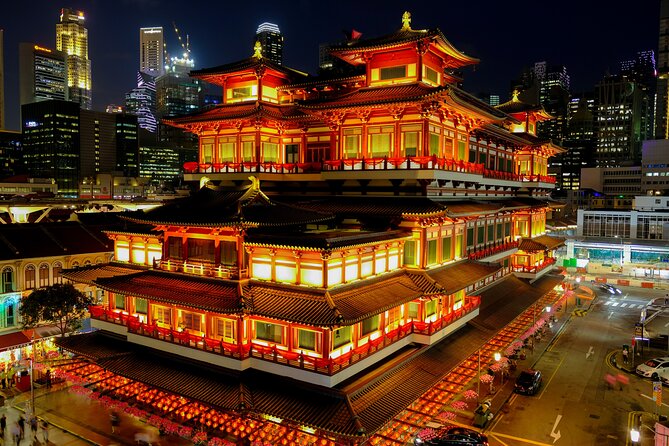
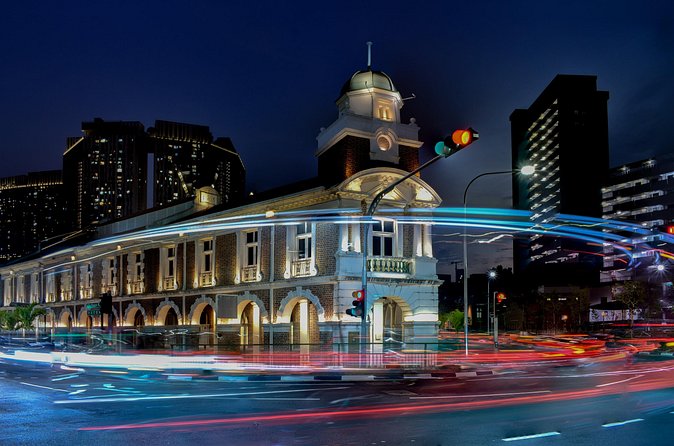
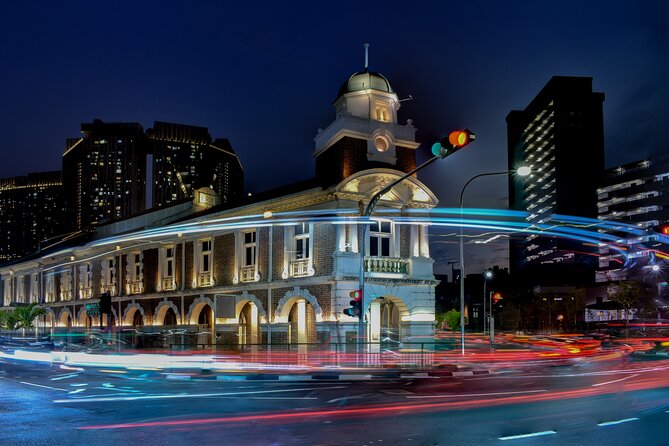
The Buddha Tooth Relic Temple is one of the major visual stops. Its scale and design make it easy to notice, but a guide can add the context that an exterior photograph cannot provide. You may learn how the building fits into the identity of Chinatown and why it draws so much attention.
Sri Mariamman Temple adds a different character. It is associated with Singapore’s Hindu community and is known for its elaborate artistic details. The stop helps break the assumption that Chinatown belongs to only one ethnic or religious tradition.
Jamae Mosque brings another layer to the same small area. Seeing it near the temples gives you a clearer sense of Singapore as a port city shaped by movement, trade, migration, and community life.
The appeal is not simply checking three buildings off a list. The route encourages you to notice the unusual closeness of these places. In a short walk, the street becomes a lesson in how Singapore’s identity was built.
As with any active religious site, respectful behavior matters. Follow the guide’s instructions about where to stand, what to photograph, and how to dress. The supplied details do not promise entry into every building, so treat the stops as cultural and architectural visits rather than assume a full interior tour.
More walking tours in Singapore:
- Singapore: Private Walking Tour with a Local
★ 4.7 · 410 reviews - Private Customised Singapore Walking Tour
★ 5.0 · 370 reviews - Singapore: Customized Private Tours (Car/Bus/Walking)
★ 5.0 · 181 reviews - Eat Snap Katong Walking Food Tour
★ 5.0 · 174 reviews
Stories in shophouses and murals
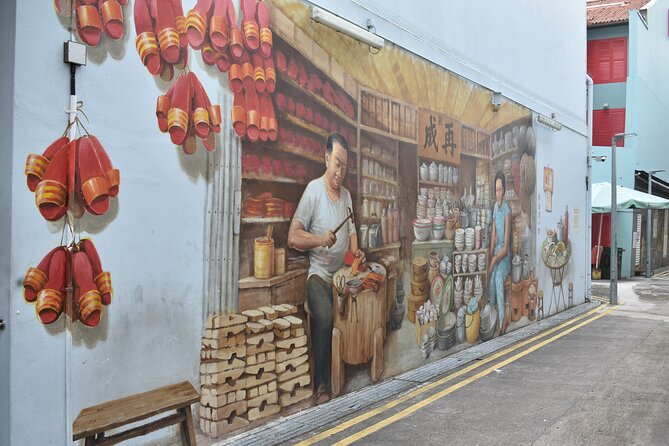
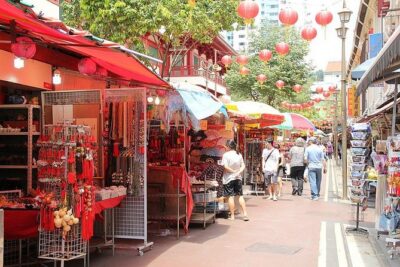
Chinatown’s shophouses do more than provide a colorful backdrop. Their facades tell you about older patterns of work, trade, and city life. The guide uses the buildings and murals as prompts for stories about earlier generations and the resilience of immigrant communities.
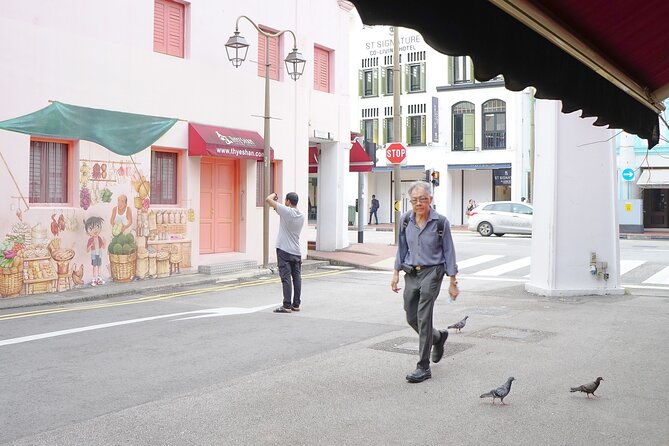
The murals are particularly useful because they make the past easier to picture. Instead of hearing only dates and names, you can see scenes connected to everyday life in old Singapore. The details may help you notice small features that you would otherwise walk past.
This is where the quality of the guide matters most. Serene is described as friendly and clear, with an easy manner that works well for families and first-time visitors. Ronald is praised for using amusing facts and connecting the past with modern Chinatown, including for people who already live in Singapore. Roland is also named as a guide associated with the food tour.
Guide assignments can change, so you should not book on the assumption that one specific person is guaranteed unless the operator confirms it. Still, the repeated emphasis on personal storytelling is encouraging. The tour seems designed around conversation rather than a memorized speech delivered at a fixed speed.
A stop at Chinatown Complex
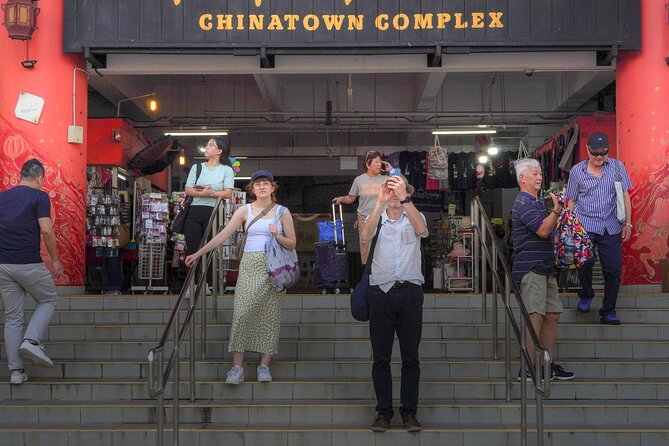
Chinatown Complex is where the food and city story come together most clearly. It is a major local food and market center, and it gives you a chance to see how Chinatown functions beyond its historic facades.
A guide is useful here because the choices can feel overwhelming. The complex has many stalls, signs, smells, and fast-moving activity. A planned tasting helps you avoid spending half an hour deciding what to order, especially if Singapore is new to you.
The stop also gives the tour a practical edge. You learn what kinds of dishes are associated with the area, how food fits into daily life, and why hawker centers matter in Singapore. The setting is active, so expect noise, crowds, and movement rather than a quiet sit-down meal.
The fixed menu is again worth remembering. You may enjoy the chance to try food selected in advance, but you will have less control than you would if you explored the complex on your own. If you have a strong dislike of certain foods, tell the operator before booking, though the stated policy does not promise substitutions.
Finishing with Chinese tea
The Chinese tea session is a smart ending. After food, temples, murals, and street walking, the experience shifts into a quieter mode. You slow down, smell the tea, and pay attention to the act of drinking rather than rushing toward the next sight.
That pause is more than a pleasant extra. It gives the tour a clear shape. You begin with food and conversation, move through the neighborhood, then finish by taking a breath. For me, that is more satisfying than ending abruptly at the last landmark.
The tea session also suits people who enjoy cultural details but do not want a long formal class. The information provided does not describe a full tea ceremony or specify the tea varieties, so you should expect a tasting and mindful pause rather than an in-depth lesson.
The tour ends on Temple Street. MRT stations are nearby by foot, making it easy to continue exploring or return to your hotel. The start and finish are different, but both are connected to public transportation.
Group size, pace, and comfort
The maximum group size is eight. That is a real advantage in a dense neighborhood. A small group can stop without blocking a narrow walkway, and you have a better chance to ask about food, religion, architecture, or daily life.
A small group does not guarantee a private tour. The pace still depends on the people with you. The published duration allows for two to two and a half hours, which is sensible because some groups walk quickly while others stop often for photos and questions.
Most people can participate, according to the supplied information, but this is still a walking activity on city streets. The tour does not include insurance, and the operator strongly advises personal accident and liability cover. You take part at your own risk, including risks related to weather, food, and ordinary street walking.
The operator can also change the route or schedule before the tour because of road closures, unexpected events, or other practical reasons. That is normal for a city walk, but it means you should treat the listed path as a guide rather than a guarantee of every exact stop.
Who should book this tour
I would choose this walk if you are visiting Singapore for the first time and want an organized introduction to Chinatown without spending half a day on a formal sightseeing program. It is also a good fit if you like trying local food but feel unsure about hawker centers.
The tour suits couples, friends, and families who appreciate a relaxed pace. The small maximum group helps, and the food, murals, religious buildings, and tea provide enough variety to keep the two hours moving.
It can also work for Singapore residents who want a fresh view of a familiar district. The stories are not limited to basic landmark facts, and the guide may point out connections between old Chinatown and the present-day neighborhood.
I would hesitate if you need a fully customized food plan, want a private guide, or prefer to explore at your own speed. You may also find better value by eating independently if your main goal is simply to sample inexpensive dishes.
The tour offers free cancellation up to 24 hours before the start time. Changes or cancellations inside that period are not accepted for a refund. Confirmation is sent within 48 hours, subject to availability, so do not leave a last-minute booking until the day before if your schedule is tight.
Should you book the Chinatown walk?
Book it if you want food with context. The strongest part of the experience is the link between roast pork, char siu, laksa, temples, murals, and the people who shaped Chinatown. The small group, English-speaking guide, and tea finish make the route feel more personal than a self-guided stroll.
Skip it if you need dietary flexibility or want the lowest possible food cost. For everyone else, $62.08 is a reasonable price for a two-hour introduction that saves you the work of planning what to eat and what to see. Choose a morning departure if possible, keep your afternoon flexible, and arrive ready to walk, taste, and listen.
FAQ
Where does the tour begin?
The tour begins at Chinatown MRT Station, at 91 Upper Cross Street, Singapore 058362.
Where does the tour end?
The tour ends on Temple Street. MRT stations are nearby by walking.
How long does the Chinatown walking tour take?
It is listed as approximately two hours, but the walk can take two to two and a half hours depending on the pace of the group.
What is included in the price?
The price includes an English-speaking guide, meals, and a Chinese tea session.
Is transportation included?
No transportation is listed as included. The meeting and ending points are accessible by public transportation and walking.
How many people can join the tour?
The tour has a maximum of eight participants.
Can the food be changed for dietary requirements?
No. The food selections are fixed and cannot be adjusted for individual preferences or dietary requirements.
Is insurance included?
No. Insurance is not included, and the operator strongly encourages participants to obtain their own personal accident and liability insurance.
When will booking confirmation arrive?
Confirmation is sent within 48 hours of booking, subject to availability.
What happens if the weather is poor?
The tour requires good weather. If it is canceled because of poor weather, you will be offered another date or a full refund.
Recently added around Singapore
- Singapore’s Marina Bay Wonders and Heritage Tales, Chinatown★ 5.0 · 5 reviews
- The Real Singapore Heartland Walking Food Tour★ 5.0 · 4 reviews
- Vegetarian Culinary Adventure in Singapore★ 5.0 · 7 reviews
- Singapore’s Hidden Treasures: A Cultural Private Tour★ 5.0 · 3 reviews
- Private Tour Singapore Street Food & Night Tour★ 5.0 · 4 reviews
- Singapore – Albatross Speedboat Adventures Cruising in Sentosa★ 5.0 · 3 reviews
- Small Group Full Day Singapore City Tour with Roundtrip Transfers★ 4.0 · 11 reviews
- Tastes of Chinatown★ 5.0 · 4 reviews
Singapore Chinatown Tours, compared.
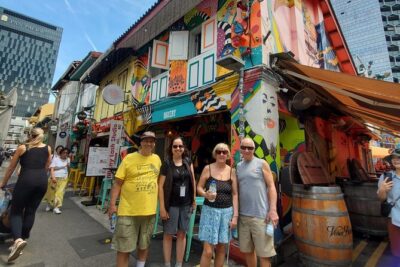
Chinatown, Little India, Kampong Gelam City Highlights Tour
Read our review →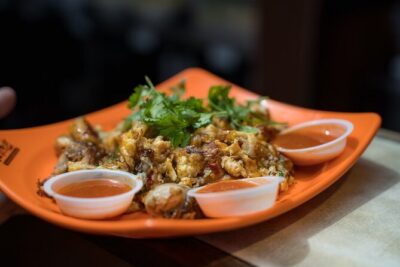
Singapore: Chinatown Hawker Market Food Tour with 7 Food Tastings
Read our review →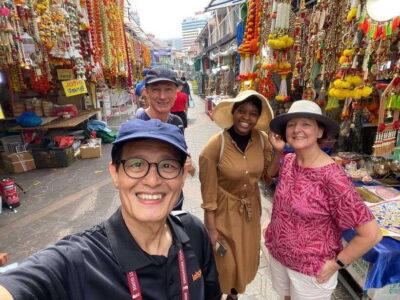
Singapore: Chinatown and Little India Guided Walking Tour
Read our review →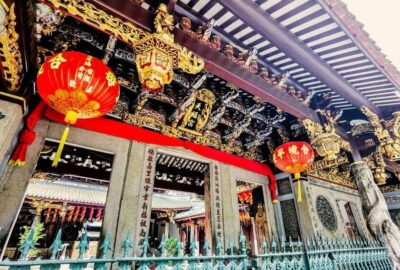
Singapore: Chinatown Historic Walking Tour with Lunch
Read our review →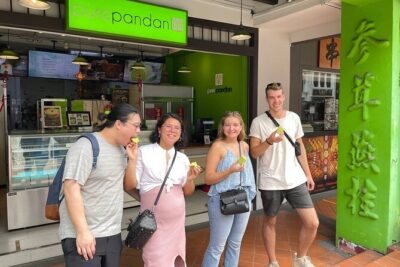
Kampong Glam, Little India & Chinatown with Local Street Food Tastings
Read our review →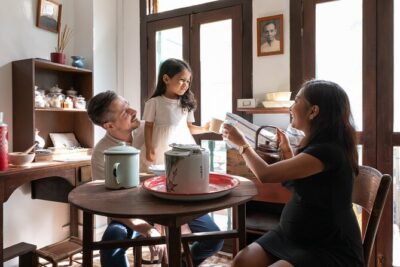
Tasting Trails: Chinatown OR with Kampong Glam, Little India
Read our review →Browse the lists this tour appears in