
Reviewed · SINGAPORE STREET FOOD AND HAWKER TOURS
Singapore: Street Food & Ethnic Quarters Kick Scooter Tour
Singapore’s food and culture come together neatly on this evening kick scooter tour, which links six ethnic quarters with seven local tastings. You start in Little India and finish near Dunlop Street after passing temples, churches, mosques, markets, old buildings, and colorful lanes.
I especially like the mix of small food samples and short cultural stops. I also like that the scooter covers about 5.7 km, letting you see more ground than you would on foot. The main catch is physical: you need balance, comfortable shoes, and enough stamina for several hours on a scooter. Wet weather can also change the ride to a walking tour.
Key points to know before booking
- Start with dosai and masala tea in Little India: The first meal stop gives you a proper introduction to South Indian flavors.
- Ride through six ethnic quarters: Little India, Bugis, Kampong Glam, the Jewish Quarter, and other central districts fit into one evening.
- Seven vegetarian-friendly tastings: Expect foods such as popiah, chwee kway, muah chee, bubur pulut hitam, and pisang goreng.
- Guide Ping brings strong local insight: Her tours combine stories about religion, architecture, food, and Singapore’s multicultural roots.
- The route covers about 5.7 km: A scooter makes the distance manageable, but you still need a fair sense of balance.
- The tour ends at 73 Dunlop Street: You finish close to Little India, with Kampong Glam and Bugis also nearby.
Why this tour works for first-time Singapore visitors
Singapore can feel polished and modern at street level, but its older neighborhoods reveal a more layered city. This ride moves between Indian, Chinese, Malay, Jewish, and European influences in a single evening. You are not only checking off landmarks. You are seeing how places of worship, food stalls, shophouses, markets, and shopping streets sit close together.
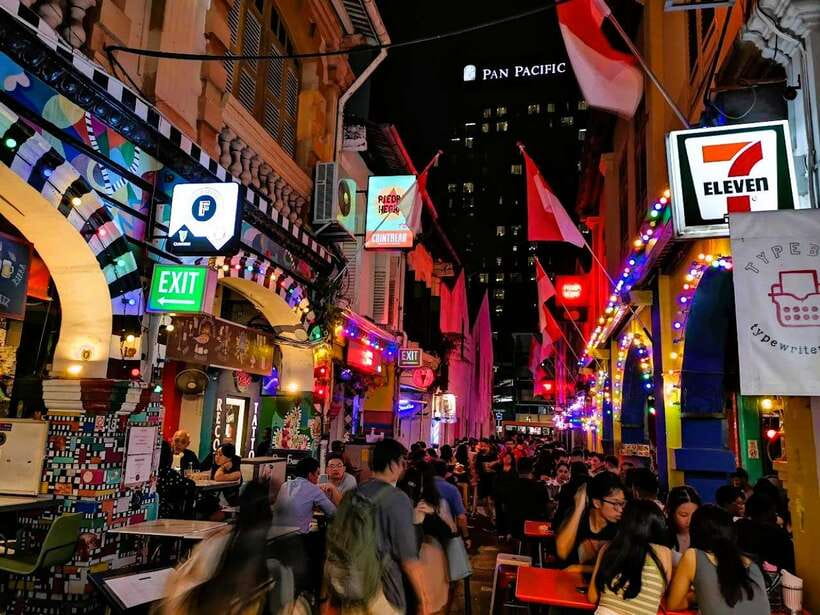
The route also gives you a useful first look at central Singapore after dark. You will see evening activity around Bugis Street, Haji Lane, Albert Centre, and the streets near Little India. The guide supplies the links between the sights, which matters because many of the buildings are easy to pass without understanding why they are there.
At $54 per person, the price is reasonable if you value a guide and plan to eat as you go. A 210-minute tour includes scooter rental, seven food and drink tastings, and stops at a long list of landmarks. You are paying for transport between neighborhoods as well as interpretation. It is less attractive if you mainly want a large sit-down dinner, since the food comes in tasting portions rather than one full meal.
More hawker centre crawls:
- Small Group: Michelin and Local Hawker Food Tour with 9 tastings
★ 5.0 · 1,890 reviews - Small Group: Singapore Street Food & Night Tour with 9 tastings
★ 5.0 · 1,240 reviews - Singapore: UNESCO Street Food & Cultural Experience
★ 5.0 · 524 reviews
Starting in Little India with dosai and tea
Meet at Little India MRT Station Exit E at street level. This is a practical starting point because the neighborhood supplies some of the tour’s strongest food and architecture right away.
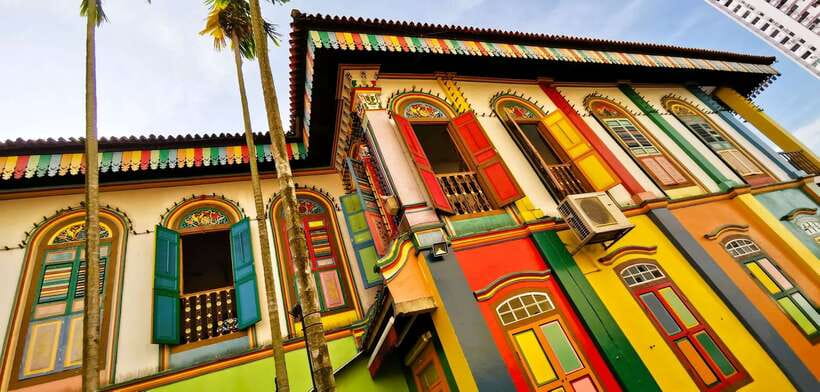
Tan Teng Niah is the first photo stop. The colorful former Chinese villa offers an early reminder that Little India was never an isolated enclave. Singapore’s districts developed through overlapping communities, businesses, and faiths, and this building makes that point in a quick visual way.
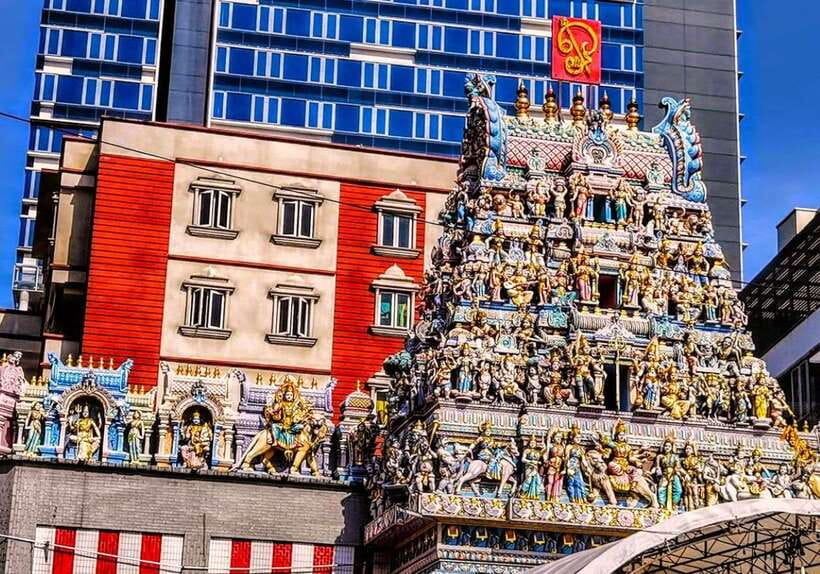
You then pause at Sri Veeramakaliamman Temple for about 10 minutes. The temple is one of Little India’s key religious landmarks, and the stop gives your guide time to explain local customs and the role of Hindu places of worship in the neighborhood. You should dress and behave respectfully around religious sites. The stop is brief, so think of it as an introduction rather than a full temple visit.
The first substantial food stop is Komala Vilas Restaurant. Here you taste a dosai cone with chutneys and masala tea. Dosai is a crisp South Indian crepe, and the cone presentation makes this more playful than a standard restaurant serving. The chutneys add different levels of heat and freshness, while the tea gives you a warm, spiced drink before the scooter ride continues.
This stop is listed for about 40 minutes and includes dinner, tea, street food, and guided commentary. It is also a useful point to tell the guide about dietary needs. The tour is vegetarian-friendly, and one family received especially careful help with vegetarian requirements. Still, you should explain your needs clearly before eating rather than relying on the general description.
Campbell Lane and the city’s smaller stories
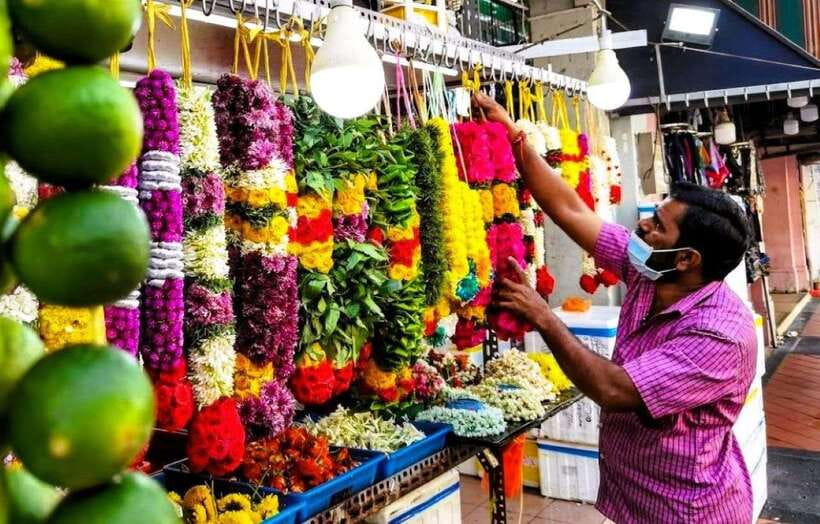
After eating, you pass through Campbell Lane, a pedestrian-friendly stretch in Little India known for shops, decorations, and street life. The stop is short, but it helps you read the neighborhood as more than a collection of temples and restaurants.
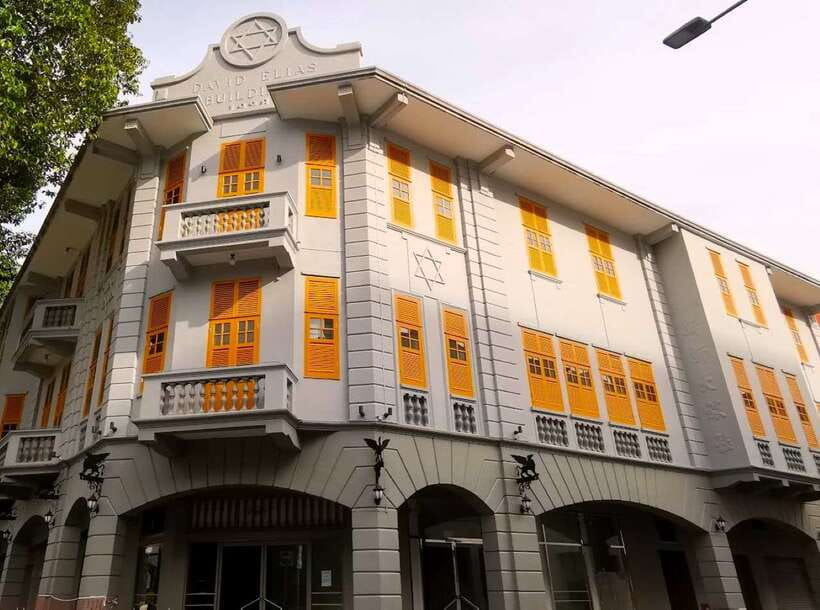
David Elias Building follows, with a quick photo stop and explanation. The building connects to Singapore’s Jewish presence, an aspect of the city many visitors miss. The tour’s reference to the Jewish Quarter is valuable because it broadens the usual Singapore story beyond the better-known Chinese, Indian, and Malay districts.
You then move toward Stamford Arts Centre. This stop shifts the mood from religious and commercial heritage to the arts. The route is not built around long interior visits, so the guide’s commentary is important. You are seeing the outside setting and learning what gives the area its character.
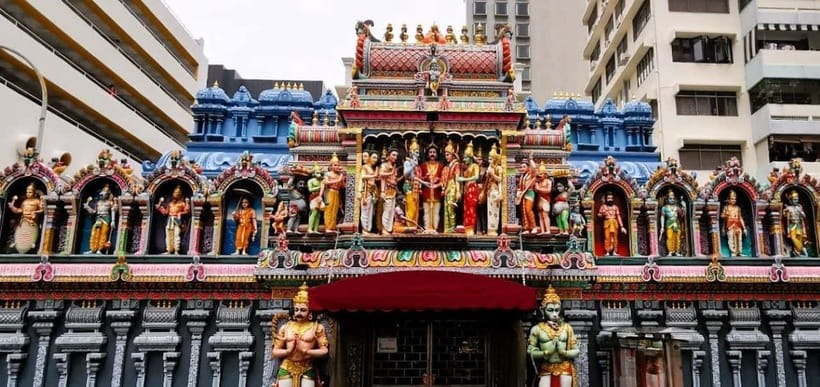
The brief stops at Sri Krishnan Temple and Kwan Im Thong Hood Cho Temple show how different religious traditions can exist within a short ride of each other. The first is Hindu, while the second is a Chinese temple associated with Guanyin, the Buddhist figure of compassion. Each visit lasts only a couple of minutes, but together they make the tour’s central point: Singapore’s cultural districts overlap rather than sit in sealed-off boxes.
Albert Centre and Singapore’s hawker flavors
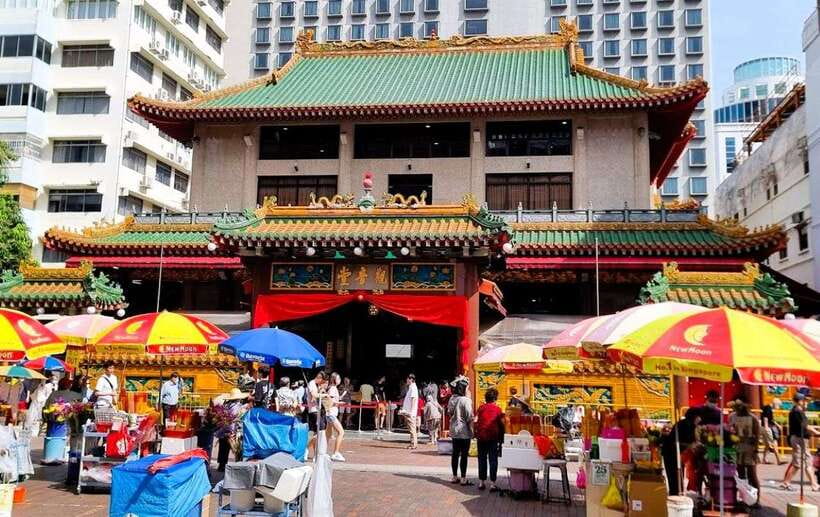
Albert Centre is one of the main eating stops, with about 30 minutes for street food and local snacks. This is where you try more of the everyday foods that define Singapore’s hawker culture.
The tastings include popiah, chwee kway, and muah chee. Popiah is a fresh Chinese spring roll with a soft wrapper and savory filling. Chwee kway is steamed rice cake topped with preserved radish and sambal. Muah chee consists of chewy glutinous rice pieces coated in crushed peanuts and sugar.
These are small foods, but they show three different textures: soft and fresh, tender with a spicy topping, and chewy with a sweet nutty coating. I like this format because you can sample dishes you might not order alone. It also keeps the meal moving, though anyone expecting a large dinner should eat lightly before the tour or plan another meal afterward.
Bugis Street comes next for a photo stop and a little shopping time. The area is known for its busy retail atmosphere, so this part feels less historic and more contemporary. It gives you a change of pace after the market food and temple visits.
You also pass Bugis Junction, a modern shopping complex. On paper, a shopping center may sound less exciting than a temple or old shophouse, but the contrast is useful. Singapore’s central districts place modern retail, preserved buildings, markets, and religious sites close together. The tour shows that contrast without pretending the city is frozen in the past.
More food tours in Singapore:
- The Award-Winning PRIVATE Food Tour: 10 Tastings of 3 Cultures
★ 4.5 · 1,017 reviews - Singapore: Chinese, Indian & Arabic Quarters, Culture & Food Tour
★ 5.0 · 789 reviews - Small-Group Food Tour With Hawker Center: Eat Like A Local
★ 5.0 · 420 reviews - Singapore Private Food, Culture and Heritage Tour with 9 tastings
★ 5.0 · 394 reviews
Churches, CHIJMES, and a pause at Raffles Hotel
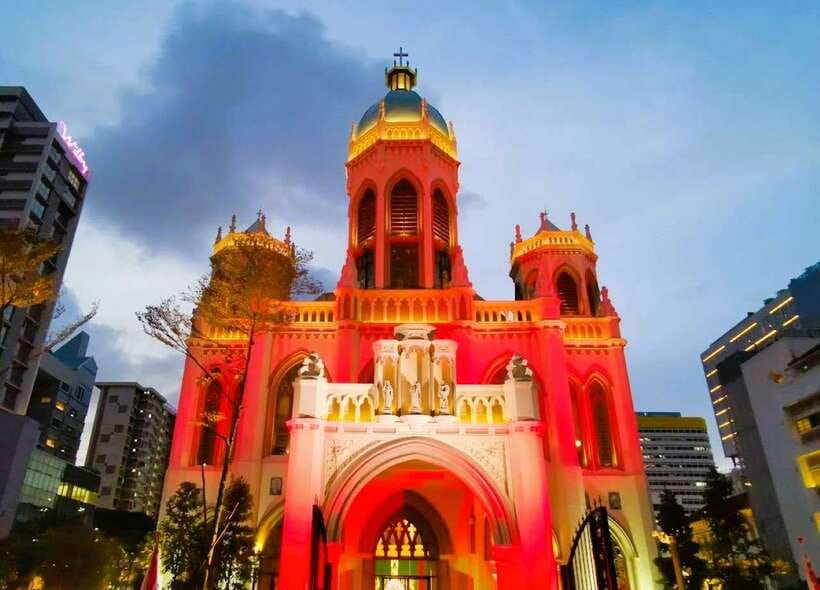
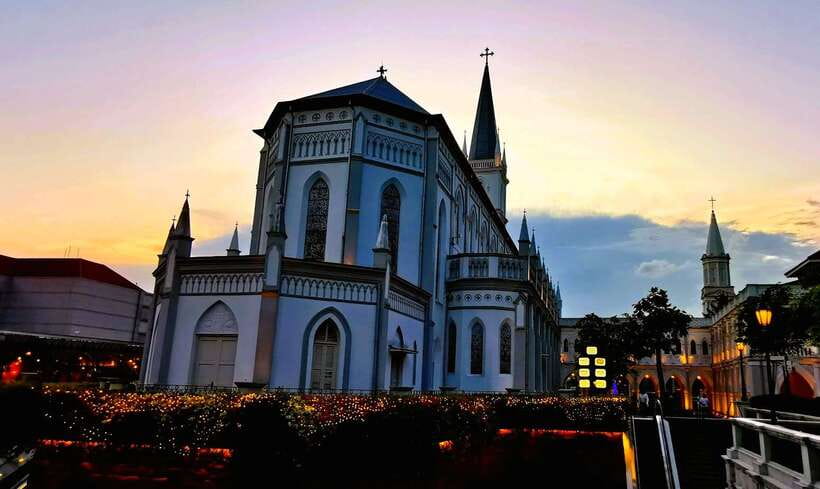
The route then crosses into an area shaped by Singapore’s Christian and colonial-era institutions. You stop briefly at St Joseph’s Church on Victoria Street and the Cathedral of the Good Shepherd. These visits are short, around two minutes each, so the value lies in the exterior views and the guide’s explanation.
CHIJMES allows more time, around 10 minutes. The former convent complex has a distinctive setting and is now associated with dining, events, and nightlife. It is a good example of adaptive reuse, where an older religious site takes on a new public role without losing its visual identity.
Raffles Hotel is the longest break on this part of the route, with about 20 minutes for photos, a rest, and possible shopping. You should not expect a full hotel tour or a long meal here. Instead, use the pause to catch your breath, take photographs, and enjoy the contrast between the hotel’s formal setting and the food markets you have just visited.
The stop matters for pacing. Three and a half hours on a scooter can feel long if every minute is spent moving. The Raffles break gives you a chance to reset before the final section through Kampong Glam.
Haji Lane and Malay sweets
Haji Lane introduces one of Singapore’s most colorful street scenes. Its narrow lane, street art, independent shops, and cafes make it a popular photo stop. The area can be lively in the evening, so keep your attention on pedestrians and other riders as you move through.
The food stop here focuses on dessert and Malay-style flavors. You may taste bubur pulut hitam, a black glutinous rice dessert served with coconut cream, and pisang goreng, crisp banana fritters. The combination works well after the savory food at Albert Centre. The rice dessert is soft and creamy, while the banana fritter offers a warm, crisp bite.
The final cultural section includes Sultan Mosque and Bussorah Street. Sultan Mosque is one of Kampong Glam’s defining landmarks, and Bussorah Street leads you through the district’s pedestrian shopping and dining area. This is where the tour’s themes come together most clearly: Malay identity, Muslim traditions, old shophouses, food, and modern street culture all occupy the same compact district.
The tour finishes at 73 Dunlop Street, near where you began in Little India. Hotel pickup and drop-off are not included, so plan your own way to the starting point and onward from the finish.
What the scooter adds, and what it demands
The kick scooters are not just a novelty. They allow you to cover a route that would be tiring on foot, especially when moving between Little India, Bugis, the civic district, and Kampong Glam. The evening breeze is another advantage, particularly in Singapore’s warm climate.
You should still take the physical requirement seriously. The tour asks you to ride for about 5.7 km, stop and start in city streets, and maintain balance for several hours. Children under eight cannot join, pregnant women are not suited for the activity, and the stated weight limit is 220 pounds, or 100 kilograms.
Comfortable shoes and water are sensible choices. You should also leave room in your schedule for the possibility of rain. Disposable ponchos are provided during bad weather, but rain may make the ride less pleasant. On at least one wet-weather departure, the group continued on foot instead of using scooters. That can preserve the cultural part of the experience, but it changes the transport element.
The format suits adults, older children who meet the age requirement, couples, and families who enjoy active sightseeing. It is less suitable if you have mobility limits, dislike traffic-side riding, or want a slow restaurant meal.
Guide Ping and the human side of the route
Guide Ping is repeatedly singled out for her warmth, energy, and command of Singapore’s cultural details. Her role matters because many stops are short. A good explanation turns a quick look at a temple, church, or old building into a useful piece of the city’s story.
Ping has also handled small groups and private-feeling departures, including a family of four and a group of only two people. Smaller numbers can make it easier to ask questions, adjust the pace, and explain food choices. Group size is not specified for every departure, so you should not book assuming a private tour.
The guide’s English is the stated tour language. If you want a tour that focuses on food alone, this may feel too history-heavy. If you like understanding why a neighborhood looks and eats the way it does, the commentary is one of the strongest reasons to choose it.
Who should book this $54 experience?
Book it if you want a lively introduction to Singapore’s central districts, enjoy tasting small portions, and are comfortable on a scooter. It is particularly useful early in a visit because you can mark places to revisit later, such as Little India, Albert Centre, Haji Lane, or Kampong Glam.
The tour also suits vegetarian visitors well, since the food plan is designed around vegetarian-friendly local dishes. Tell the guide about any specific dietary needs at the start, because vegetarian-friendly does not automatically answer questions about dairy, eggs, nuts, spice, or allergies.
You may want to skip it if your priority is a full evening meal, a private vehicle, or long indoor visits. The itinerary is fast-moving, and several landmarks receive only two to five minutes. Its strength is variety, not depth at a single site.
Free cancellation up to 24 hours before departure and the option to reserve now and pay later add flexibility. Check the available starting time when booking, since the duration is fixed at 210 minutes but the departure time can vary.
Final verdict: a smart way to connect Singapore’s neighborhoods
I would recommend this tour to active food lovers who want more than a standard sightseeing loop. The seven tastings give you a useful introduction to local food, while the route links religious buildings, markets, old architecture, public art, and modern shopping streets.
The best reason to book is the combination of range and guidance. In one evening, you move from Little India to Bugis, the civic district, and Kampong Glam, with Ping’s explanations helping you connect the dots. Just arrive ready to ride, keep your meal expectations realistic, and bring water. If those conditions suit you, $54 buys a full and memorable first look at Singapore.
FAQ
Where does the tour start?
The meeting point is Little India MRT Station Exit E at street level.
Where does the tour finish?
The tour finishes at 73 Dunlop Street.
How long does the experience last?
The tour lasts 210 minutes, or three and a half hours.
How far do participants ride?
Participants ride kick scooters for about 5.7 km.
What food and drinks are included?
Seven types of vegetarian-friendly local street food and drink are included. Listed examples include dosai, masala tea, popiah, chwee kway, muah chee, bubur pulut hitam, and pisang goreng.
Is the tour suitable for vegetarians?
Yes. The tour is described as vegetarian-friendly. You should still tell the guide about any specific dietary requirements.
Is scooter rental included?
Yes. Kick scooter rental is included in the price.
What should I bring?
Bring water and comfortable shoes. Disposable ponchos are supplied during inclement weather.
Who should not take this tour?
The tour is not suitable for children under eight, pregnant women, or people over 220 pounds, or 100 kilograms. Participants also need reasonable fitness and a sense of balance.
More Kick Scooter Tours in Singapore
- Singapore: Kampong Glam & Civic District Vespa Sidecar Ride
★ 4.9 · 49 reviews - Singapore: Sunset City Tour by Kick Scooter
★ 4.9 · 23 reviews - Secrets of Singapore Kick Scooter Tour with Dinner
★ 5.0 · 11 reviews - Secrets of Singapore Kick Scooter Tour with Dinner
★ 5.0 · 11 reviews
Recently added around Singapore
- The Real Singapore Heartland Walking Food Tour★ 5.0 · 4 reviews
- Vegetarian Culinary Adventure in Singapore★ 5.0 · 7 reviews
- Singapore’s Marina Bay Wonders and Heritage Tales, Chinatown★ 5.0 · 5 reviews
- Singapore’s Hidden Treasures: A Cultural Private Tour★ 5.0 · 3 reviews
- Private Tour Singapore Street Food & Night Tour★ 5.0 · 4 reviews
- Singapore – Albatross Speedboat Adventures Cruising in Sentosa★ 5.0 · 3 reviews
- Small Group Full Day Singapore City Tour with Roundtrip Transfers★ 4.0 · 11 reviews
- Tastes of Chinatown★ 5.0 · 4 reviews
Singapore Street Food and Hawker Tours, compared.
Small Group: Michelin and Local Hawker Food Tour with 9 tastings
Read our review →
Small Group: Singapore Street Food & Night Tour with 9 tastings
Read our review →
Singapore: UNESCO Street Food & Cultural Experience
Read our review →
Small-Group Food Tour With Hawker Center: Eat Like A Local
Read our review →
Singapore: Chinatown Hawker Market Food Tour with 7 Food Tastings
Read our review →
Singapore: Local Hawker Food Tour with Tastings
Read our review →
Singapore Street Food Tour with a Local: A Feast for Foodies 100% Personalized
Read our review →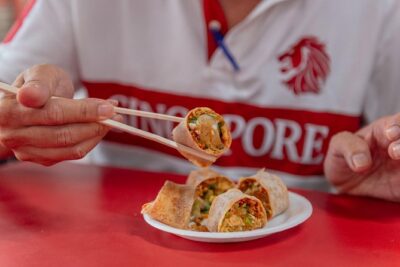
A Taste of Singapore: Hawker Center Private Customized Food Tour
Read our review →Browse the lists this tour appears in