
Reviewed · KATONG AND PERANAKAN TOURS
Learn to cook authentic Peranakan food with local market tour
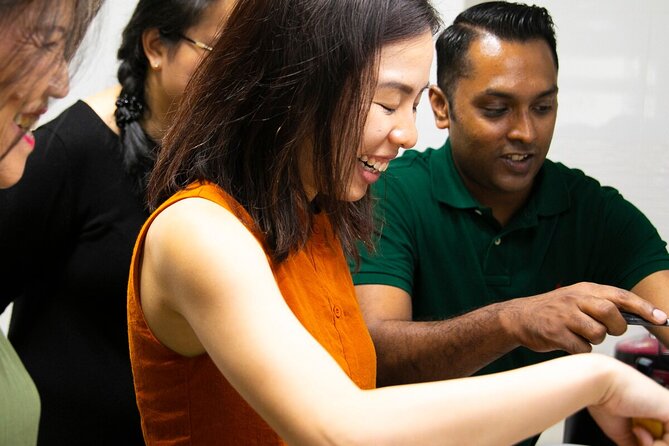
Peranakan food is the star here, but the local market visit gives this six-hour outing its real flavor. You shop for herbs, spices, and other ingredients with chef Wei Qiang before returning to cook assam fishhead and ayam pongteh, a chicken stew made with fermented soybean.
I like the small private group, limited to two to six people, and the fact that you do the cooking rather than simply watch. I also like taking home printed recipes, since the class can continue in your own kitchen.
The main caution is that the class needs at least two people to operate, and one past booking had trouble after the operator changed the date and failed to provide a clear address. Confirm the meeting details promptly after booking.
Key points to know before booking
- A market visit comes first: You shop for the class ingredients in a Singapore heartland neighborhood, away from the usual sightseeing circuit.
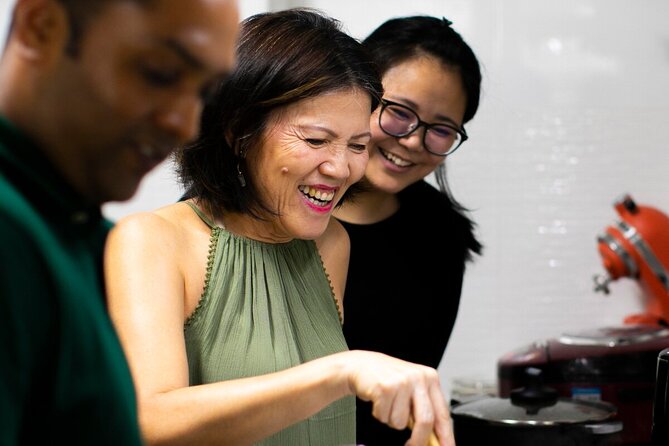
- Two Peranakan dishes are included: You prepare assam fishhead and ayam pongteh from scratch, then eat what you cook.
- Chef Wei Qiang leads the class: He explains the food, cooking methods, and background while keeping the session hands-on.
- The group is genuinely small: A minimum of two people is required, with a maximum of six.
- The morning runs long: Allow about six hours, with start times available between 7:00 AM and 1:00 PM.
- The price includes the practical extras: Ingredients, equipment, apron, printed recipes, and the meal are included in the $168.16 cost per person.
Starting at Chinatown MRT and heading to the market
The meeting point is Chinatown MRT Station at 91 Upper Cross Street. This is a practical place to begin, especially if you are staying in central Singapore or using public transport. The activity also ends back at the meeting point, so you do not need to arrange a separate return journey.
From there, you join the chef for a market visit. This is not a polished food hall built for sightseeing. The point is to see a local shopping area and buy the ingredients needed for the cooking session. That makes the first part useful: you see the raw materials before they become lunch.
The market stop is also a good fit for you if you have already covered Singapore’s major attractions and want a look at ordinary neighborhood life. The exact market route is not specified, so you should not book this expecting a named landmark or a formal food tour. Instead, think of it as a practical shopping trip with a chef who can explain what you are buying and why it matters.
This part may be less exciting if you prefer a fast, tightly scripted tour. Market shopping takes time, and the value comes from context rather than a long list of photo stops. Still, buying the ingredients yourself gives the cooking class a stronger connection to local food culture.
More Katong and Peranakan days:
- Singapore Food & Bike Tour – Katong
★ 5.0 · 289 reviews - Eat Snap Katong Walking Food Tour
★ 5.0 · 174 reviews - Katong Evening Food Tour
★ 4.5 · 41 reviews
Learning the spice base of Peranakan cooking
Peranakan cuisine brings together Chinese ingredients and cooking methods with Malaysian and Indonesian spices. The result is food with bold seasoning, layered aromas, and a balance that is very different from a basic Chinese stir-fry or a standard Southeast Asian curry.
You learn about the herbs and spices used in this cooking tradition as part of preparing the dishes. The supplied details do not list every ingredient, so I would not expect a fixed lecture on a long roster of spices. The useful part is seeing how those ingredients fit into the recipes you are actually making.
That practical approach matters. You are not just hearing that Peranakan cooking uses a certain herb or fermented ingredient. You are handling it, adding it at the right stage, and tasting the finished result later. For many people, that is a better way to remember a technique than taking notes during a demonstration.
Chef Wei Qiang is the named cooking teacher for this activity. The class is private, so you should have room to ask questions and work at a sensible pace. One account describes him as welcoming and clear in his teaching, while another highlights the hands-on format and his explanation of Peranakan food culture. Those details point to a class built around participation rather than a chef performing while you stand back.
Making assam fishhead from scratch
Assam fishhead is one of the two featured dishes. The name gives you a good idea of what makes it distinctive: fishhead cooked with an assam-style sour element and a Peranakan spice base.
The supplied details do not specify the type or size of fishhead, the cooking vessel, or the exact recipe steps. What is clear is that you prepare the dish from scratch using the ingredients bought during the market visit. You can expect the chef to guide you through the process, but the precise amount of hands-on work may depend on the class pace and the group.
This dish is a good reason to choose the experience if you want something beyond familiar tourist cooking-school staples. Fishhead may not be the first choice for every diner, and you should consider your own comfort with it before booking. The meal centers on the dishes prepared in class, so anyone with strong food restrictions should ask the provider for current ingredient details before paying.
The finished dish also gives you a chance to take photos before eating. The setting is described as a homey lunch rather than a restaurant meal, which suits the informal nature of the lesson.
Preparing ayam pongteh with fermented soybean
The second named dish is ayam pongteh, a chicken stew made with fermented soybean. This is a useful recipe to learn at home because it is a hearty, saucy dish rather than a single quick cooking trick.
Fermented soybean brings a savory quality that may be new to some home cooks. The class gives you a chance to see how it is used in a Peranakan recipe and how the other seasonings balance it. Again, the exact ingredient list and cooking method are not provided, so you should treat the printed recipe as the key reference for recreating it later.
The two dishes make a sensible pair. Assam fishhead offers a seafood preparation with sour, spicy notes, while ayam pongteh gives you a chicken stew with fermented soybean. Together, they show two different sides of Peranakan cooking instead of repeating one technique twice.
One past account says the class covered three recipes rather than two. The standard description names two dishes, so I would plan on assam fishhead and ayam pongteh, but you might receive an additional preparation if the chef has time or the session is arranged that way. Do not rely on a third dish being included unless it is confirmed in advance.
More food tours in Singapore:
- Small Group: Michelin and Local Hawker Food Tour with 9 tastings
★ 5.0 · 1,890 reviews - Small Group: Singapore Street Food & Night Tour with 9 tastings
★ 5.0 · 1,240 reviews - The Award-Winning PRIVATE Food Tour: 10 Tastings of 3 Cultures
★ 4.5 · 1,017 reviews - Singapore: Chinese, Indian & Arabic Quarters, Culture & Food Tour
★ 5.0 · 789 reviews
A private class with room to ask questions
The group size is one of the strongest reasons to consider this activity. It requires at least two people and accepts no more than six. That is far more personal than a large demonstration class, and it should make it easier for you to ask about ingredients, timing, and cooking methods.
A private format does not guarantee a perfect class. Much depends on the chef, the day, and how well the schedule is handled. Still, the available feedback gives useful signs: one account praises Wei Qiang’s welcoming manner and teaching, while another appreciates being able to stay hands-on throughout the session.
The class includes all ingredients, cooking equipment, and an apron. That makes packing easy. You do not need to bring cooking tools or shop for specialty items before arriving.
The printed recipes are especially valuable. A food class can be enjoyable for a morning and then disappear from memory once the trip ends. Written instructions give you a realistic chance to repeat the dishes, although you may need to adjust quantities for your own kitchen.
Ending with lunch and a welcome drink
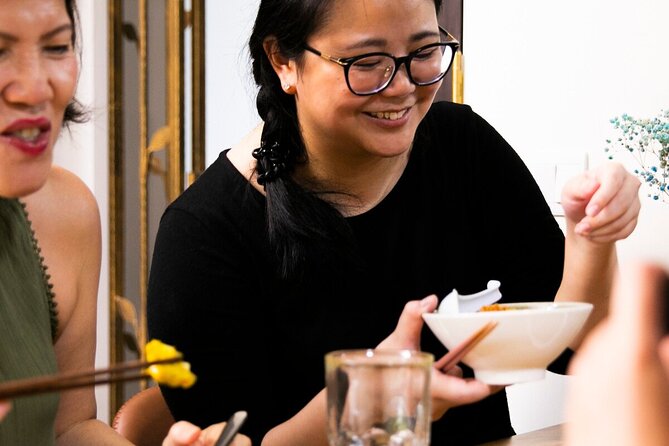
After the cooking, you eat the food you prepared. This turns the class into more than a lesson. You see the process from market purchase to finished meal, then have time to talk about what you made.
One account also mentions a welcome drink prepared by Wei Qiang. It is a small detail, but it fits the personal scale of the class. Since it is not listed as a formal inclusion, I would treat it as a possible courtesy rather than something to book the activity for.
The lunch is described as homey. That means you should expect a relaxed meal connected to the cooking session, not a formal restaurant service or a tasting menu. You can take photos of the finished dishes and share the meal with your group before returning to Chinatown MRT.
The food may be the best part for you if you enjoy eating dishes tied to the lesson. If you only want a short demonstration, the six-hour length could feel heavy. The market visit, preparation, cooking, and lunch are all part of the value, so plan for a full morning and early afternoon.
What the $168.16 price means
At $168.16 per person, this is not a bargain cooking class. The price needs to be judged against what is included and the small group size.
You are paying for about six hours, a private chef, a market visit, all ingredients, cooking equipment, an apron, two dishes, lunch, and printed recipes. For a pair or small group that wants personal instruction, the package can make sense. The market visit also gives it more substance than a class that starts only when you enter the kitchen.
The value is weaker if you mainly want a cheap meal or a short introduction to Singaporean food. You could spend less on a restaurant lunch, but that would not give you the shopping trip, instruction, or recipes.
I would also check the final inclusions before booking if you have dietary needs. The advertised dishes include fishhead, chicken, and fermented soybean, and no substitutions are stated. The experience provider is Low Salt Low Sugar, but that name alone does not confirm that every dish can be changed to suit a particular diet.
The class is booked, on average, five days ahead. That is a useful planning clue, though it is not a guarantee of availability. Because confirmation can take up to 48 hours and the class needs at least two people, do not leave this until the last morning of your Singapore stay.
Timing, transport, and booking details that matter
The activity lasts approximately six hours. Operating hours are listed from 7:00 AM to 1:00 PM every day, so you should select a morning start and keep the rest of the day fairly open.
The public meeting point is Chinatown MRT Station. The activity ends there as well. Mobile tickets are accepted, and the tour is near public transport. Service animals are allowed.
Confirmation is sent within 48 hours, subject to availability. Since one past booking involved a date change and missing address details, I would check your confirmation carefully and make sure the start time and meeting instructions are clear. Contact the provider if anything is vague.
Free cancellation is available up to 24 hours before the start time for a full refund. Changes or cancellations made less than 24 hours before the start are not accepted for a refund, and the cut-off uses Singapore local time.
Who will enjoy this most
I would choose this class if you like food with a strong sense of place and prefer doing the work yourself. It suits couples, families, and small groups of friends who can meet the two-person minimum and want a private morning.
It is also a good option for repeat visitors to Singapore. The market trip takes you beyond the standard tourist route, while the cooking session gives you something practical to bring home.
The experience is less suitable if you dislike fishhead, fermented soybean, or long cooking sessions. It may also disappoint you if you want a guaranteed tour of a specific famous market, since no named market or detailed route is provided.
The small group cap makes this a better fit for people who value personal instruction. If you are traveling alone, you will need to arrange another participant or confirm that the minimum can be met. The activity is not presented as a solo class.
Should you book this Peranakan cooking class?
Book it if your ideal Singapore food experience includes shopping with a local chef, learning two traditional dishes, and eating the result in a relaxed setting. The strongest points are the small group, the hands-on format, chef Wei Qiang’s personal teaching, and the printed recipes that let you cook the food again.
Think twice if the $168.16 price feels high for a meal, or if you need guaranteed dietary substitutions. Confirm the date, start time, address, and minimum group size as soon as you book. With those details settled, this is a thoughtful choice for curious cooks who want more than a standard restaurant visit.
FAQ
Where does the Peranakan cooking experience start?
It starts at Chinatown MRT Station, 91 Upper Cross Street, Singapore 058362.
Where does the activity end?
The activity ends back at the Chinatown MRT meeting point.
How long does the experience last?
It lasts approximately six hours.
What dishes will I cook?
The standard class includes assam fishhead and ayam pongteh, a chicken stew made with fermented soybean.
How many people can join?
At least two people are required for the workshop to start, and the maximum group size is six.
What is included in the price?
The price includes the market visit, ingredients, cooking equipment, an apron, printed recipes, and the meal prepared during the class.
More Shopping Tours in Singapore
- Private Market Visit and Cooking Class With A Professional Chef
★ 4.5 · 10 reviews
More Market Visits in Singapore
- Singapore Market to Table Culinary Experience (Wet Market Tour included)
★ 5.0 · 479 reviews - Singapore: Chinatown Hawker Market Food Tour with 7 Food Tastings
★ 5.0 · 213 reviews - Singapore Chinatown Market Private Food Tour with 7 Food Tastings
★ 5.0 · 19 reviews - Singapore: Market-to-Table Experience and Cooking Class
★ 5.0 · 17 reviews
Recently added around Singapore
- The Real Singapore Heartland Walking Food Tour★ 5.0 · 4 reviews
- Vegetarian Culinary Adventure in Singapore★ 5.0 · 7 reviews
- Singapore’s Marina Bay Wonders and Heritage Tales, Chinatown★ 5.0 · 5 reviews
- Singapore’s Hidden Treasures: A Cultural Private Tour★ 5.0 · 3 reviews
- Private Tour Singapore Street Food & Night Tour★ 5.0 · 4 reviews
- Small Group Full Day Singapore City Tour with Roundtrip Transfers★ 4.0 · 11 reviews
- Tastes of Chinatown★ 5.0 · 4 reviews
- Singapore – Albatross Speedboat Adventures Cruising in Sentosa★ 5.0 · 3 reviews
Katong and Peranakan Tours, compared.
Singapore: Katong Local Food and City Highlights Tour
Read our review →
Best Ever Katong Food Tour with Local Foodie – PRIVATE TOUR
Read our review →
Peranakan Cooking Class in Singapore, near Lavender MRT Station
Read our review →Browse the lists this tour appears in