
Reviewed · SINGAPORE CHINATOWN TOURS
Singapore: Chinatown Historic Walking Tour with Lunch
Singapore’s Chinatown is best understood one doorway at a time. This 210-minute walk takes you from the sea-linked Yueh Hai Ching Temple to Thian Hock Keng Temple, old clan buildings, food shops, temples, and traditional businesses that still serve local customers.
I like the mix of serious history and everyday food, especially the lunch at Chiew Kee Noodle House and the stop at century-old Pek Sin Choon. I also like that guides such as Ping explain the Chinese, Malay, Indian, and colonial threads together instead of treating Chinatown as a single-culture theme park. The main drawback is simple: you cover a lot of ground, often outdoors, so Singapore’s heat and rain can make the walk tiring.
Key points at a glance
- A walk through several layers of Singapore: Start near Raffles Place and trace the city’s Chinese immigrant story through temples, lanes, shophouses, and food streets.
- Thian Hock Keng Temple is the visual centerpiece: Built in 1821 for Mazu, the sea goddess, it offers intricate details and a clear link to the hopes of early migrants.
- Lunch is part of the experience: Chiew Kee Noodle House serves the tour’s included meal, with soy sauce chicken as its signature dish.
- The small stops matter: Fuk Tak Chi Museum, the Chinese Weekly Entertainment Club, Goh Loo Club, and Mohamed Ali Lane give the walk its local character.
- Expect a strong guide-led experience: Ping is repeatedly praised for clear storytelling, personal warmth, photography, and the ability to answer questions.
- Plan for tropical weather: Wear comfortable shoes, bring water, and remember that the tour runs rain or shine. A disposable poncho is included if needed.
Why this Chinatown walk feels different
Many Chinatown visits focus on the same few photo spots. This one spends time on the less obvious details: a former Taoist shrine inside a boutique hotel, an old entertainment club, a long-running tea merchant, and a family medicine shop. You still see major landmarks, but the walk keeps returning to small businesses and religious buildings.
That gives you a better sense of how Chinatown functioned, not just how it looks. Early Chinese immigrants arrived with hopes tied to work, family, trade, and safe passage across the sea. The temples, clan associations, food stalls, and shops all fit into that larger picture.
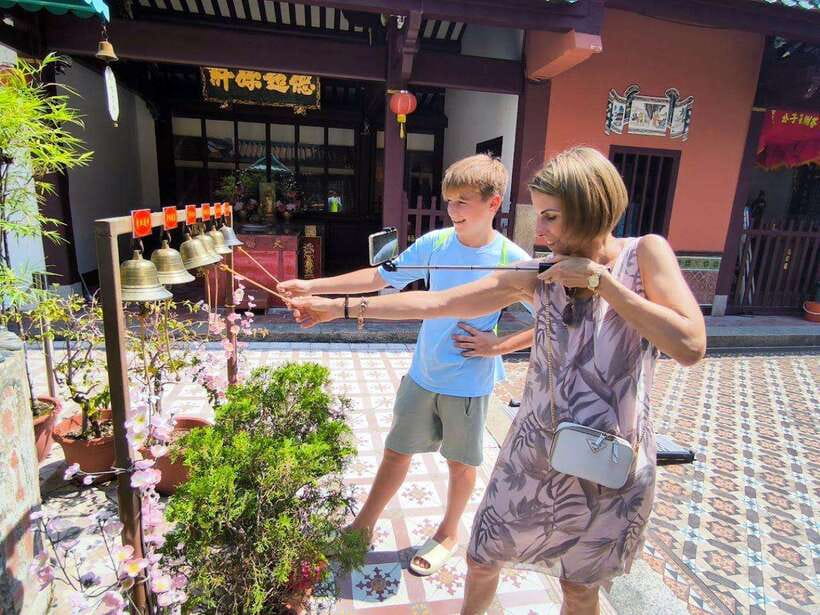
The guide is central to the experience. Ping is the name that comes up most often in connection with this walk, and her style appears to suit people who want more than a list of dates. She explains religion and architecture in plain English, answers side questions, adjusts the pace, and sometimes takes photographs during the walk before sharing them later.
That last touch is useful if you are traveling alone or if everyone in your group wants to appear in a few photographs. It is not the reason to book the tour, but it adds a personal note to a morning that could otherwise feel like a standard sightseeing circuit.
More Chinatown walks and food stops:
- Chinatown, Little India, Kampong Gelam City Highlights Tour
★ 5.0 · 224 reviews - Singapore: Chinatown Hawker Market Food Tour with 7 Food Tastings
★ 5.0 · 213 reviews - Singapore: Chinatown and Little India Guided Walking Tour
★ 4.8 · 190 reviews
From Raffles Place to Yueh Hai Ching Temple
Meet at 9:55 AM in front of The Whisky Distillery at One Raffles Place, across from Raffles Place MRT Station Exit A at street level. The walk begins at 10:00 AM.
Starting here is a smart choice. Raffles Place is Singapore’s modern business center, while the first temple takes you back to the city’s early Chinese community. Yueh Hai Ching Temple is a national monument linked to the hopes of immigrants who crossed the sea to build a new life.
The guided visit lasts about 20 minutes. That is enough time to look closely at the temple and understand why these religious sites were practical centers of community life, not just places for quiet prayer. Your guide can also help you read the setting, since office towers and older religious buildings sit close together in this part of town.
From there, the route moves along pedestrian-only Pekin Street. This short stretch helps you shift from modern Singapore to older Chinatown. You will not need transport between stops, so the walk feels continuous rather than broken into separate sightseeing appointments.
Fuk Tak Chi, Nagore Dargah, and Thian Hock Keng
Fuk Tak Chi Museum is one of the most interesting early stops. It began as a Taoist shrine and has been restored inside a boutique hotel. The visit lasts around 20 minutes, giving your guide room to explain both the building and the role such shrines played in the community.
The setting also makes a useful point about Singapore today. Old religious and social spaces have not disappeared entirely, but many now share the city with hotels, offices, restaurants, and new residences. You see that tension throughout the morning.
A short five-minute stop at Nagore Dargah adds another piece to the area’s religious story. The schedule does not allow a long visit, but it reinforces the fact that Chinatown is part of a wider Singaporean neighborhood shaped by Chinese, Indian Muslim, Hindu, and colonial influences.
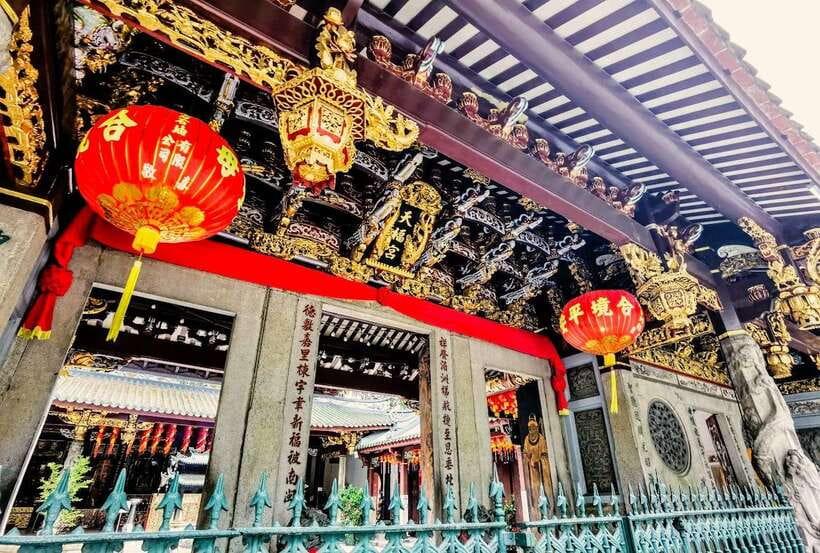
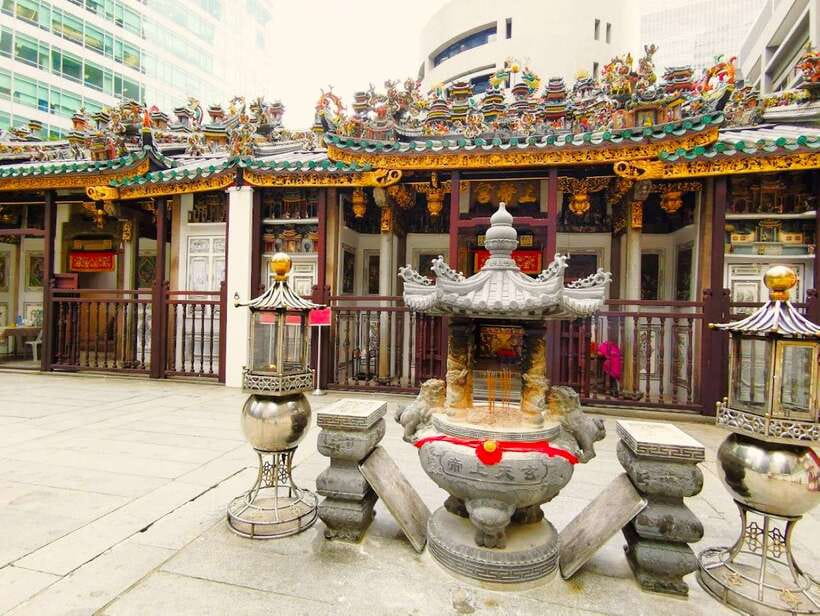
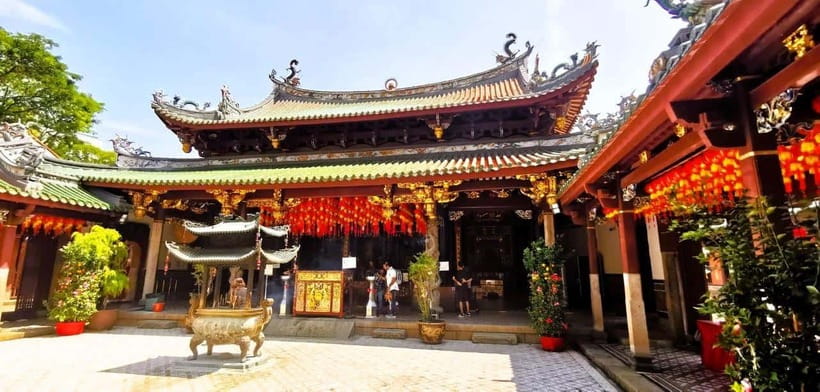
Thian Hock Keng Temple receives about 25 minutes, the longest temple visit on the route. Built in 1821 and dedicated to Mazu, the sea goddess, it is closely tied to the seafaring experience of early Chinese immigrants. Look for the roofline, carvings, and layered decorative work rather than rushing through for one photograph.
This is one point where a guide makes a real difference. Without context, an ornate temple can blur into the next ornate temple. With an explanation of Mazu, sea travel, and the needs of early migrants, the building becomes easier to understand.
Ann Siang Hill and the old clubhouses
The walk then climbs Ann Siang Hill for around 10 minutes. The hill provides a change in scenery and a useful reminder that Chinatown is not flat in every direction. It also brings you into an area of older shophouses and former social clubs.
The Chinese Weekly Entertainment Club gets a brief five-minute guided visit. The name points to a past when Chinese community organizations offered entertainment, companionship, and a sense of belonging. You may find the stop more interesting for the story than for the time spent inside.
At the Goh Loo Club, the tour allows about 20 minutes. The shophouse setting is part of the appeal. Singapore’s shophouses were built for mixed use, with business below and living space above, and they help you picture how trade and family life once worked in close quarters.
Mohamed Ali Lane follows with a short five-minute stop. Here, the guide fills in more of Chinatown’s social past. These quick lane visits are easy to underestimate, but they break up the major monuments and help you notice how much of the district’s character survives in narrow side streets.
A few more Singapore experiences worth comparing
- Splendour of Colonial Singapore Walking Tour with Lunch
★ 5.0 · 82 reviews - Splendour of Colonial Singapore Walking Tour with Lunch
★ 5.0 · 59 reviews - SMALL GROUP: Batam day tour with Ferry, 1-hour Massage, and Lunch from Singapore
★ 4.0 · 29 reviews - Singapore to Batam:City Tour with Ferry Tickets & Lunch
★ 4.0 · 22 reviews
Chiew Kee Noodle House and the value of an included lunch
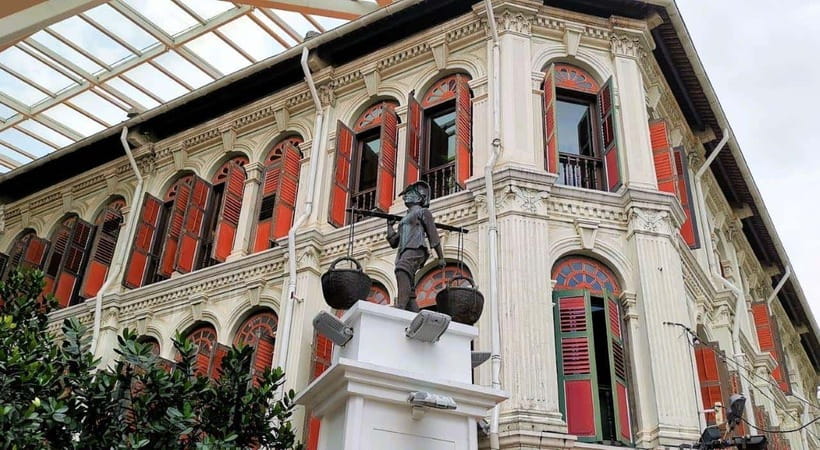
After the morning’s temples and buildings, lunch at Chiew Kee Noodle House is welcome. The meal lasts about 35 minutes and is included in the $54 price.
Chiew Kee is known for soy sauce chicken and is described as one of Singapore’s oldest and best-loved restaurants. The value here is not simply getting fed during a long walk. You are eating at a long-running local business rather than stopping at a generic restaurant chosen only for group convenience.
The meal is described as simple and delicious, which is exactly the right expectation. This is not presented as a formal dining experience. It is a chance to try a familiar Singaporean dish in an old-style noodle house and to sit down with the group before continuing.
Food is one of the strongest parts of the tour because it connects the history to ordinary life. You hear about migration, trade, and family businesses, then eat in a place built around those same patterns.
Yue Hwa, The Majestic, and Pagoda Street
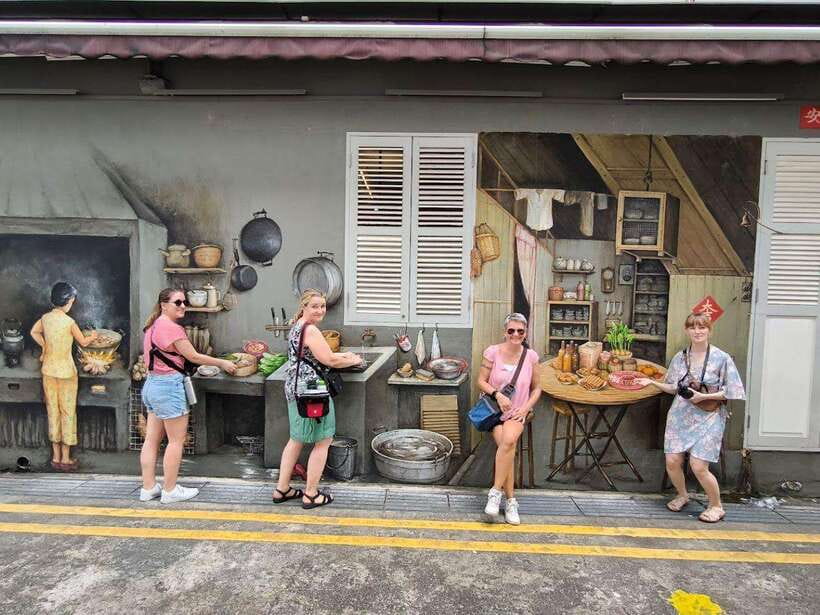
After lunch, the route passes Yue Hwa Chinese Products, a large store associated with Chinese goods and traditional products. The guided stop is brief, only about three minutes, so treat it as an orientation point rather than a dedicated shopping session.
The Majestic receives around two minutes for photographs and a quick explanation. It is a good example of how old buildings and changing uses sit side by side in central Singapore. If you enjoy architecture, keep your eyes up and look beyond the main road signs.
Pagoda Street gets about 10 minutes. This is one of the more recognizable Chinatown streets, but the guide helps you look past the obvious storefronts and connect the street to the district’s earlier commercial life.
The tour also includes Lim Chee Guan’s famous New Bridge Road store. The visit helps show how established food businesses become part of Singapore’s cultural identity. You may want to buy something here, but shopping is not listed as included, so bring your own spending money if you plan to browse.
Sri Mariamman Temple and the many faiths of Chinatown
The 10-minute visit to Sri Mariamman Temple is important because it widens the story beyond Chinese Singapore. As the oldest Hindu temple in Singapore, it adds a clear reminder that Chinatown has always been a mixed neighborhood, not a sealed-off Chinese quarter.
The route is strongest when these different places are explained together. Yueh Hai Ching, Nagore Dargah, Thian Hock Keng, and Sri Mariamman each point to different communities and religious traditions. You get a more accurate picture of Singapore when these buildings are placed in the same urban story.
The temple visit is fairly short, so you should not expect a long, quiet exploration. Instead, listen for the explanation of the building’s role and take time to observe the details that your guide points out.
Tea, pastries, Smith Street, and Sago Lane
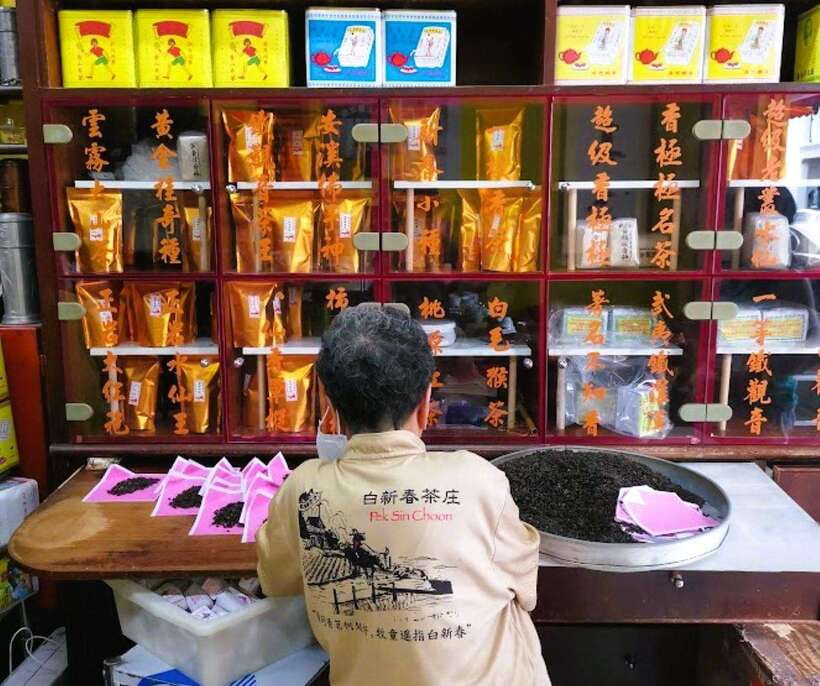
Pek Sin Choon is a particularly appealing stop for anyone interested in food and old businesses. This tea merchant has more than a century of history, and you can browse Cantonese pastries as well.
This is the kind of stop that gives the walk its texture. A large monument tells you about public history. A tea shop tells you how tradition survives through purchases, recipes, and familiar tastes. You may find this stop more useful than a quick pass through a souvenir store because it connects directly to local food culture.
The route then moves along Smith Street toward Sago Lane. Smith Street is a major Chinatown food and shopping corridor, while Sago Lane recalls the area’s earlier sago factories. The contrast between the current street and its older industrial use gives your guide another chance to show how the district has changed.
The walk includes time at the Buddha Tooth Relic Temple, another major Chinatown landmark, and a short guided look at Maxwell Food Centre. These stops are brief, around five minutes each, so do not expect to eat there or tour every part of the temple. They work best as landmarks that help you understand the surrounding streets.
Singapore City Gallery and the traditional medicine shop
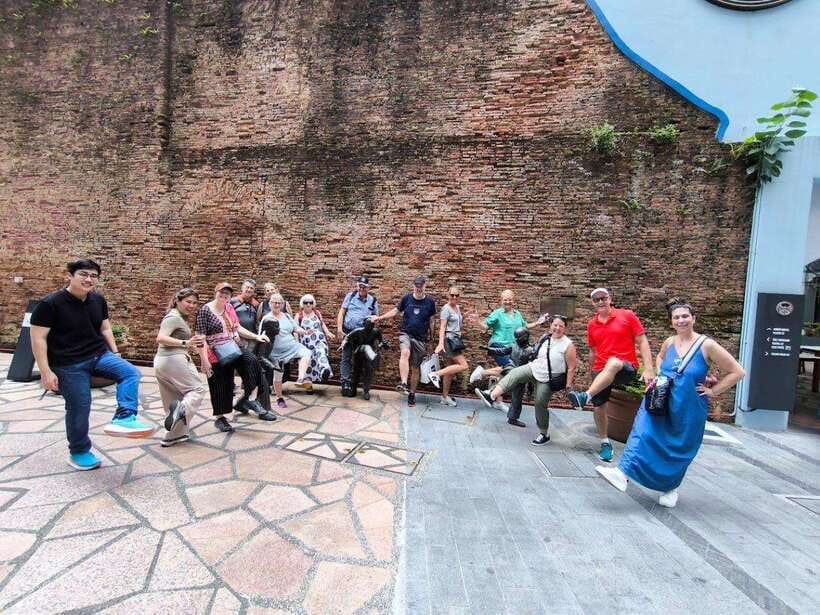
Singapore City Gallery gets about 20 minutes and provides a useful change of scale. After spending the morning looking at temples, lanes, shops, and shophouses, you get a chance to think about how the city has been planned and reshaped.
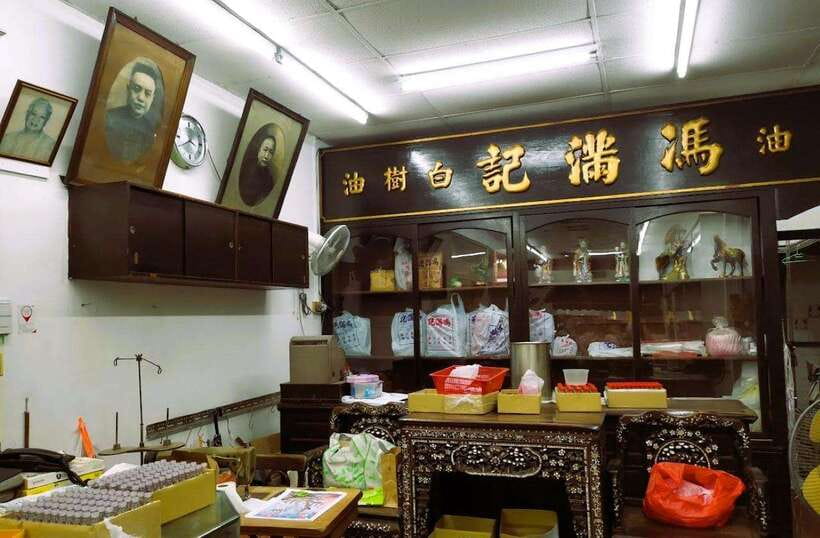
The stated experience also finishes with Fong Moon Kee, a family-run traditional medicine shop dating to the early 1900s. This is a fitting final Chinatown stop. The shop represents another form of continuity, with remedies and family business practices carried forward through generations.
Because the route includes many short visits, the final section can feel full. You are seeing a lot in one morning, and some places receive only a few minutes. I would treat this as a guided introduction rather than a slow, specialist study of every temple and shop.
Is $54 a fair price?
At $54 per person, the tour offers reasonable value if you want a guided Chinatown overview with lunch included. You are paying for 210 minutes of English-language guiding, a substantial route, the meal at Chiew Kee Noodle House, and help making sense of places that can be easy to miss on your own.
The price is less attractive if you mainly want free time for shopping or photography. Several stops are short, and the group follows a set route. You also pay separately for any purchases, drinks, or extra food.
For a first visit to Singapore, I like the combination. You get temples, architecture, local businesses, food, and religious history in one compact morning. It can also work well early in a longer stay, since you will recognize places and understand the neighborhood better when you return on your own.
Practical advice for the 3.5-hour walk
Wear comfortable shoes. The route runs through streets and lanes for most of the morning, and even an easy pace can become tiring in Singapore’s heat.
Bring water. The tour takes place rain or shine, and a disposable poncho is provided if rain arrives, but you should still prepare for wet weather. One guide has been especially attentive about warning people to bring umbrellas when rain was expected.
Allow extra time after the scheduled finish if you have a strict appointment. The advertised duration is 210 minutes, but a good guide may spend longer answering questions or helping with photographs. Do not book this immediately before a flight, timed attraction, or formal meal.
The tour is in English. It suits adults, families, solo visitors, and anyone who wants a clear introduction to Chinatown’s history and culture. It is less suited to someone who dislikes walking, outdoor heat, short stops, or a schedule that keeps moving.
Free cancellation is available up to 24 hours before the activity, and you can reserve now and pay later. Those policies make it easier to fit the walk into a changing Singapore itinerary.
Should you book this Chinatown tour?
I would book it if you want Chinatown explained rather than simply photographed. The strongest reasons are the well-chosen mix of temples and working businesses, the included soy sauce chicken lunch, and the chance to visit Pek Sin Choon and Fong Moon Kee.
If Ping is available, she appears to be an especially strong choice for travelers who value clear storytelling, personal attention, and photographs along the way. Still, the tour’s value does not depend on one guide alone. The route itself is well balanced.
Skip it if you prefer to wander slowly, spend an hour in each temple, or choose your own food stops. Book it if you have one morning, want an authentic taste of old and new Singapore, and would rather have a local guide connect the pieces for you.
FAQ
Where does the Chinatown walking tour begin?
Meet at The Whisky Distillery at One Raffles Place, across from Raffles Place MRT Station Exit A at street level. The meeting time is 9:55 AM, and the tour starts at 10:00 AM.
How long does the tour last?
The scheduled duration is 210 minutes, or three and a half hours.
Is lunch included?
Yes. An authentic lunch at Chiew Kee Noodle House is included. The restaurant is known for soy sauce chicken, and the lunch portion of the tour lasts about 35 minutes.
What language is the tour conducted in?
The live guided tour is conducted in English.
What should I bring?
Bring comfortable shoes and water. The tour runs rain or shine, and a disposable poncho is included if it rains.
Is hotel pickup included?
No. Hotel pickup and drop-off are not included, so you need to make your own way to the starting point and return independently after the tour.
More Heritage Tours in Singapore
- Historical Singapore Bike Tour on Full-Sized Bicycles
★ 5.0 · 1,421 reviews - Singapore: Historical Half-Day Bike Tour
★ 4.8 · 399 reviews - Singapore Private Food, Culture and Heritage Tour with 9 tastings
★ 5.0 · 394 reviews - Singapore Group History & Culture Walking Tour
★ 5.0 · 160 reviews
More Walking Tours in Singapore
- Singapore: Private Walking Tour with a Local
★ 4.7 · 410 reviews - Private Customised Singapore Walking Tour
★ 5.0 · 370 reviews - Singapore: Customized Private Tours (Car/Bus/Walking)
★ 5.0 · 181 reviews - Eat Snap Katong Walking Food Tour
★ 5.0 · 174 reviews
Recently added around Singapore
- The Real Singapore Heartland Walking Food Tour★ 5.0 · 4 reviews
- Vegetarian Culinary Adventure in Singapore★ 5.0 · 7 reviews
- Singapore’s Marina Bay Wonders and Heritage Tales, Chinatown★ 5.0 · 5 reviews
- Singapore’s Hidden Treasures: A Cultural Private Tour★ 5.0 · 3 reviews
- Private Tour Singapore Street Food & Night Tour★ 5.0 · 4 reviews
- Singapore – Albatross Speedboat Adventures Cruising in Sentosa★ 5.0 · 3 reviews
- Small Group Full Day Singapore City Tour with Roundtrip Transfers★ 4.0 · 11 reviews
- Tastes of Chinatown★ 5.0 · 4 reviews
Singapore Chinatown Tours, compared.
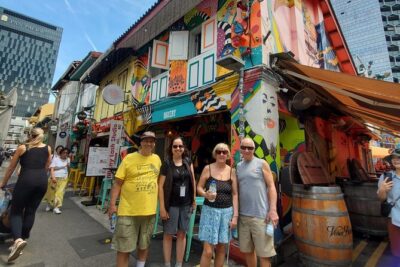
Chinatown, Little India, Kampong Gelam City Highlights Tour
Read our review →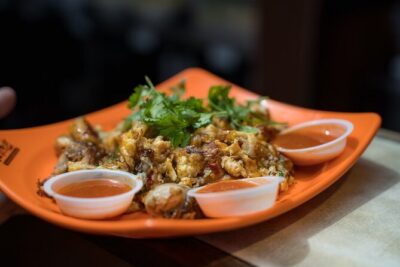
Singapore: Chinatown Hawker Market Food Tour with 7 Food Tastings
Read our review →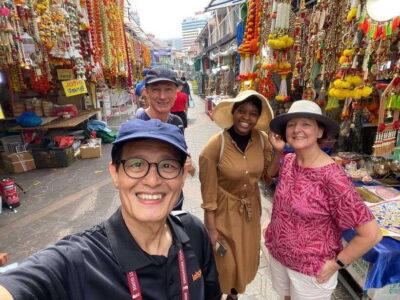
Singapore: Chinatown and Little India Guided Walking Tour
Read our review →
Kampong Glam, Little India & Chinatown with Local Street Food Tastings
Read our review →
Tasting Trails: Chinatown OR with Kampong Glam, Little India
Read our review →
5 hours Little India, Kampong Glam, Chinatown with 9 Food Tasting
Read our review →Browse the lists this tour appears in