
Reviewed · SINGAPORE CHINATOWN TOURS
Tasting Trails: Chinatown, Little India & Kampong Glam, Haji Lane
Singapore’s best food stories are often found between the famous dishes. This private four-hour tour links Little India, Kampong Glam, and Chinatown, pairing 8 to 10 food tastings with market stalls, temples, mosques, shophouses, and local history.
I like two things in particular: the guide can shape the experience around your group, and the route gives you a fast but useful look at three very different parts of Singapore. Guides such as Kelvin and Dawn have also brought food, migration, religion, and daily life into the same conversation.
The main drawback is the pace. Fourteen listed stops in about four hours means most are short visits of roughly 15 minutes, and you will walk quite a bit. Public transport may also be part of the route, but fares are not included.
Key things to know before booking
- Three historic districts in one outing: Visit Little India, Kampong Glam, Haji Lane, and Chinatown in a single private tour.
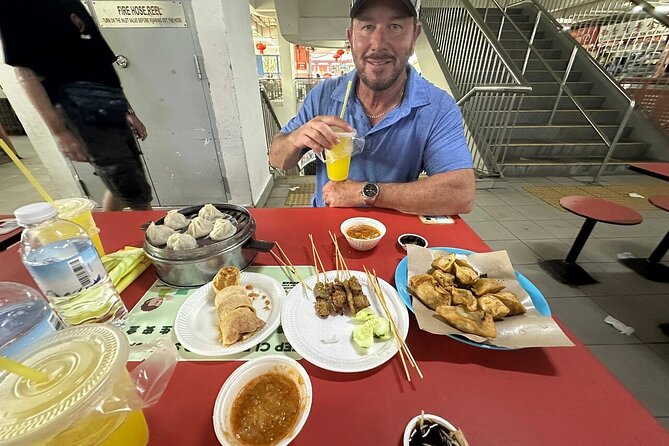
- Eight to ten tastings included: Come hungry, since food is one of the main reasons to book.
- Short stops keep the route moving: Most places receive about 15 minutes, so this is an overview rather than a detailed museum tour.
- Local guides add the human side: Kelvin and Dawn have shared stories about Singapore’s food, people, and neighborhoods.
- Public transport may be used: Bus and train rides help cover ground, but transport costs are extra.
- Best for flexible small groups: Solo visitors, families, friends, and small teams can take part privately.
A food tour that also explains Singapore
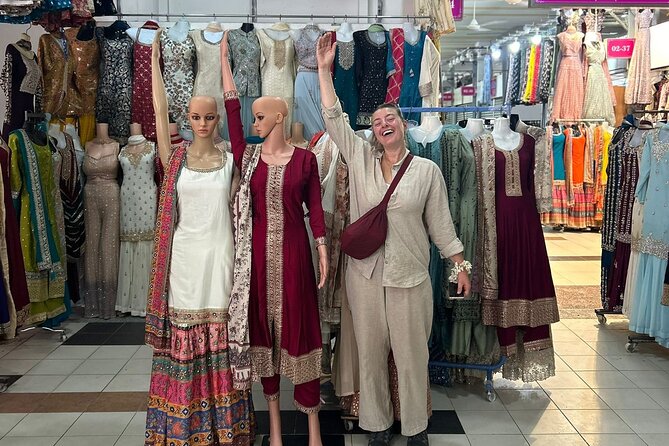
I like this experience because it does not treat food as a separate activity from culture. A dish at a market, a coffee shop, a Chinese temple, and an Indian shopping arcade all become pieces of the same Singapore story.
The route begins in Little India, continues through Kampong Glam, and finishes around Chinatown and Maxwell MRT Station. That order gives you a useful contrast between Singapore’s Indian, Malay-Muslim, Arab, and Chinese communities.
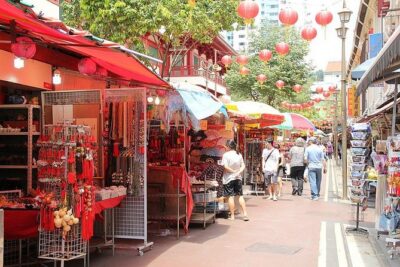
You are not simply taken from one restaurant to the next. You will see restored shophouses, old streets, a religious landmark, a wet market, murals, and shops selling textiles, perfumes, henna, and traditional goods. The food gives the walk a purpose, while the guide provides context.
Because the tour is private, your group can ask questions and set the tone. If you are curious about religion, migration, architecture, or local eating habits, this format gives you more room than a large group outing.
More Little India walks:
- Chinatown, Little India, Kampong Gelam City Highlights Tour
★ 5.0 · 224 reviews - Singapore: Chinatown and Little India Guided Walking Tour
★ 4.8 · 190 reviews - Kampong Glam, Little India & Chinatown with Local Street Food Tastings
★ 4.5 · 70 reviews
Little India begins with color and old neighborhood stories
The first stop is the former House of Tan Teng Niah, a colorful Chinese villa built in 1900 by a local businessman. Its location in Little India is part of what makes it interesting. The building reflects the area’s mixed past rather than fitting into a single cultural label.
You receive about 15 minutes here, enough to look at the painted exterior and hear why the house matters. Admission is free. It is mainly an orientation stop, not a long interior visit.
From there, the route moves to Little India Arcade. The complex occupies restored 1913 shophouses and sells traditional Indian goods, textiles, and food. You can expect the guide to connect the shopfronts with the neighborhood’s Indian identity and commercial life.
The short stop works well if you want an introduction to the district before eating. It may feel too brief if you hoped to browse every shop. Keep your eyes moving upward as well as along the displays, since the shophouse design is part of the appeal.
Buffalo Road and Tekka Place add everyday life
Buffalo Road carries one of the more memorable place names in Singapore. It recalls the period when the area was known as Kampong Kerbau, a buffalo-rearing village. The street’s name gives your guide a simple way to explain how Little India changed over time.
At roughly 15 minutes, this is another quick history stop. You will not get a full neighborhood walk here, but you will gain a useful link between the modern street and its older working life.
Tekka Market, also referred to as Tekka Place in the route, brings the food focus into sharper view. The market is known for fresh produce, meat, seafood, and hawker dishes. This is the kind of place where Singapore’s food culture feels practical and lived-in rather than staged for sightseeing.
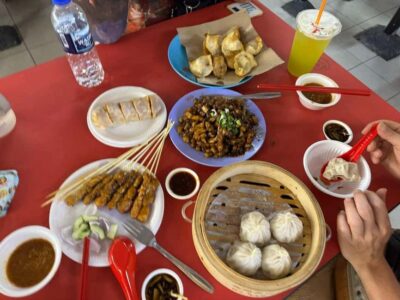
Eight to 10 tastings are included across the tour, though the exact dishes are not specified. You should arrive ready to sample unfamiliar foods, since the experience is designed to introduce local dishes, including options connected with Michelin-recommended cooking.
One important tip: eat lightly before meeting the guide. The food is not an optional side note. Several hours of tasting can add up quickly, especially if you want to try everything offered.
Kampong Glam brings mosques, textiles, and modern street life
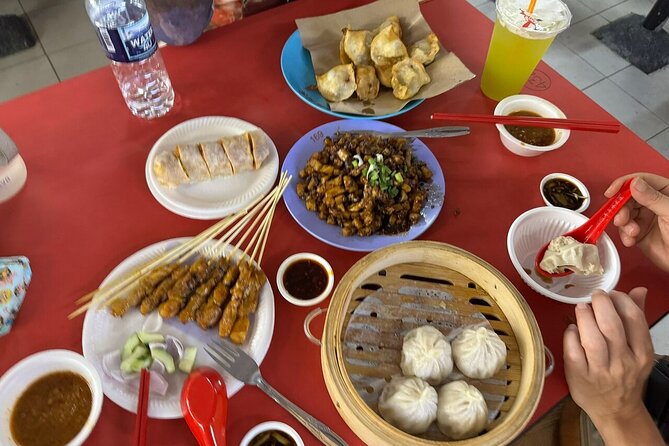
The route then shifts to Kampong Glam, a historic Malay-Muslim district with a different visual and cultural feel. Sultan Mosque is the main landmark, with its golden dome and long religious history dating back to 1824.
The mosque is listed as a stop, but admission is not included. The tour gives you about 15 minutes there, so treat it as a guided exterior and cultural visit unless your guide explains otherwise. Respectful clothing and behavior are sensible around any active place of worship.
Kampong Glam itself adds more than a single landmark. Its shophouses, cafes, and cultural sites show how an older district has adapted to present-day Singapore. The guide can help you read the area as both a historic Malay-Muslim center and a current commercial neighborhood.
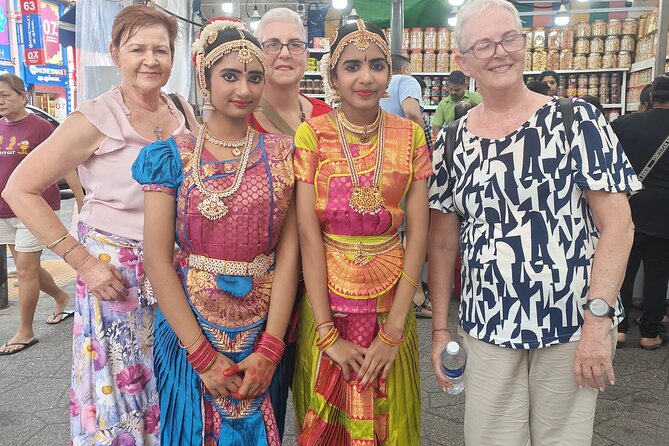
Arab Street follows with textile shops, Middle Eastern cafes, and Islamic connections. This is a good place to notice the variety of businesses packed into the shophouses. You may find the stop especially useful if you are interested in fabrics, perfumes, or the links between Singapore and the wider Muslim world.
Haji Lane shifts the mood again. The narrow street is known for boutiques, cafes, street art, and unusual small shops. It is a popular photo stop, but the guide can keep it from becoming only a backdrop by explaining how the lane fits into Kampong Glam today.
A later stop described in the experience is a perfume shop, and one past itinerary also included a henna tattoo. Since these details may depend on the day and the guide, consider them possible extras rather than guaranteed inclusions. Personal purchases are not included.
More Kampong Glam and Arab Street walks:
- #instawalk: Bugis, Waterloo, Kampong Glam
★ 5.0 · 60 reviews - Tasting Trails: Chinatown OR with Kampong Glam, Little India
★ 5.0 · 59 reviews - 5 hours Little India, Kampong Glam, Chinatown with 9 Food Tasting
★ 5.0 · 58 reviews - Singapore: Kampong Glam & Civic District Vespa Sidecar Ride
★ 4.9 · 49 reviews
Chinatown connects food with migration
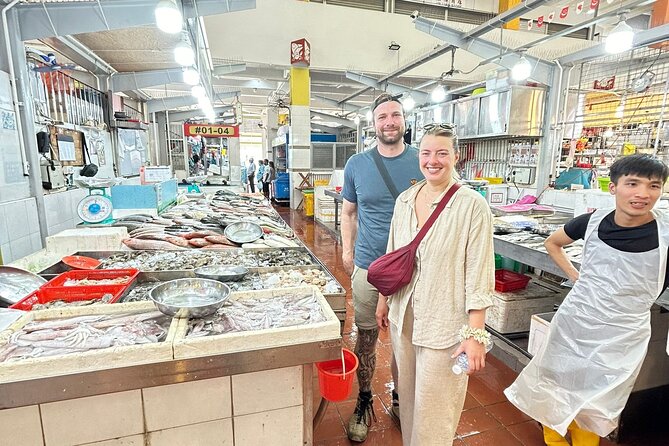
The final major section is Chinatown, where the Chinatown Heritage Centre provides a more direct look at early Chinese immigrant life. The displays include recreated 1950s-style homes and stories about hardship, work, family, and hope.
Admission is not included, so you should confirm with your guide how the visit will be handled. With only about 15 minutes allocated, you are unlikely to see the entire center in detail. Still, even a short introduction can give meaning to the streets outside.
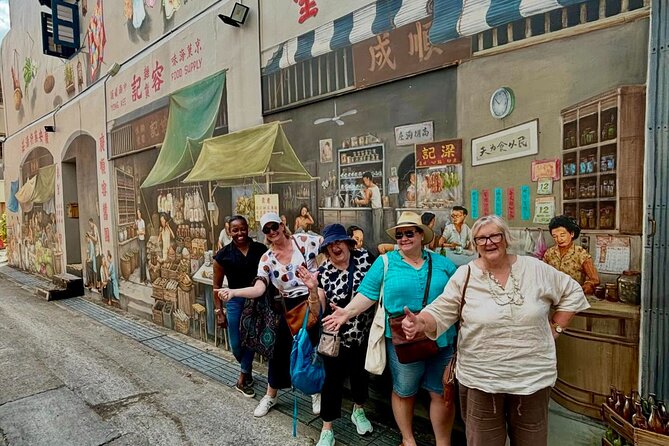
Smith Street adds public art and local memory. Murals by Yip Yew Chong show scenes from Chinatown’s past, including family life in a traditional shophouse and the work of a letter writer. These murals are helpful because they make ordinary routines visible: home life, communication, work, and community.
Pagoda Street offers another layer of history. In the 19th century, it served Chinese immigrants and included coolie lodging, opium dens, and businesses such as Kwong Hup Yuen. Modern shops now line the street, but the older uses explain why this part of Chinatown mattered to new arrivals.
The guide’s stories are particularly valuable here. Food alone cannot explain Chinatown. You need some sense of why people came, what work they did, how they lived, and how the district changed. The tour’s strongest moments are likely to come when those subjects meet at a street corner or market stall.
Coffee, temples, and the Chinatown Complex
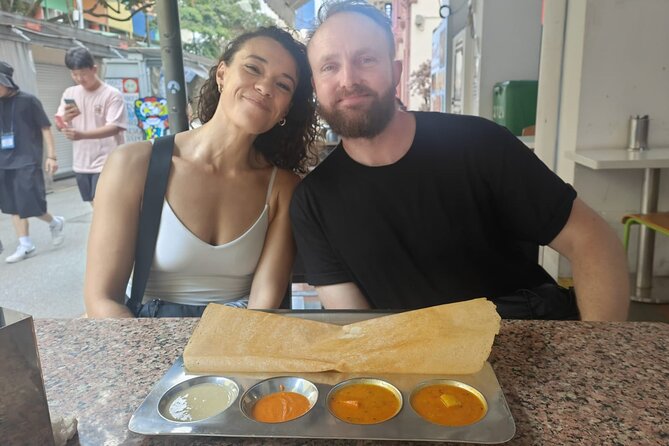
Nanyang Old Coffee provides a slower stop within the busy route. Its red walls, vintage signs, and traditional decoration create a nostalgic setting, while a small second-floor museum displays old coffee-making equipment.
This is a useful chance to learn about Singapore’s coffee culture without turning the visit into a formal lecture. You can expect the stop to focus on the drink, the shop, and the tools used to prepare it.
The Buddha Tooth Relic Temple and Museum brings a religious and architectural contrast. Its Tang Dynasty-inspired design includes tiered roofs, wood carvings, dragons, phoenixes, and lotus motifs. Admission is listed as free.
Fifteen minutes is enough to admire the exterior and step inside if timing allows, but not enough for a careful museum visit. If this temple is a major priority for you, plan a separate return visit. On the tour, it works best as a compact introduction.
The final food-focused stop is Chinatown Complex, home to a wet market and many hawker stalls. Fresh produce, meat, seafood, and cooked food all appear here, giving you one of the clearest views of everyday eating in Singapore.
The tour ends at Maxwell MRT Station on South Bridge Road. That is practical if you want to continue exploring Chinatown, take the train, or head toward another part of the city after the tasting ends.
Four hours means a brisk route
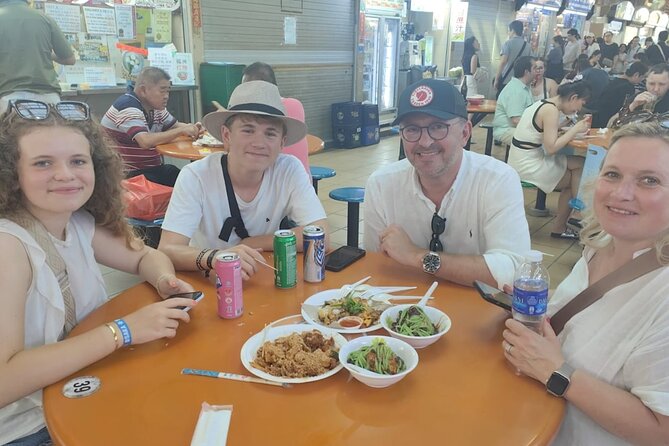
The tour lasts about four hours and lists 14 stops, most with 15 minutes assigned. That math tells you how to approach it. You will see many places, but you will not have long at any one attraction.
The pace is useful if you have limited time in Singapore or want an orientation early in your visit. You can learn which districts deserve a second visit and return later for longer museum visits, shopping, or a more relaxed meal.
It is less suitable if you dislike walking, need frequent long breaks, or want to study each museum and religious site in depth. The experience specifically is not recommended for people with walking difficulties unless they contact the provider for assistance.
You may use a bus and train during the route. This helps the group cover Little India, Kampong Glam, and Chinatown without spending the entire afternoon on foot. Public transport is not included, and personal expenses are extra, so carry a little money for fares and purchases.
A complimentary bottle of water is provided. That is helpful, but it does not replace sensible preparation for a warm, active afternoon. Comfortable shoes matter more than dressing up for this outing.
What the $100.89 price gets you
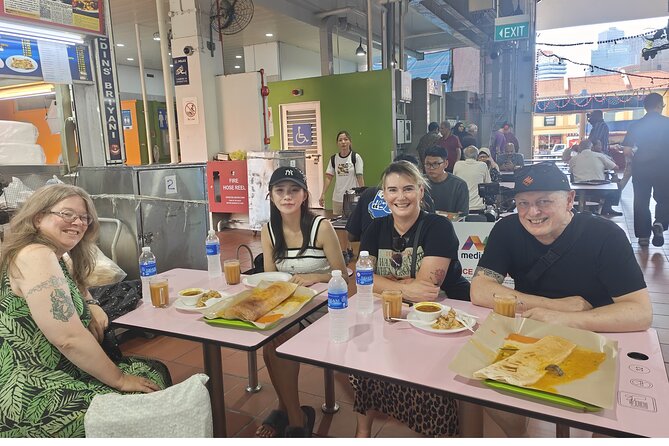
At $100.89 per person, this is not a cheap hawker-food crawl. The value depends on how much you want from the guide and the private format.
The price includes 8 to 10 food tastings, an English-speaking guide, and one bottle of water. It also buys a route that would take planning to reproduce: three major cultural districts, several historic streets, a market, public art, a temple, a mosque, and food stops in one outing.
You are also paying for your own group rather than joining strangers. That matters for families, couples, friends, or small work groups who want to ask questions and move at a shared pace. A private tour can feel expensive for one person, but group discounts may improve the value when several people book together.
The price does not include public transport, entry to Sultan Mosque or the Chinatown Heritage Centre, tips, or personal spending. The exact tasting menu is also not laid out, so ask about dietary needs and the planned dishes before booking if that matters to you.
For a first visit, I see the strongest value in the combination of food and orientation. If you want a long meal at several famous stalls, you may prefer a dedicated food tour. If you want Singapore explained through neighborhoods, this format makes more sense.
Who will get the most from this experience
I would choose this tour if you want a broad introduction and prefer a guide to handle the route. It suits first-time visitors, families, small groups, and anyone who wants food to open the door to local history.
It also works for returning visitors. One person specifically found it worthwhile even after already being in Singapore, partly because the guide connected the food with places and customs that are easy to miss alone.
The private setup is useful if your group has its own interests. Guides such as Kelvin and Dawn have been noted for responding to questions and adapting the conversation. You can ask about dishes, religious sites, shopping districts, or the communities that shaped Singapore.
I would hesitate if your main goal is a slow museum day. The Chinatown Heritage Centre and Buddha Tooth Relic Temple each deserve more than a quick look, while Haji Lane and the markets may tempt you to linger.
The overall rating is 4.8 from seven reviews, with the strongest praise focused on the mix of history, culture, food, and personal guiding. The repeated practical message is simple: you will eat a lot, walk a lot, and learn a lot.
Should you book Tasting Trails?
Book it if you want one private outing that connects Singapore’s food with its Chinese, Indian, Malay, and Islamic communities. The route is broad, the tastings are substantial, and a good guide can make the short stops feel connected rather than random.
Skip it if you want a leisurely food crawl, guaranteed time inside every attraction, or very little walking. At $100.89, the tour earns its price through the private guide, included tastings, and efficient route, not through long visits at individual sights.
My practical advice is to book near the start of your Singapore stay. Use the four hours to find the dishes and districts you want to revisit, then return on your own for a slower meal, longer museum visit, or more shopping.
FAQ
How long is the tour?
The experience lasts approximately four hours.
Where does the tour start?
It starts in Little India, Singapore.
Where does the tour end?
It ends at Maxwell MRT Station, at 321 South Bridge Road, Singapore 058841.
How many food tastings are included?
The tour includes 8 to 10 food tastings.
Is the tour private?
Yes. Only your group participates in the activity.
Is an English-speaking guide included?
Yes. An English-speaking guide is included.
Are public transport fares included?
No. Bus, MRT, taxi, and other public transport costs are not included.
Are admission tickets included?
Most listed stops are free, but admission is not included for Sultan Mosque and the Chinatown Heritage Centre.
Is the tour suitable for people with walking difficulties?
The tour is not recommended for people with walking difficulties, but you can contact the provider for further assistance.
Can I cancel for a full refund?
Yes. You can cancel at least 24 hours before the experience start time for a full refund. Changes or cancellations made less than 24 hours before the start time are not accepted for a refund.
More Food Tours in Singapore
- Small Group: Michelin and Local Hawker Food Tour with 9 tastings
★ 5.0 · 1,890 reviews - Small Group: Singapore Street Food & Night Tour with 9 tastings
★ 5.0 · 1,240 reviews - The Award-Winning PRIVATE Food Tour: 10 Tastings of 3 Cultures
★ 4.5 · 1,017 reviews - Singapore: Chinese, Indian & Arabic Quarters, Culture & Food Tour
★ 5.0 · 789 reviews
More Chinatown Tours in Singapore
- Singapore: Chinatown Hawker Market Food Tour with 7 Food Tastings
★ 5.0 · 213 reviews - Singapore: Chinatown Historic Walking Tour with Lunch
★ 5.0 · 134 reviews - Singapore: Chinatown Hawker Food Tasting Tour
★ 5.0 · 96 reviews - Chinatown Heritage Centre (Admission Ticket)
★ 5.0 · 65 reviews
Recently added around Singapore
- The Real Singapore Heartland Walking Food Tour★ 5.0 · 4 reviews
- Vegetarian Culinary Adventure in Singapore★ 5.0 · 7 reviews
- Singapore’s Marina Bay Wonders and Heritage Tales, Chinatown★ 5.0 · 5 reviews
- Singapore’s Hidden Treasures: A Cultural Private Tour★ 5.0 · 3 reviews
- Private Tour Singapore Street Food & Night Tour★ 5.0 · 4 reviews
- Singapore – Albatross Speedboat Adventures Cruising in Sentosa★ 5.0 · 3 reviews
- Small Group Full Day Singapore City Tour with Roundtrip Transfers★ 4.0 · 11 reviews
- Tastes of Chinatown★ 5.0 · 4 reviews
Singapore Chinatown Tours, compared.
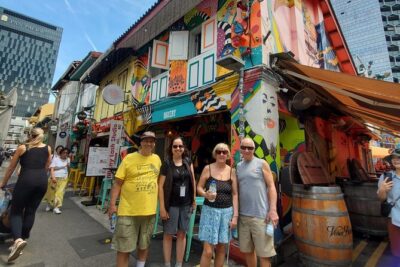
Chinatown, Little India, Kampong Gelam City Highlights Tour
Read our review →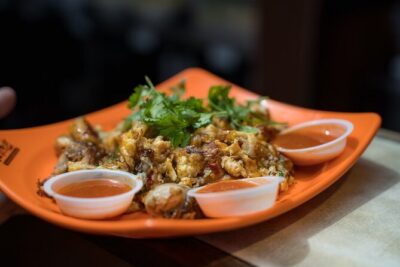
Singapore: Chinatown Hawker Market Food Tour with 7 Food Tastings
Read our review →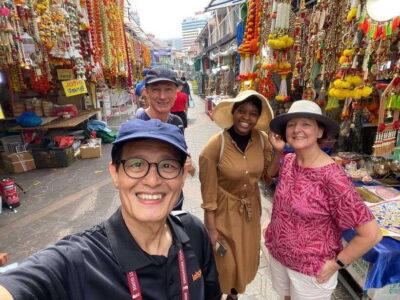
Singapore: Chinatown and Little India Guided Walking Tour
Read our review →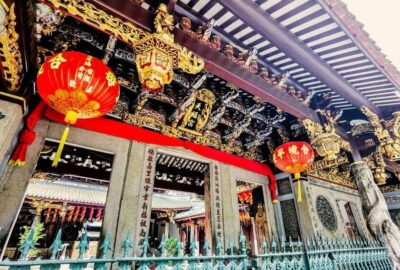
Singapore: Chinatown Historic Walking Tour with Lunch
Read our review →
Kampong Glam, Little India & Chinatown with Local Street Food Tastings
Read our review →
Tasting Trails: Chinatown OR with Kampong Glam, Little India
Read our review →Browse the lists this tour appears in